The Orthodox Church understands Christian life as participation in the life of Christ. Faith is not only an idea to hold, but a way of worship, repentance, communion, mercy, and daily attention to God.
Christ in His Church
Orthodoxy is not a private spirituality. It is life in Christ through the worship, faith, sacraments, and communion of the Church.
Apostolic continuity
The faith is received through Scripture, Holy Tradition, the Creed, councils, Fathers, saints, and the Church's liturgical life.
Healing, not branding
Prayer, fasting, confession, Communion, and mercy are medicine for repentance and union with God, not identity signals.
A Whole Life
Orthodoxy is learned by entering a worshipping life, not by collecting isolated facts.
The best introduction holds doctrine, worship, Scripture, sacraments, icons, saints, fasting, and parish belonging together. Separating these pieces usually distorts them.
Orthodox faith worships the Father, Son, and Holy Spirit confessed in the Creed and prayed in the services.
The Bible saturates Orthodox worship and is received within Holy Tradition rather than isolated from it.
The Divine Liturgy, hymns, icons, feasts, and gestures teach doctrine through the whole person.
Real learning becomes attendance, catechesis, confession, Communion, service, and pastoral guidance.
Orthodox Christianity learning sequence
Learn Orthodoxy positively: received faith, worship, doctrine, parish life, and daily repentance.
Orthodox Christianity Decision Guide
Begin with the question that is actually in front of you.
Many people search for Orthodoxy through one doorway: icons, history, fasting, chant, conversion, Catholic-Protestant comparisons, or a nearby church. A serious introduction should answer that doorway without letting the doorway become the whole faith.
Whole Life Map
Orthodox Christianity is not one topic. It is one connected life.
The faith is confessed, prayed, received, fasted, sung, painted, remembered, and lived in a concrete parish. These six doors keep the introduction from becoming either abstract doctrine or surface religious culture.
Core Map
The basic Orthodox answer is simple, but never thin.
Orthodox Christianity is the life of Christ in His Church: confessed in the Creed, prayed in the Liturgy, read in Scripture, guarded in Holy Tradition, received in the sacraments, remembered through the saints, and practiced through repentance, fasting, mercy, and parish belonging.
Faith Architecture
Orthodox Christianity is a coherent life: doctrine, worship, sacraments, prayer, saints, and parish belonging.
A serious introduction should not flatten Orthodoxy into icons, chant, ethnicity, rules, or arguments. The faith is received as a whole life in Christ through the Church's confession, Scripture, Holy Tradition, worship, mysteries, ascetic practice, and communion.
Orthodox doctrine begins with the Father, Son, and Holy Spirit confessed in the Creed and prayed in the services.
Bishops, priests, deacons, parishes, monasteries, and the Eucharistic life keep Christianity from becoming private theory.
Scripture, hymns, icons, incense, gestures, offering, and Communion teach doctrine as prayer, not as detached information.
Holy Tradition includes the Creed, councils, Fathers, saints, icons, hymnography, and pastoral wisdom that guard apostolic faith.
Repentance, baptism, confession, Communion, prayer, fasting, and mercy are medicine for union with God in Christ.
Visit a canonical parish, attend services, learn the Creed, ask questions, and let patient catechesis replace online pressure.
A faith received, not invented
Orthodoxy is not presented as a private interpretation of Christianity or as a modern restoration project. It understands itself as the Church's received apostolic faith, guarded through Scripture, worship, the Creed, the Ecumenical Councils, the Fathers, saints, and sacramental life.
This is why Orthodox Christianity can feel both ancient and demanding. It does not begin by asking each person to build a system from scratch. It asks the person to receive the faith of the Church, to be corrected by worship, to learn the Creed, to repent, and to enter a life that existed before personal preference and will continue after personal moods change.
Receiving the faith is not the same as turning off the mind. Orthodox Christianity has a deep intellectual tradition, but its knowledge is ecclesial: theology is learned through prayer, worship, obedience, Scripture, councils, spiritual fatherhood, and holiness. The Church's question is not only "What do you think?" but "How are you being healed in Christ?"
Eastern Orthodox, Oriental Orthodox, and wording
In ordinary English, people often use Orthodox Christianity to mean Eastern Orthodox Christianity: the communion of churches such as Greek, Russian, Serbian, Antiochian, Romanian, Bulgarian, Georgian, and others. The wording should still be careful, because Oriental Orthodox churches are distinct communities with their own history and should not be casually merged into the same category.
For this website and the Orthodox Daily Prayer app, Orthodox normally refers to Eastern Orthodox Christianity unless a page says otherwise. That clarity matters for search, for readers from different backgrounds, and for avoiding inaccurate claims about Christians who use similar words differently.
Not merely Eastern aesthetics
Orthodoxy is sometimes reduced online to icons, chant, candles, beards, ancient languages, or a mood of mystery. Those things may attract people, but they are not the substance of the faith. Orthodox Christianity is the life of Christ in the Church: worship, repentance, sacramental communion, doctrine, mercy, holiness, and patient obedience.
It is also not simply an ethnic inheritance. Greek, Russian, Serbian, Antiochian, Romanian, Georgian, Bulgarian, Ukrainian, African, American, and many other Orthodox communities carry real cultures and languages, but the Church is not limited to any one people. The Gospel is received locally without becoming a possession of one nation.
Orthodoxy is Church life, not a content category
Many people first encounter Orthodoxy through icons, chant, fasting rules, or online debates. Those can become misleading if separated from the Church. Orthodoxy is a concrete ecclesial life: bishop, parish, Divine Liturgy, Eucharist, confession, catechesis, prayer, fasting, mercy, and perseverance.
This concrete life protects beginners from two opposite errors. One error is reducing Orthodoxy to beautiful religious culture. The other is reducing it to argument and doctrine detached from worship. Orthodox faith holds beauty and doctrine together because both serve communion with the living God.
| Question | Orthodox answer in brief |
|---|---|
| Where is the faith learned? | In the Church: worship, Scripture, sacraments, pastoral care, and the life of the parish. |
| What guards doctrine? | Scripture within Holy Tradition, the Creed, Ecumenical Councils, Fathers, saints, and liturgical life. |
| What is salvation? | Forgiveness, healing, communion with God, and transformation by grace in Christ. |
| Why does worship matter? | The Church prays what she believes; doctrine is sung, enacted, and received in worship. |
Worship at the center
Orthodox worship is liturgical. The Divine Liturgy, daily prayers, hymns, readings, incense, icons, and gestures all work together to teach the faith through the whole person: mind, heart, body, memory, and community.
This is why a visitor may understand more by attending services for a month than by reading arguments for a month. The services teach what the Church believes about God, the human person, sin, mercy, Scripture, the saints, death, resurrection, and the coming Kingdom. Orthodoxy is not anti-explanation, but explanation becomes healthier when it grows from worship.
The Creed as a doorway
The Nicene-Constantinopolitan Creed is one of the clearest doorways into Orthodox belief. It confesses the Father, the Son, the Holy Spirit, the Incarnation, the Church, baptism, resurrection, and the life of the age to come. For beginners, learning the Creed is often more stable than chasing isolated internet explanations.
The Creed is also a safeguard. It prevents Christianity from becoming a vague spirituality about kindness, tradition, or mystery. Orthodox Christianity confesses the Father, Son, and Holy Spirit; the true Incarnation of Christ; one holy catholic and apostolic Church; baptism; resurrection; and the life of the age to come. This faith is specific, not generic.
Scripture and Holy Tradition
The Bible is read inside the living tradition of the Church. Holy Tradition includes the worship, councils, saints, hymns, icons, and pastoral wisdom through which the Church has received and guarded the apostolic faith.
That does not mean Scripture is treated lightly. Scripture fills Orthodox worship. Psalms, Gospel readings, apostolic readings, Old Testament prophecy, biblical images, and the language of prayer saturate the services. The Orthodox difference is that Scripture is not isolated from the Church that prays and interprets it.
Bishop, parish, and communion
Orthodoxy is not a loose collection of spiritual preferences. The Church is visibly gathered around bishops, priests, deacons, parishes, monasteries, and the Eucharistic life. A person does not become Orthodox by privately agreeing with Orthodox ideas; entrance into the Church happens through the Church.
This can be difficult for people formed by individual choice. Orthodoxy asks a person to belong, to be taught, to be corrected, and to live inside communion. The bishop and parish are not administrative decorations. They express the visible, sacramental, historical life of the Church.
Salvation as healing and communion
Orthodox Christianity speaks about salvation as forgiveness, healing, union with Christ, and transformation by grace. The Christian life is not reduced to information or private spirituality. It is lived through repentance, prayer, fasting, almsgiving, confession, Communion, and love of neighbor.
Theosis without confusion
Orthodox Christians often speak of theosis, participation in the life of God by grace. This does not mean the human person becomes God by nature or loses creaturely identity. It means the human person is healed, illumined, and united to God through Christ by the Holy Spirit.
For beginners, the safest way to understand theosis is through Christ and the sacraments. Salvation is not merely legal acquittal, and it is not self-improvement. It is communion with God, the healing of sin and death, and transformation into the likeness of Christ.
Icons, saints, and the Christian life
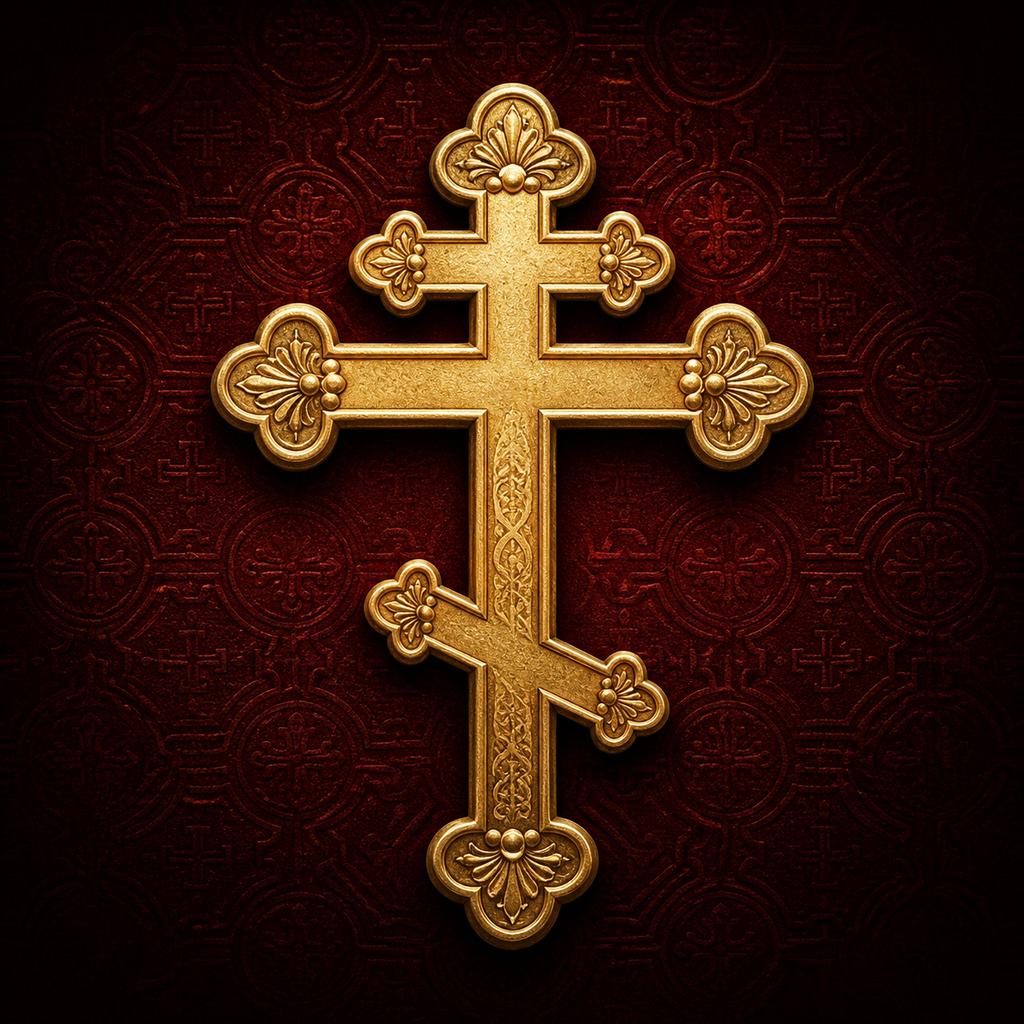
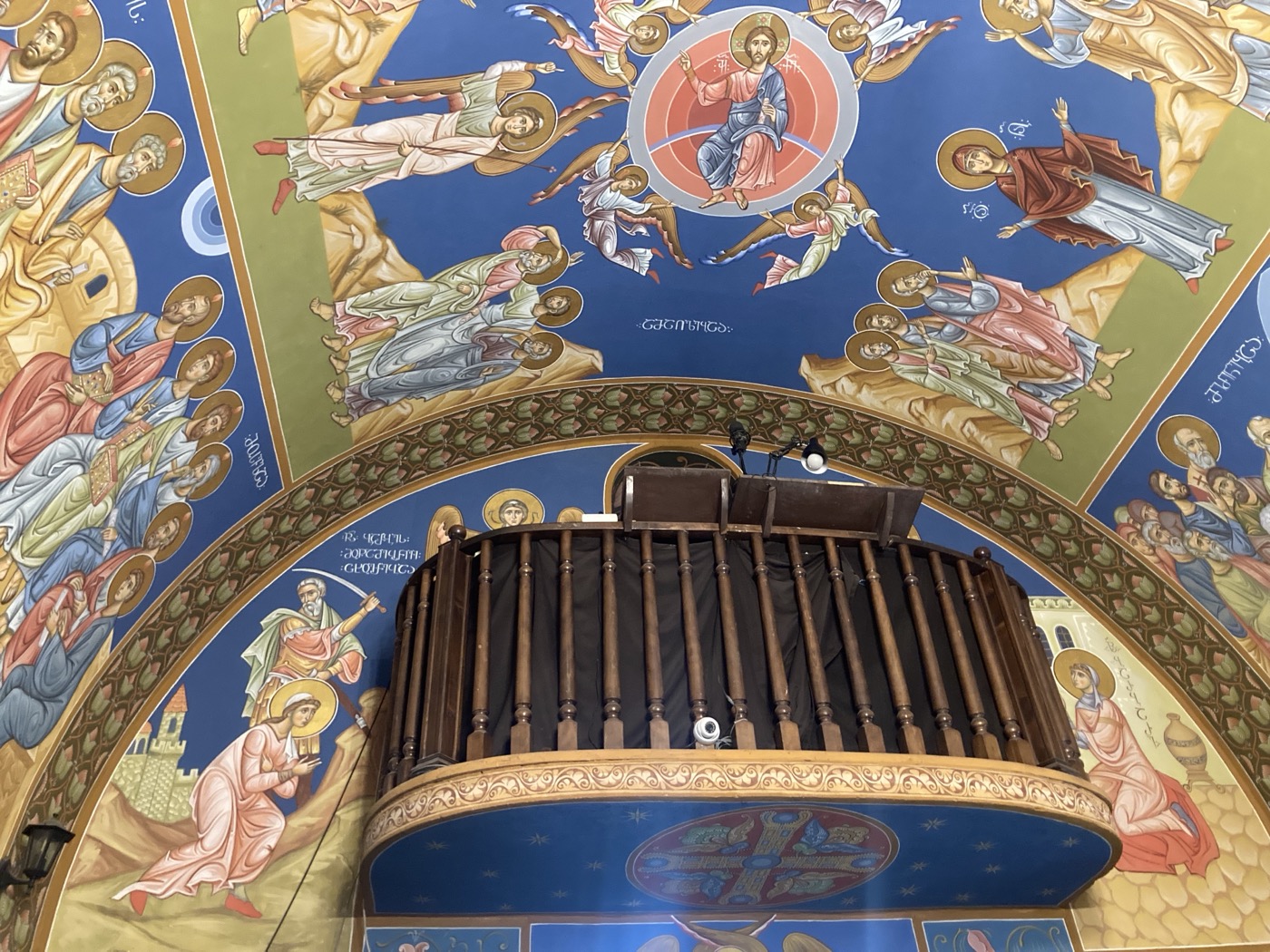
Icons are not decorations. They witness to the incarnation of Christ and to the holiness possible in human life. The saints are honored as living members of the Body of Christ and as examples of prayer, courage, humility, and love.
Veneration of icons and saints can be confusing to visitors, but it follows from the Incarnation. If the Son of God truly became visible in human flesh, matter is not spiritually meaningless. If Christ's grace truly transforms human beings, the saints are not dead examples only; they are living members of the Church in Christ.
Fasting, prayer, and mercy
Orthodox Christianity is often associated with fasting rules, but fasting is not a stand-alone identity marker. It belongs with prayer, almsgiving, confession, Communion, and love. A fast that creates pride, contempt, or harshness has missed its purpose.
For this reason, beginners should learn fasting through parish practice and pastoral guidance. The Church gives fasting as medicine, not as a scoreboard. Its aim is freedom from slavery to appetite, deeper prayer, and greater mercy toward others.
How to learn without getting lost online
Begin with worship rather than arguments. Visit a canonical Orthodox parish, listen to the services, learn the Creed, read Scripture with the Church, and ask a priest concrete questions about fasting, Communion, confession, and catechism.
How to judge Orthodox information online
A trustworthy Orthodox explanation should lead toward Christ, the Church, worship, repentance, humility, and love of neighbor. It should not make beginners anxious, isolated, contemptuous, or obsessed with arguments. Serious sources usually acknowledge pastoral variation instead of treating one parish custom as universal law.
Be cautious with content that turns Orthodoxy into aesthetic nostalgia, culture-war identity, anti-Western reaction, miracle entertainment, or rule-collecting. The safest learning path is slower and more concrete: attend services, read the Creed, learn Scripture inside the Church, and ask a priest how the faith is lived locally.
The first real step
The first serious step is usually not mastering every doctrine online. It is visiting a canonical Orthodox parish, standing in the services, learning the Creed, and asking simple questions with humility. Orthodoxy is clearer when it is encountered as worship and community rather than as isolated content.
A beginner does not need to understand every icon, fast, hymn, calendar question, or jurisdictional detail immediately. Repeated attendance and patient learning often teach more than trying to solve the entire tradition from a screen.
What Orthodoxy is not
Orthodoxy is not a political tribe, an ethnic club, a personality aesthetic, a reaction against modernity, or a collection of exotic customs. It is also not a private spirituality that can be separated from bishops, sacraments, repentance, and parish life.
Those warnings matter because many people first meet Orthodoxy online. The internet can introduce the faith, but it can also distort it. A good introduction should make a person more humble, more willing to attend church, more careful with speech, and more serious about Christ. If learning Orthodoxy makes someone contemptuous, isolated, or theatrical, something has gone wrong.
Common questions about Orthodox Christianity
What is Orthodox Christianity in simple terms?
Orthodox Christianity is the ancient Christian faith lived in the Church through worship, Scripture, Holy Tradition, sacraments, prayer, fasting, repentance, and communion with Christ.
Is Orthodoxy only an ethnicity or culture?
No. Orthodox Christianity is the life of the Church in Christ. It has taken root in many cultures, but it is not reducible to any ethnicity, language, or national identity.
How should someone begin learning Orthodoxy?
Begin by visiting a canonical Orthodox parish, attending services, learning the Creed, reading Scripture with the Church, and speaking with a priest.
Is Orthodox Christianity the same as Eastern Orthodox Christianity?
In ordinary English, Orthodox Christianity often means Eastern Orthodox Christianity. The term should still be used carefully because Oriental Orthodox churches are distinct communities with their own history.
Can someone learn Orthodox Christianity only online?
Online learning can help, but Orthodoxy is learned in the Church through worship, parish life, catechesis, sacraments, prayer, and pastoral guidance.
Orthodox Christianity study path
Start with the broad map, then move into worship, doctrine, parish life, and daily practice.
Source Trail
Read this topic with the Church, not only the internet.
These links give a cautious path for checking the topic further. They do not replace parish worship, confession, pastoral guidance, or the calendar used by your bishop and local parish.
Daily Practice
When Orthodoxy becomes daily rhythm.
The app is for the reader who wants to move from learning about prayer, Scripture, fasting, saints, and the calendar into a gentle daily pattern. It supports attention; it does not replace parish life.
Source note
This overview follows standard Orthodox catechetical themes: worship, Scripture within Holy Tradition, the Creed, parish life, sacraments, icons, saints, fasting, prayer, and salvation in Christ.
This page is an introduction, not a replacement for parish life or pastoral guidance. If you are exploring Orthodoxy, visiting a local parish and speaking with a priest is the best next step.