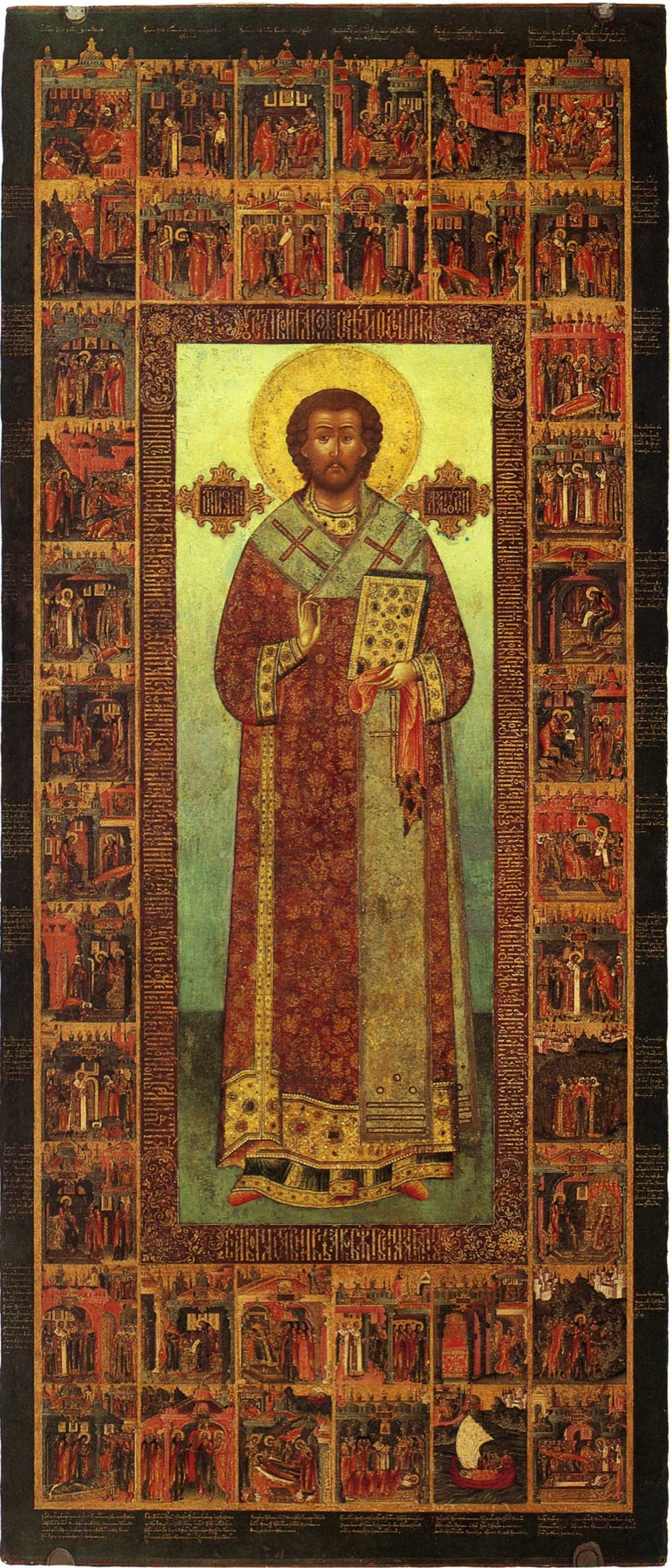
Orthodox Christians honor saints because holiness is not abstract. The lives of the saints show repentance, courage, prayer, mercy, endurance, and love made visible in real human lives. Saints are not admired as celebrities; they are received as witnesses to Christ and examples of life transfigured by grace.
Saints reveal Christ's work in human life.
The Church remembers saints because grace is not theoretical. Holiness becomes visible in repentance, endurance, mercy, teaching, martyrdom, family life, and hidden faithfulness.
Veneration is not worship.
Orthodox Christians ask saints for prayer as living members of Christ's Body, while worship and adoration belong to the Holy Trinity alone.
Universal and local memory belong together.
Some saints are known everywhere; others are beloved in particular churches, languages, monasteries, and families. Local love should deepen communion, not rivalry.
Saints In Daily Life
Read saints as witnesses to Christ, not as religious content to collect.
The lives of saints are meant to lead into prayer, repentance, courage, mercy, and worship. A saint is not a mascot, aesthetic symbol, or miracle story detached from the Gospel.
- Begin with the calendar.Read the saint of the day, your patron saint, the parish patron, and saints connected to feasts before collecting random stories.
- Ask what Christ reveals.Notice repentance, endurance, mercy, teaching, martyrdom, hidden faithfulness, and love rather than only dramatic details.
- Keep veneration distinct from worship.Saints are honored and asked for prayer; adoration belongs to the Holy Trinity alone.
- Let the reading become prayer.Ask for intercession, imitate one virtue in ordinary life, and return to parish worship rather than internet fascination.
Saints study path
Use this page as the hub for saints, name days, patron saints, local traditions, icons, and the Church calendar.
Saints Memory Map
Saints are remembered in worship, names, homes, icons, and daily prayer.
A serious saints guide should not flatten holy people into interesting stories. Orthodox memory is liturgical, personal, local, and practical: the Church calendar, baptismal names, family customs, icons, intercession, and parish worship all belong together.
Communion Map
The saints are not religious trivia; they are the Church's memory of holiness alive in Christ.
Orthodox devotion to saints becomes clear when worship, honor, intercession, icons, calendar memory, imitation, and parish life are kept distinct and together. The saints are witnesses and intercessors, never replacements for Christ.
Saints are honored because God is glorified in them. They do not compete with Christ, replace prayer to Him, or create a separate spiritual system.
Asking a saint's prayers belongs to the communion of the Church, not magic, luck, or a shortcut around repentance, worship, and pastoral care.
Daily commemorations, feasts, name days, family Slava, and local saints keep Christian memory concrete rather than vague or sentimental.
Icons show sanctified human life in Christ and teach the faithful to honor holy persons without worshiping matter or confusing image with God.
Mercy, endurance, chastity, courage, repentance, confession, and prayer should become visible in ordinary life, not remain a beautiful story.
Lives, hymns, services, patronal feasts, relics, and local calendars keep devotion inside the prayer of the Church.
Saints Identity System
Names, patrons, Slava, and daily saints should form memory, not branding.
Many people discover Orthodox saints through a name, icon, family custom, or calendar search. A serious Orthodox page should help them move from curiosity to prayer: the saint of the day, a patron saint, a parish patron, a name day, family Slava, and the app's daily remembrance all need the same Christ-centered logic.
The daily calendar gives a stable first step: read one life, ask intercession, and connect the saint to prayer, readings, fasting awareness, and parish worship.
Name days are not only cultural markers. They connect baptismal identity, patronal prayer, family gratitude, and the feast of a real witness to Christ.
A patron saint is not an aesthetic label. Patronage should lead toward humility, prayer, repentance, mercy, and concrete accountability before Christ.
Serbian Slava is best explained as prayerful family patronal memory with bread, candle, koljivo, hospitality, blessing, and the local Church.
Greek, Serbian, Russian, Antiochian, Romanian, Georgian, Bulgarian, Ukrainian, African, American, and other Orthodox memories should not become rival brands.
Orthodox Daily Prayer can place saints beside prayer, Scripture, fasting awareness, and calendar rhythm while deferring to parish and jurisdictional calendars.
Saints Discernment Guide
Honor for saints should become prayer, not spiritual collecting.
Orthodox devotion to saints is safest when it stays connected to Christ, the Church calendar, parish worship, patron names, icons, and repentance. The goal is not to gather fascinating stories, but to learn holiness from living members of Christ's Body.
Begin With The Saints
Do not start with a random list. Start with memory.
Orthodox saints are learned best through the Church's calendar, a patron saint, a parish patron, the Theotokos and major feasts, local saints, and the lives that naturally return in worship. This keeps devotion connected to Christ instead of turning saints into content to collect.
What is a saint?
In the broadest Christian sense, holiness belongs to God and is shared with His people by grace. When the Church glorifies a saint, it recognizes a life that has borne clear witness to Christ. Saints may be martyrs, bishops, monks, nuns, married people, missionaries, hymnographers, confessors, healers, rulers, fools-for-Christ, or ordinary repentant Christians known by God.
| Type | Witness |
|---|---|
| Martyrs | Faithfulness to Christ even unto death. |
| Confessors | Suffering for the faith without necessarily being killed. |
| Hierarchs | Holy bishops and teachers who shepherded the Church. |
| Monastics | Prayer, repentance, ascetic struggle, and spiritual counsel. |
| Righteous laypeople | Holiness in family life, work, mercy, endurance, and hidden faithfulness. |
Saints by vocation and witness
Orthodox saints are not a decorative category. Their lives show that holiness can appear in many vocations without becoming vague or sentimental. The Church remembers apostles who preached, martyrs who confessed, bishops who guarded doctrine, monastics who learned prayer, married people who practiced mercy, rulers who repented, and hidden faithful known fully only to God.
This matters for beginners because it prevents the saints from becoming a single aesthetic: old icons, dramatic martyr stories, or monastic severity. The lives of the saints are wider and more demanding than that. They ask every reader, in his or her own state of life, to become faithful in concrete ways.
Witness to Christ, preaching, suffering, and the foundation of Church life.
Faithfulness under persecution, showing that Christ is worth more than safety.
Repentance, watchfulness, obedience, and hidden struggle for purity of heart.
Holiness in marriage, parenting, hospitality, work, grief, service, and endurance.
Saints are not one personality type
One reason saint lives matter is that holiness is not restricted to a single temperament, culture, or vocation. Some saints were scholars; others were unlettered. Some preached publicly; others prayed hidden lives. Some died as martyrs; others spent decades in ordinary repentance, pastoral care, family life, monastic obedience, or service to the poor.
This protects readers from turning Orthodoxy into a narrow aesthetic. A saint is not someone who matches an internet image of religious seriousness. A saint is a person in whom Christ's life has become visible through repentance, faithfulness, love, endurance, and grace.
Feast days
Each day of the calendar remembers saints and sacred events in the life of the Church. These commemorations make the calendar a living school of faith: a person does not only learn doctrine as information, but meets examples of repentance, courage, humility, and worship.
A saint's feast day may include hymns, readings, an icon, a short life, and local customs. Some saints are commemorated across the Orthodox world; others are especially remembered in a monastery, region, language tradition, or local Church. The calendar is therefore both universal and local.
Intercession
As members of the Body of Christ, the saints are remembered not as distant heroes, but as living witnesses who pray with and for the faithful. Orthodox Christians ask the saints for prayer in the same spirit that they ask other Christians to pray for them, while worship belongs to God alone.
This does not mean saints replace the one mediation of Christ or become independent spiritual powers. Orthodox intercession belongs inside the life of the Church, where all prayer is finally directed to God and all holiness is God's gift.
Veneration is not worship
Orthodox language about saints can sound strong to outsiders because honor, prayer, kissing icons, feast days, and hymns are all involved. The distinction is essential: worship and adoration belong to God alone. Veneration honors God's work in His saints and asks for their intercession as living members of Christ's Body.
This is why saints are never an alternative center of devotion. Proper devotion to the saints leads back to Christ, to repentance, to the Church's worship, and to love of neighbor. If interest in saints becomes superstition, nationalism, or spiritual collecting, it has lost its Orthodox shape.
Relics and embodied holiness
Orthodox Christians also venerate relics of saints. This can be confusing if holiness is imagined as a purely mental or symbolic reality. In Orthodox Christianity, salvation concerns the whole human person. The body is not disposable spiritual packaging; it is created by God, baptized, anointed, fed by the Eucharist, and called to resurrection.
Relics are therefore honored as signs of God's work in His saints and of the Christian hope in bodily resurrection. They are not magic objects, and they are not worshiped. As with icons and saint intercession, the honor shown to relics must lead back to Christ, thanksgiving, repentance, and the worship of God.
Saints should make us more Christian, not more theatrical.
Healthy devotion to saints leads toward Christ, prayer, repentance, courage, mercy, and worship. If saint content becomes superstition, identity performance, miracle-chasing, political ammunition, or contempt for other Orthodox peoples, it has left the mind of the Church.
| Confusion | Orthodox distinction |
|---|---|
| Worshiping saints | Worship belongs to the Holy Trinity alone; saints are honored as witnesses to Christ. |
| Using saints as luck | Saints are asked for prayer, not treated as magical protection or spiritual technique. |
| Collecting dramatic stories | Saint lives should lead to repentance, prayer, mercy, and worship. |
| Treating relics as magic objects | Relics are venerated as signs of embodied holiness and resurrection hope, while worship belongs to God. |
| Reducing saints to ethnic identity | Local saints are loved deeply, but holiness belongs to the whole Church. |
Patron saints and names
Many Orthodox Christians bear the name of a saint and celebrate that saint's feast as a name day. A patron saint may be connected with a baptismal name, a family tradition, a parish dedication, or a particular vocation and devotion.
Glorification and local calendars
Saints are remembered liturgically through the Church's calendar. Some saints are known across the whole Orthodox world; others are especially beloved in a local Church, monastery, country, or parish. This is why a Greek, Serbian, Russian, Antiochian, Romanian, Georgian, Bulgarian, Ukrainian, or American Orthodox calendar may highlight different commemorations on the same civil date.
When the Church glorifies a saint, she is not inventing holiness by declaration. She is recognizing and receiving a witness already shown in Christ. The exact process and calendar placement can differ by local Orthodox Church, so parish calendars remain important.
Universal saints and local saints
Some saints are woven into the worship of nearly every Orthodox community: apostles, great martyrs, holy hierarchs, monastic fathers and mothers, the Theotokos, and saints connected to major feasts. Other saints are especially cherished by one local Church or people because their life, language, mission, or suffering belongs closely to that community's memory.
This local love should deepen catholicity rather than shrink it. A Serbian Christian can love Saint Sava, a Greek Christian can love Saint Nektarios, a Russian Christian can love Saint Seraphim of Sarov, and an American Orthodox Christian can remember local saints without treating Orthodoxy as a set of competing national brands.
Learning from saint lives
Reading the lives of saints can teach patience, humility, endurance, and joy. The goal is not to collect dramatic stories, but to see how the Gospel takes flesh in monks, mothers, bishops, martyrs, missionaries, confessors, rulers, healers, fools-for-Christ, and ordinary repentant Christians.
How to read responsibly
Lives of saints can include historical detail, liturgical memory, miracle stories, and spiritual interpretation. They should be read with reverence and discernment, not as internet ammunition or entertainment. A saint's life should lead to repentance, prayer, mercy, and worship.
A good reading question is not only "What happened?" but "What does this life reveal about Christ, repentance, endurance, prayer, humility, and love?" Some details may require historical care. Some stories are preserved primarily as liturgical memory. The safe path is to read inside the Church's prayer rather than as detached religious spectacle.
Responsible reading pattern
How to begin without collecting saints
Beginners can become overwhelmed because Orthodox calendars name many saints every day. A healthier beginning is narrow and stable. Start with Christ's feasts, the Theotokos, your patron saint if you have one, your parish patron, the saint of the day when you pray, and a few saints your priest or parish naturally mentions. This gives memory a liturgical shape instead of turning the saints into a catalogue.
When reading, avoid the habit of searching for the most extreme or unusual life. The saint who teaches patience in ordinary life may be more useful than the saint whose story feels dramatic. Ask: What in this life calls me to repentance? What virtue is visible? What does this saint reveal about Christ? How can I pray differently today?
| Begin with | Why this is stable |
|---|---|
| Daily calendar saint | The Church gives the remembrance; the reader does not have to manufacture a theme. |
| Patron saint | The name becomes prayer, feast-day memory, and personal accountability. |
| Parish patron | The saint is already part of the worshipping community's life. |
| Major feast saints | Apostles, prophets, martyrs, hierarchs, and the Theotokos are learned inside worship. |
Saints are not magical specialists
Orthodox people sometimes ask particular saints for prayer in situations connected to that saint's life, ministry, suffering, or pastoral memory. This can be beautiful when it remains prayerful. It becomes distorted when saints are treated as problem-specific powers, guaranteed shortcuts, or spiritual techniques.
The saint does not replace Christ, the sacraments, repentance, medical care, wise counsel, or ordinary responsibility. Asking the prayers of Saint Nektarios, Saint Xenia, Saint Nicholas, Saint Mary of Egypt, Saint Sava, Saint Nino, Saint Herman, or any other saint should lead deeper into humility, not into superstition.
Daily saints in an app rhythm
A daily saints feature is most valuable when it keeps memory close to prayer. It can remind a person of the saint of the day, connect the saint with the calendar, and help a reader return later. It should not imply that an app replaces parish calendars, liturgical books, or pastoral judgment.
Orthodox Daily Prayer can support this in a modest way: by placing saints beside prayer, Scripture, fasting awareness, and the Church year. That combination matters because saints are not trivia. They belong to a whole life of worship.
Saints and culture
Different Orthodox peoples remember local saints with deep love. Greek, Russian, Serbian, Antiochian, Romanian, Georgian, Bulgarian, Ukrainian, African, American, and other Orthodox communities all carry memories of holy people. This diversity shows the universality of the Church, not competing spiritual brands.
How a daily saints calendar should be used
A saints calendar should not become spiritual collecting or trivia. Its best use is quiet remembrance: notice the saint of the day, read a short life when possible, ask for prayer, and let the witness of holiness lead back to Christ. Some days will include saints you know well; other days may open unfamiliar parts of Orthodox history.
For families, name days and patron saints can become a gentle way to connect children, prayer, parish life, and the calendar. The point is not to turn identity into decoration, but to remember that every Christian name is a call toward holiness.
How to tell whether saint content is healthy
Healthy saint content points toward Christ, repentance, worship, courage, mercy, and hope. It does not use saints as tribal symbols, political weapons, or dramatic material for religious entertainment. A good account of a saint should make the reader more humble and more willing to pray, forgive, serve, and endure.
Readers should also distinguish between liturgical commemoration, local devotion, historical research, and popular storytelling. Not every online story about a saint has the same weight. When a detail matters for prayer, naming, feast days, fasting, or parish celebration, the safest reference is the calendar and guidance of one's parish or local Orthodox Church.
Saints and modern search
Many people discover Orthodox saints through search results, short videos, icons, quotes, or lists of patron saints. That can be a doorway, but it can also flatten the saints into aesthetics. A serious saints page should connect each saint to Christ, the Church calendar, prayer, worship, and the virtues shown in the life, not merely to a dramatic story or attractive image.
This is especially important for name days and family patron traditions. The question is not only "which saint matches my name?" but "how does this saint teach me to pray, repent, endure, forgive, and belong more deeply to the Church?"
Reliable sources for Orthodox saint lives
Not every saint page online has the same weight. Some pages summarize the Church calendar responsibly; others mix pious memory, local custom, weak attribution, and dramatic retelling. A reader does not need to become cynical, but should learn how to read with reverence and care.
The safest approach is layered. First ask what the parish calendar commemorates. Then read official jurisdictional resources, service texts, synaxaria, and reputable Orthodox publications. When a detail affects a name day, patron saint, local service, fasting practice, or family custom, local parish guidance carries more practical authority than a generic website.
| Source type | Best use | Limit to remember |
|---|---|---|
| Parish calendar | Concrete worship, local commemorations, name days, and service announcements. | It may not explain every historical detail. |
| Official jurisdictional calendar | Stable saint listings, feast dates, and local Church memory. | Different jurisdictions may highlight different saints. |
| Service texts and synaxaria | Liturgical meaning, hymns, feast context, and prayerful memory. | They require careful reading and sometimes pastoral explanation. |
| Popular articles and videos | Initial discovery and short introductions. | They can oversimplify, dramatize, or detach the saint from worship. |
When saint calendars differ
A Greek parish, Serbian parish, Russian parish, Antiochian parish, Romanian parish, Georgian parish, Ukrainian parish, or American Orthodox parish may not present the daily saints in exactly the same way. This is not automatically a problem. The Orthodox Church is one Church with local calendars, local saints, translations, and pastoral histories.
For a reader, the practical order is simple: follow the parish calendar for worship, learn the wider Orthodox saints with gratitude, and avoid using local differences as evidence of contradiction. When a date matters for a name day, Slava, parish feast, or fasting question, ask the local priest rather than forcing a universal answer from search results.
What a serious daily saints feature should do
A daily saints feature should be humble. It should show saints in relation to the Church calendar, help readers learn reliable names and feasts, and invite prayer. It should not pretend to solve every jurisdictional calendar difference, every language form, or every local custom.
For Orthodox Daily Prayer, that means saints should appear beside prayer, Scripture, fasting awareness, and the calendar. The app can help memory; the parish gives the practical worship context. That distinction is what keeps digital Orthodox content from becoming shallow.
Common questions about Orthodox saints
Do Orthodox Christians worship saints?
No. Worship belongs to God alone. Orthodox Christians honor saints as holy witnesses to Christ and ask for their prayers. This distinction matters: veneration is not the same as worship.
What is an Orthodox name day?
A name day is the feast of the saint whose name a person bears, often connected with baptism, patronage, prayer, and family or parish celebration. Exact customs differ by local tradition.
Why read lives of saints?
Lives of saints show how the Gospel is lived in real people: martyrs, monastics, bishops, families, missionaries, confessors, and hidden righteous Christians. They should lead to repentance and love, not spiritual comparison.
Can I choose a patron saint?
Many Orthodox Christians have a patron saint connected with a baptismal name, family tradition, parish dedication, or personal devotion. The choice should be made with reverence and pastoral guidance, not as aesthetic branding.
Are saints magical specialists for different problems?
No. Orthodox Christians may ask particular saints for prayer because of their lives and pastoral memory, but saints are not magical specialists or spiritual techniques. All true intercession leads to Christ.
How should beginners choose which saints to read?
Begin with the saints of the Church calendar, your patron saint, your parish patron, major feasts, and reliable jurisdictional calendars. Read slowly and let the life lead to prayer, not collecting.
Where can I find reliable Orthodox lives of saints?
Begin with your parish calendar, official jurisdictional calendars, Orthodox service books, and established resources such as OCA Lives of the Saints or GOARCH Saints and Feasts.
Why do Orthodox calendars sometimes list different saints?
Local Orthodox Churches may emphasize different local saints, newly glorified saints, language traditions, or calendar usage. This diversity should deepen communion rather than create rivalry.
How are Orthodox saints connected to icons?
Icons of saints witness that holiness is embodied in real human lives transfigured by Christ. Orthodox Christians venerate icons with honor, while worship belongs to God alone.
Should an Orthodox app show the saint of the day?
A saints feature can help remembrance, prayer, name days, and calendar awareness, but it should remain humble and defer to parish and jurisdictional calendars for practical worship details.
Why do Orthodox Christians venerate relics?
Orthodox veneration of relics is connected to the belief that holiness involves the whole person, body and soul, in Christ. Relics are honored with reverence, while worship belongs to God alone.
How are saints connected to the Orthodox calendar?
Orthodox calendars remember saints and sacred events day by day. These commemorations connect prayer, feasts, name days, local saints, hymns, and parish worship to the concrete memory of holiness.
Why do different Orthodox traditions emphasize different saints?
Local Orthodox Churches remember the same faith through particular languages, histories, missions, martyrs, monasteries, and newly glorified saints. Local devotion should widen communion, not become rivalry.
Source note
This guide follows Orthodox teaching on saints, veneration, intercession, name days, and liturgical commemoration. Local calendars can differ by Orthodox Church, jurisdiction, and parish.
Source Trail
Read this topic with the Church, not only the internet.
These links give a cautious path for checking the topic further. They do not replace parish worship, confession, pastoral guidance, or the calendar used by your bishop and local parish.
Saints Calendar
Let daily commemorations lead back to Christ.
Orthodox Daily Prayer helps keep saints, name days, Scripture, fasting awareness, and prayer together in the rhythm of the Church year.
Calendars and saint commemorations can differ by local Church and language tradition. Use your parish calendar when a date matters for worship or fasting.