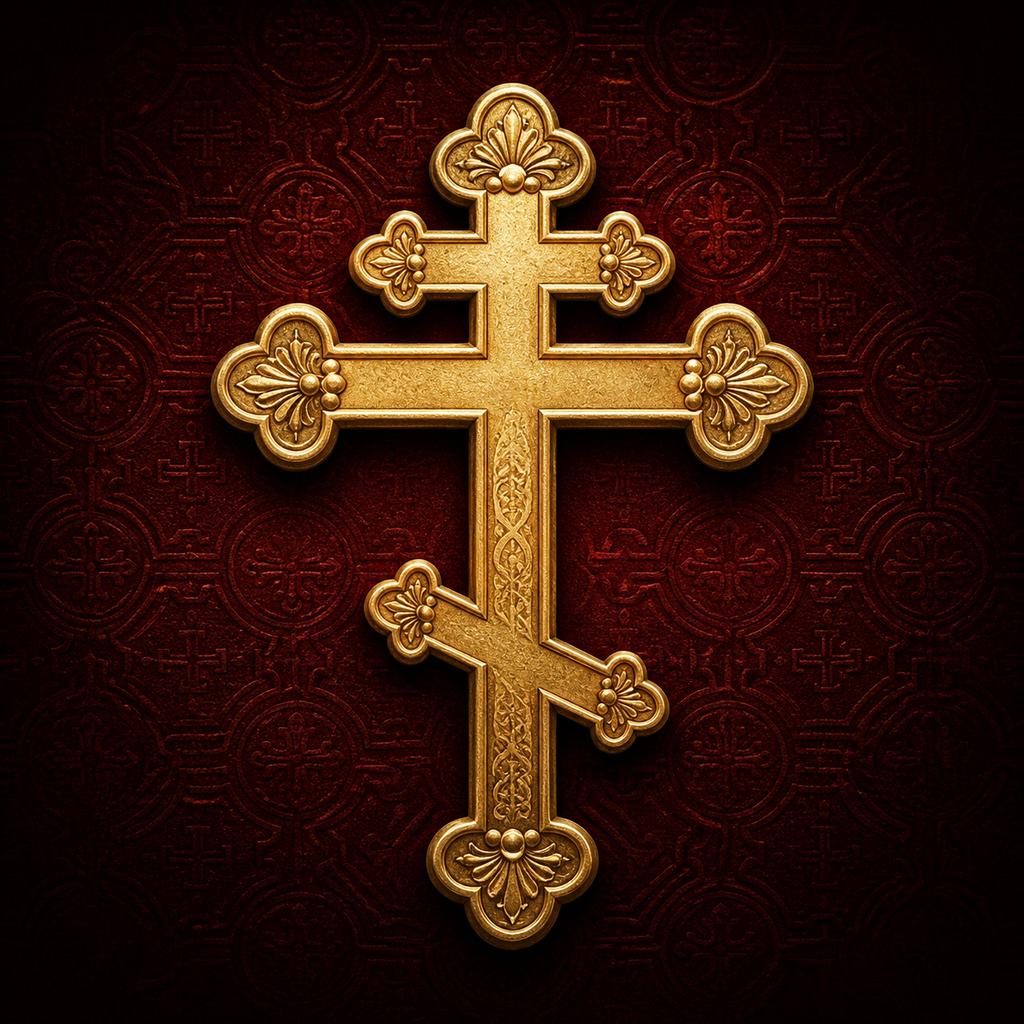

Many Orthodox Christians keep a small rule of prayer: a consistent pattern for morning, evening, meals, and moments of need. The goal is not performance, but faithfulness and attention. Orthodox prayer is not a technique for self-improvement. It is a way of turning the whole person toward God in repentance, thanksgiving, intercession, and love.
Small prayers kept faithfully matter.
A modest rule is usually healthier than an impressive rule that collapses. Prayer grows through return, not religious self-display.
The Church teaches the heart to pray.
Written prayers, psalms, Scripture, hymns, and the services keep personal prayer from becoming only mood, opinion, or self-expression.
Prayer is not a private achievement.
The fruit of prayer should be repentance, mercy, patience, reconciliation, and deeper participation in the worshiping Church.
Daily Prayer
A sober Orthodox prayer day has a beginning, returns, and an ending.
The goal is not to fill every minute with religious activity. A healthy rhythm gives the day a clear opening before God, small returns during ordinary life, and an evening return in repentance and thanksgiving.
- Begin before the day begins using you.Stand or sit attentively, make the sign of the Cross, pray a short received prayer, and ask God to bless the day.
- Keep one phrase close.A psalm verse, Gospel phrase, or the Jesus Prayer can become a small thread of remembrance during work, travel, or household duties.
- Remember people by name.Intercession keeps prayer from becoming self-enclosed: pray for family, parish, enemies, the sick, the departed, and the world.
- End without theatre.Give thanks, repent, ask forgiveness, entrust the night to God, and avoid turning missed prayers into despair or self-punishment.
Orthodox prayer learning sequence
Learn prayer as a humble rhythm shaped by the Church, not as mood management or spiritual content.
Prayer Discernment Guide
Orthodox prayer is learned by faithful return, not religious intensity.
For many readers, the real question is not whether prayer matters. It is how to begin without turning prayer into anxiety, aesthetic performance, or a private system detached from the Church.
Prayer Core Map
Orthodox prayer is a rhythm of return, not a private performance project.
Prayer becomes Orthodox when it is shaped by the Church's words, Scripture, repentance, intercession, parish worship, and mercy. The aim is not a dramatic spiritual personality, but steady attention to God that can survive ordinary life.
Prayer Architecture
Orthodox prayer is not a technique; it is a daily return into the prayer of the Church.
A mature prayer life holds several things together: received words, Scripture, the Jesus Prayer, intercession, a modest rule, the body, parish worship, confession, Communion, fasting, and mercy. If one part is isolated, prayer becomes thinner than the Church intends.
Morning, evening, meals, and short returns help prayer survive ordinary work, family duties, distraction, travel, and tiredness.
Prayer books, psalms, hymns, and Scripture form repentance, thanksgiving, intercession, and worship better than mood alone.
The holy name is approached with humility, sobriety, and guidance, not as a productivity habit or private achievement.
Praying for the living, the departed, enemies, the sick, and the world keeps prayer joined to love and mercy.
Vespers, Matins, Liturgy, confession, Communion, feasts, fasting, and pastoral care give home prayer its wider home.
Orthodox Daily Prayer can gather prayers, Scripture, saints, and fasting awareness while letting the person actually pray.
Prayer study path
Use this page as the hub for Orthodox prayer. Start with daily rhythm, then move into the Jesus Prayer, home prayer, Scripture, confession, and worship.
Prayer Context
Daily prayer becomes Orthodox when it stays connected to worship, Scripture, mercy, and parish life.
A serious prayer page should not only tell people to pray more. It should help them find a sober rule, read Scripture prayerfully, avoid private intensity, and keep prayer accountable to the Church.
Prayer Rule System
A serious Orthodox prayer guide should turn attention into a rule that can be kept.
Orthodox prayer is not a mood, productivity habit, or collection of beautiful texts. It belongs with the Church's worship, a blessing from the parish, Scripture, Psalms, the Jesus Prayer, morning and evening prayer, fasting, and concrete mercy.
Morning prayers orient attention before work, screens, decisions, and anxieties take over. The rule begins by receiving the day, not conquering it.
Evening prayer gathers gratitude, confession, forgiveness, and sleep under the mercy of God instead of turning the day into self-analysis.
The Psalms give language for praise, grief, repentance, fear, enemies, hope, and trust. They keep prayer larger than personal mood.
The Jesus Prayer is not a technique. It is a humble cry for mercy, learned with sobriety and kept inside the life of the Church.
A priest can help shape a modest rule for actual duties, health, work, children, and weakness, not an online ideal.
Orthodox Daily Prayer can keep prayers, Scripture, fasting reminders, and calendar rhythm visible without replacing guidance or worship.
A daily rhythm
Orthodox prayer usually has both fixed and personal elements. Fixed prayers keep the heart inside the language of the Church; personal prayer allows a person to bring concrete needs, sins, gratitude, and grief before God. A beginner might start with a short morning prayer, a Gospel reading, the Lord's Prayer, the Jesus Prayer, and a short evening examination of conscience.
| Moment | Common Orthodox practice |
|---|---|
| Morning | Bless the day, read a short prayer, ask for mercy, and remember the people entrusted to your prayer. |
| Meals | Give thanks before and after eating, especially during fasting seasons when meals become part of spiritual attention. |
| Work and travel | Use short prayers, psalms, or the Jesus Prayer without forcing emotion or display. |
| Evening | Review the day, ask forgiveness, give thanks, and entrust sleep and the coming day to God. |
A beginner rule that can actually be kept
A realistic beginner rule might be brief: stand before an icon, make the sign of the Cross, pray the Trisagion prayers or the Lord's Prayer, read a short Gospel passage, remember a few names, and end with the Jesus Prayer said slowly. In the evening, the same person might give thanks, ask forgiveness, remember the departed, and entrust the night to God.
The important word is realistic. A person caring for children, working night shifts, grieving, traveling, or returning to faith after years away may need a very small beginning. Orthodox prayer is not measured by length alone. It is measured by faithfulness, humility, repentance, and whether prayer opens the person toward God and neighbor.
Stand or sit attentively, make the sign of the Cross, and remember that prayer is before God.
Use a short received prayer rather than trying to invent the perfect spiritual language.
A few Gospel verses can keep private prayer joined to the living word of Christ.
Pray for the living, the departed, enemies, the sick, and the people entrusted to you.
How long should beginners pray?
The better beginner question is not "How much is impressive?" but "What can I keep with humility?" Five faithful minutes can be more spiritually honest than an hour attempted for three days and then abandoned with shame. The Church values perseverance, repentance, and sobriety over private drama.
A person new to Orthodox prayer should normally avoid building a rule from the strictest examples online. Begin small, ask your priest, and let the rule grow only when it is producing steadiness, mercy, repentance, and love. If a rule creates contempt for others, neglect of duties, or anxiety, it needs correction.
Prayer when life is irregular
Orthodox prayer is not only for people with quiet rooms, predictable mornings, and uninterrupted evenings. Parents with small children, shift workers, students, travelers, the sick, the grieving, and people returning to faith after a long absence may need a rule that is very small and very concrete. This is not failure. It can be humility.
A person in an irregular season might keep one received prayer in the morning, the Lord's Prayer before sleep, the Jesus Prayer during a commute, and names for intercession during the day. When life becomes more stable, the rule can grow. When life becomes heavy, it can be simplified without abandoning God.
Pray briefly and visibly.
A parent may pray shorter prayers with patience, bless meals, remember names, and let children see prayer without turning the home into pressure.
Keep returns inside ordinary duties.
Short prayers before work, during travel, and after conflict can keep attention alive without neglecting responsibilities.
Receive weakness honestly.
When concentration or strength is limited, a small prayer, a psalm verse, or simply asking mercy can be enough for that season.
Written prayers and the heart
Written prayers teach us how to speak to God. They give words to repentance, gratitude, intercession, and hope when our own thoughts are scattered. They also protect prayer from becoming only mood or self-expression. A prayer book is not a cage for the heart; it is a school of attention.
Why Orthodox prayer often sounds stronger than modern speech
Many prayer-book texts use language of repentance, judgment, mercy, tears, enemies, passions, and spiritual struggle. This can feel intense to modern readers. The purpose is not to produce theatrical guilt. The prayers teach the heart to speak truthfully before God without self-defense.
At the same time, prayer-book language should be received with pastoral sobriety. A person with scrupulosity, religious trauma, severe anxiety, or obsessive patterns should not intensify prayer in isolation. The Church's medicine is not meant to be self-administered harshly. Prayer grows best with confession, counsel, parish worship, and ordinary mercy toward others.
The Jesus Prayer
The Jesus Prayer is one of the best-known Orthodox prayers: a short invocation of the Lord Jesus Christ for mercy. It is often practiced gently and with pastoral guidance, especially when used as a repeated prayer. Beginners should avoid treating it as a breathing method, mystical shortcut, or achievement marker. Its spirit is humility: Lord Jesus Christ, have mercy.
Icons, posture, and attention
Orthodox prayer often happens before icons, with the sign of the Cross, bows, candles, or a prayer rope. These are not theatrical accessories. They help the body participate in prayer and remind the faithful that Christianity is not merely mental. Still, the outward form should serve repentance and attention, not replace them.
Prayer with Scripture
Scripture reading is itself a form of prayer. The psalms, Gospel readings, epistles, and daily passages shape the imagination and return the heart to Christ.
A simple method is to read less and notice more. Read a short passage, ask what it reveals about Christ, repent of what it exposes, give thanks for what it gives, and carry one phrase into the day. Orthodox Scripture reading is not private information gathering; it is listening inside the life of the Church.
| Prayer element | What it forms |
|---|---|
| Psalms | Lament, praise, repentance, hope, thanksgiving, and endurance. |
| Gospel | Attention to Christ's words, mercy, commands, healings, and Kingdom. |
| Written prayers | The language of the Church when personal words are scattered. |
| Silence | A sober space to return to God without filling every moment. |
Private prayer and Church prayer
Private prayer is strengthened by the public prayer of the Church. Vespers, Matins, the Hours, the Divine Liturgy, feasts, fasts, confession, and Communion all give personal prayer its wider home. A person who prays alone should still remain connected to parish life as much as possible.
Prayer, fasting, and almsgiving belong together
Orthodox prayer is not meant to remain only inward. It belongs with fasting and almsgiving because the whole person is being healed. Prayer without mercy can become self-absorption. Fasting without prayer can become dieting or control. Almsgiving without prayer can become self-congratulation. Together, they teach dependence on God and love of neighbor.
This is one reason the app should connect prayer with fasting awareness, Scripture, saints, and the calendar. The Orthodox life is not a set of disconnected religious tabs. It is one rhythm: worship, repentance, mercy, remembrance, and return.
Prayer is not mood management
Orthodox prayer can bring peace, but peace is not the product being manufactured. Prayer is communion with God, repentance before Christ, thanksgiving, intercession, and return. If a person treats prayer only as a way to calm the nervous system, the practice becomes too small. The heart is not merely soothed; it is healed, corrected, and opened to love.
This also means distraction does not make prayer worthless. The person who notices distraction and returns to God is already learning humility. A sober prayer life is often built from small returns rather than dramatic experiences.
How digital tools should serve prayer
A prayer app should reduce friction without reducing reverence. It can help a person remember morning prayers, evening prayers, Scripture, fasting days, saints, and feast days. It should not train the user to skim prayer like content or substitute notifications for a living relationship with God and the Church.
The healthiest digital use is quiet: open the prayer, stand or sit attentively, pray without rushing, and let the phone disappear into the background. The tool is successful when it helps the person pray and then return to ordinary duties with more mercy.
When prayer feels dry
Dryness, distraction, and tiredness do not automatically mean prayer has failed. Orthodox prayer is often learned through small faithful returns: noticing distraction, asking mercy, beginning again, and keeping a modest rule without drama. The goal is not to manufacture feelings, but to stand truthfully before God.
If prayer becomes anxious, extreme, or isolated from parish life, simplify the rule and ask for guidance. A small prayer kept with humility is healthier than a complicated rule that produces pride, despair, or neglect of ordinary responsibilities.
Prayer should not become spiritual pressure.
If prayer produces panic, obsessive checking, contempt for other people, or isolation from parish worship, the answer is not usually to add more rules. Simplify, return to the basic prayers of the Church, and speak with a priest or trusted pastoral guide.
Common questions about Orthodox prayer
Do Orthodox Christians have to use written prayers?
Written prayers are a normal part of Orthodox life because they teach the language of repentance, thanksgiving, intercession, and worship. Personal prayer also has a place, but it is strengthened when it is shaped by the prayer of the Church.
What is a prayer rule?
A prayer rule is a modest, repeatable pattern of prayer. It may include morning and evening prayers, Scripture, the Jesus Prayer, commemorations, and short prayers during the day. It should be realistic and often grows best with pastoral guidance.
Is the Jesus Prayer only for monks?
No. Lay Orthodox Christians also pray the Jesus Prayer. It should be approached with humility and simplicity, not as a technique or spiritual achievement. In deeper or more intense use, guidance from a priest or experienced spiritual father matters.
Can an app replace Orthodox prayer books or parish worship?
No. A prayer app can support consistency and reminders, but Orthodox prayer remains rooted in the Church's worship, prayer books, Scripture, confession, Communion, and pastoral guidance.
How long should Orthodox beginners pray each day?
Beginners should usually start modestly: short morning and evening prayers kept consistently are better than a long private rule that creates pride, anxiety, or collapse. Ask your priest for guidance.
What should I do when prayer feels dry or distracted?
Dryness and distraction are common. Return simply, keep the rule modest, avoid drama, and stay connected to confession, parish worship, Scripture, and pastoral counsel.
How do I start Orthodox prayer at home?
Begin with a very small rhythm: make the sign of the Cross, pray a received prayer, read a short Scripture passage, remember a few names, and end with the Jesus Prayer or the Lord's Prayer. Keep it modest and connected to parish life.
What belongs in an Orthodox prayer corner?
A simple prayer corner may include icons, a prayer book, a Bible or Gospel book, a candle or lamp where appropriate, a list of names for intercession, and enough quiet space to pray attentively.
Source note
This guide follows standard Orthodox teaching on prayer, fasting, almsgiving, the Jesus Prayer, written prayers, and parish-guided spiritual life.
Source Trail
Read this topic with the Church, not only the internet.
These links give a cautious path for checking the topic further. They do not replace parish worship, confession, pastoral guidance, or the calendar used by your bishop and local parish.
Daily Rhythm
Keep prayer close without turning it into noise.
Orthodox Daily Prayer helps keep morning and evening prayers, Scripture, fasting awareness, saints, and the Church calendar in one quiet daily rhythm.
A prayer app can support consistency, but the life of prayer grows best with humility, patience, confession, worship, and counsel from the Church.