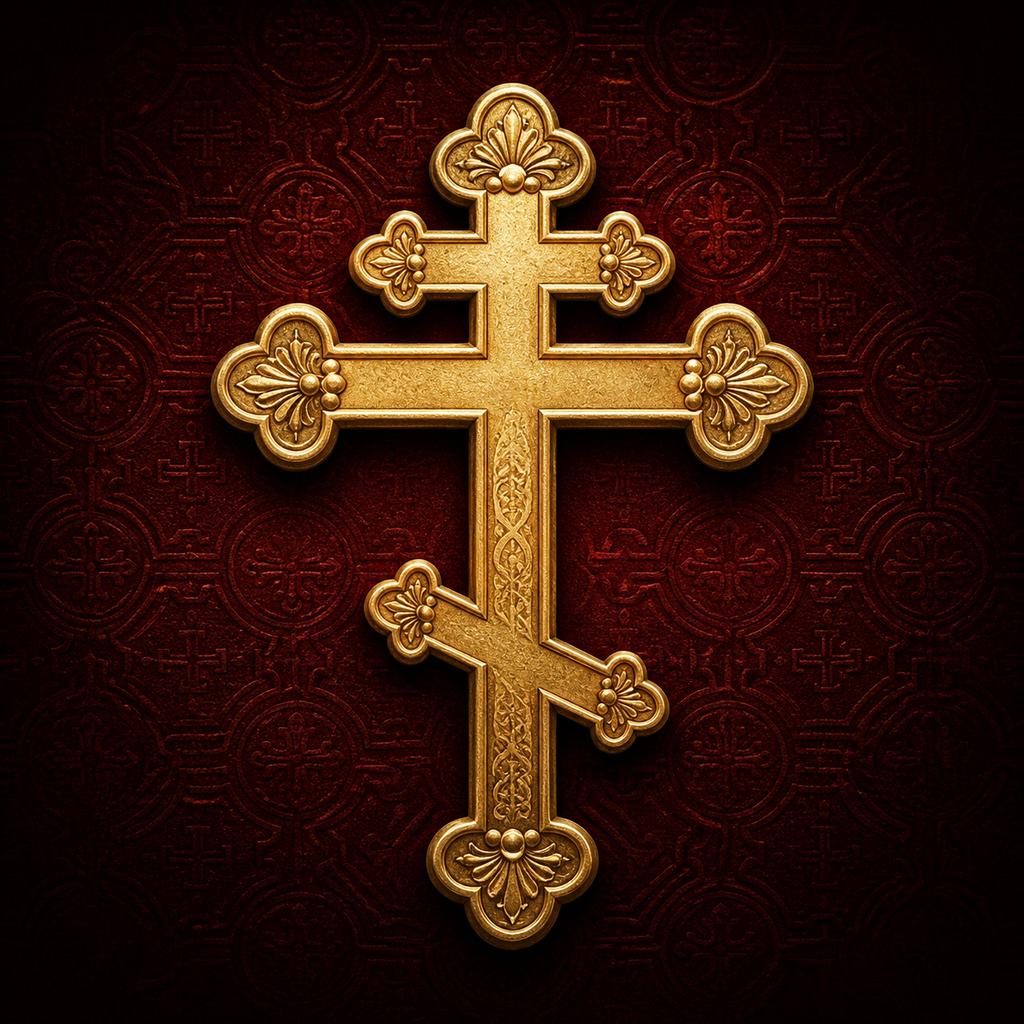

Matins belongs to the morning cycle of Orthodox prayer. In parish life it may be served before the Divine Liturgy, as Orthros in Greek usage, or at other appointed times. In monasteries it is part of the fuller daily cycle.
The service is rich and can feel dense to newcomers. It includes psalms, litanies, canons, hymns for the day, and in certain contexts Gospel readings. On Sundays it is deeply shaped by the Resurrection.
Matins teaches the faithful to wake before God rather than drift immediately into noise. It gives the morning a theological shape: mercy is asked, the saints and feasts are remembered, Scripture is sung, and the light of day becomes a sign of the light of Christ.
The morning service may be called Matins or Orthros depending on parish usage.
Matins teaches morning praise through Scripture, hymnography, saints, feasts, and resurrectional memory.
A newcomer does not need to understand every layer at once. Patient attendance teaches over time.
Morning Prayer
Matins teaches the morning to begin with praise before noise.
The service can feel dense because it carries psalms, canons, hymns, saints, feasts, and resurrectional memory. Its depth is learned by repetition, not by mastering everything at once.
- Listen before analyzing.Newcomers can receive Matins by standing, listening, and noticing recurring themes before trying to decode every rubric.
- Watch the calendar work.The service shows how saints, feasts, tones, Scripture, and the weekly Resurrection cycle meet in prayer.
- Carry the spirit home.Lay morning prayer can echo Matins through psalms, thanksgiving, remembrance of the day, and a sober beginning.
Pastoral note
Do not judge a parish or yourself by whether Matins is served in full. Parish, monastery, Greek, Slavic, and local practices differ. Receive what your parish offers with gratitude and let it shape personal morning prayer.
Morning Architecture
Matins gives first light a Church memory.
The service does not begin the day with private motivation. It wakes the Church through psalms, litanies, troparia, canons, Gospel memory, the Magnificat, and doxology, so morning becomes praise before it becomes productivity.
The sober beginning, especially in fuller forms, teaches the morning to ask mercy before the day rushes into plans.
Saint, feast, tone, season, and resurrectional memory are carried by hymnography rather than left as calendar data.
Psalms, Gospel readings in appointed contexts, canons, and biblical hymns teach the parish to remember together.
Doxology and morning petitions turn first light toward thanksgiving, repentance, and the work that follows.
Orthodox Matins learning sequence
Matins teaches morning praise through Scripture, hymnography, resurrection remembrance, and patient repetition.
Morning Orientation
Matins teaches the morning to remember Christ before the day becomes private activity.
Read Matins through praise, repentance, Scripture, resurrectional memory, saints, feasts, and local parish practice. It is dense because it carries the Church's memory into the first light of the day.
Pastoral Guardrails
Protect Matins from confusion, performance pressure, and shallow productivity spirituality.
Beginners need permission to receive the service slowly. Serious Orthodox learning should explain density without turning the daily cycle into an impossible private program.
Matins, Orthros, and parish practice
English-speaking Orthodox parishes often use the word Matins. Greek Orthodox parishes commonly use Orthros. The names point to the same morning service, though the exact order, length, language, and musical tradition may differ by parish, service book, and jurisdiction.
In some parishes, only parts of Matins or Orthros are served publicly before the Divine Liturgy. In monasteries, the service is usually fuller and more regular. Beginners should not judge parish life by whether every possible part of the cycle is served; the Orthodox daily cycle is received according to local capacity and pastoral reality.
What Matins teaches
| Element | Meaning |
|---|---|
| Morning | The day begins in praise and remembrance of God. |
| Psalms | Scripture gives the service its language of worship. |
| Canons | Hymnography teaches doctrine, feasts, saints, and repentance. |
| Sunday Matins | The Resurrection shapes the Church's weekly morning praise. |
Why Sunday Matins is resurrection-shaped
Sunday is not only a convenient day for church attendance. It is the weekly celebration of the Resurrection. This is why Sunday Matins contains resurrectional hymnography and why the morning service leads naturally toward the Eucharistic gathering of the Divine Liturgy.
The theology is not hidden in a lecture. It is carried by repetition: psalms, troparia, canons, Gospel remembrance, and hymns. Over time, the worshiper begins to hear how the Church reads every morning in the light of Christ's victory over death.
This weekly resurrection shape is one reason Matins matters for people trying to understand Orthodox Sunday worship. The Divine Liturgy is the summit, but it is not surrounded by empty time. The morning already begins to proclaim Christ risen, to remember the saints, and to draw the parish into praise before the Eucharistic offering.
Orthros before the Divine Liturgy
In many Greek Orthodox parishes, Orthros is served before the Divine Liturgy on Sunday morning. A newcomer may arrive during Orthros and wonder whether Liturgy has already begun. Usually the parish schedule will distinguish the two, but the transition can feel seamless because both belong to the same morning movement toward Eucharistic worship.
Orthros prepares the parish by placing Scripture, hymns, saints, the feast, and resurrectional themes before the faithful. The Divine Liturgy is not meant to appear out of nowhere as a stand-alone event. The morning service gathers the heart so that the Eucharistic service is received with attention rather than as a weekly religious appointment.
The Six Psalms and sober beginning
In fuller forms of Matins, the Six Psalms stand near the beginning with a sober and quiet force. They give the service a penitential depth before the brighter movement of praise unfolds. Even when a parish abbreviates the service, the larger tradition reminds us that morning prayer is not only cheerful inspiration. It is also standing before God in need of mercy.
This is a useful correction to modern spiritual habits. Many people want morning prayer to provide energy, positivity, or focus. Matins begins deeper than that. It places the whole person before God: sins, weakness, hope, thanksgiving, fear, and praise. The day is received as mercy before it becomes activity.
Why Matins can feel difficult
Matins is often the service where a beginner first realizes that Orthodox worship is not built like a lecture, concert, or short devotional meeting. It can feel layered because several things are happening at once: the ordinary morning cycle, the weekly tone, the saint or feast of the day, the season of the Church year, and sometimes the preparation for Liturgy.
This density is not a defect. It is how the Church teaches memory. A single service may hold Scripture, doctrine, repentance, the Resurrection, the Theotokos, martyrs, ascetics, and the local parish's living voice. A newcomer does not need to master the structure immediately. Patient attendance is already a form of learning.
Matins and ordinary morning prayer
Parish Matins and personal morning prayers belong together, but they are not the same thing. Matins is the Church's liturgical morning praise; a home prayer rule is usually shorter and shaped to a person's state in life. The public service teaches the personal rule to be less self-centered: the morning is not only about personal motivation, but about praise, repentance, and the remembrance of God's works.
For laypeople, the practical lesson is not to imitate a monastery unrealistically. It is to let the first moments of the day be claimed by God. A short prayer, the sign of the Cross, a psalm, the daily Gospel reading, or a few minutes of silence can carry the spirit of Matins into a workday.
For beginners
Do not worry if you cannot follow every text. Matins often teaches through immersion. Listen for repeated themes: mercy, resurrection, light, repentance, the saint or feast of the day, and the praise of the Holy Trinity.
If you arrive during Matins before Liturgy, enter quietly and do not worry about being late to the beginning of the service. Some people will be praying, lighting candles, or preparing for Communion. Let the service gather you into attention without turning it into a performance.
A visitor path for Orthros or Matins
If Matins or Orthros is your first Orthodox service, expect density. You may hear long psalms, changing hymns, references to saints or feasts, and a rhythm that does not stop to explain itself. That is normal. Orthodox worship is received by repeated presence before it is mastered analytically.
A useful visitor pattern is simple: arrive quietly, stand or sit where you can listen, follow only what you can, and ask local questions afterward. If Matins is served before Liturgy, do not assume the parish is halfway finished or that you have done something wrong by arriving during it. The morning service is drawing the parish toward the Eucharistic gathering.
| Beginner confusion | Helpful interpretation |
|---|---|
| The service feels long. | Matins carries psalms, canons, feast texts, and resurrectional memory. |
| The words change often. | The Church is praying the saint, feast, tone, and season of the day. |
| People arrive at different times. | Parish practice varies; enter quietly and ask local questions later. |
| I cannot follow the book. | Listen first for mercy, light, resurrection, and the repeated shape of prayer. |
The canon and the saint or feast of the day
One reason Matins feels rich is that it often carries the memory of the saint, feast, tone, or season through hymnography. The canon and related hymns do not merely decorate the service. They interpret the day through the Church's memory. A martyr, ascetic, apostle, Theotokos feast, or resurrectional tone becomes part of the morning's prayer.
This is how Orthodox worship teaches without reducing everything to explanation. The faithful hear the same truths in many forms over time: repentance, resurrection, the intercession of the saints, the mercy of Christ, the praise of the Trinity, and the Church's reading of Scripture. A beginner may catch only a few phrases at first, and that is enough.
Canons, tones, and why repetition matters
Matins often depends on patterns that repeat: tones, refrains, psalms, canons, and seasonal hymnography. This repetition is not filler. It trains memory. A truth heard once may remain an idea; a truth sung for years becomes part of the way a person sees the world.
The Octoechos, Menaion, Triodion, and Pentecostarion are not books most beginners need to master immediately, but their presence explains why Matins can feel so layered. The service is carrying the weekly tone, the saint or feast, the season, and the ordinary morning cycle together. Orthodox worship forms people by returning again and again to the same mysteries from different angles.
Matins and the Gospel book
On Sundays and certain feasts, Matins may include a Gospel reading according to the liturgical order. This reminds the faithful that morning praise is not separated from the apostolic witness to Christ. The Gospel is not only studied privately; it is heard within the worshiping Church and surrounded by psalms, hymns, incense, and prayer.
Local practice can differ, especially in how much of the service is served publicly. The safest approach is to receive what the parish offers with gratitude and to ask questions slowly. Matins is a service one grows into rather than a system one masters in a single visit.
Matins in monasteries and parishes
Monastic Matins is often fuller, longer, and more regular than parish Matins. This difference should not be interpreted as failure by the parish or superiority by the monastery. The Church has different settings of prayer. Monasteries keep the daily cycle with a fullness that serves the whole Church; parishes adapt the cycle around families, work, travel, language, and pastoral capacity.
For learners, this distinction prevents discouragement. Seeing an online monastery schedule does not mean a layperson must reproduce it. It means the Church has a complete rhythm of prayer, and each Christian receives from that rhythm according to calling, blessing, and real life.
How Matins can shape a personal morning
Most laypeople will not reproduce Matins at home, and they do not need to. The service still teaches the shape of a Christian morning: praise before productivity, Scripture before noise, repentance before self-justification, and remembrance of the Resurrection before the day becomes crowded.
A simple morning rule can carry this spirit: the sign of the Cross, a short prayer, a psalm or Gospel reading, and a moment to remember the saint or feast of the day. Small faithfulness is better than an ambitious rule that collapses after a week.
Why Matins helps explain Orthodox Daily Prayer
Matins shows why an Orthodox prayer app should not only offer isolated prayers. The morning belongs to a larger memory: Scripture, saints, feasts, tones, resurrectional hymns, and the Church calendar. Even a short personal rule becomes richer when the user knows the day has a liturgical shape.
The app can translate that depth into a usable daily rhythm: a morning prayer, the saint or feast, readings, fasting awareness, and a path back to parish worship. The point is not to compress Matins into a phone, but to let the Church's morning logic inform daily prayer.
Matins and the app's morning screen
A morning screen in an Orthodox app should not feel like a motivational dashboard. Matins teaches a different order: Christ, resurrection, Scripture, saints, repentance, and praise before productivity. The app can echo that order by showing the day's prayer, readings, saint or feast, and fasting context without overwhelming the user.
This is why restraint matters. The goal is not to recreate the full service on a small screen. The goal is to let the Church's morning memory shape the user's first attention: pray, read, remember, and then enter the day with mercy.
Begin with received prayer before tasks and feeds take over.
Let the Gospel or appointed reading anchor attention in Christ.
Notice the Church's calendar rather than starting from private mood.
Carry the morning into work, family, study, and service.
Where Matins fits
Matins is best understood beside Vespers, the Hours, Sunday worship, and the daily prayers that shape personal life.
Source note
This guide follows Orthodox liturgical teaching and the Orthodox Church in America's explanation of Matins. Parish, Greek, Slavic, and monastic practice can differ in timing and fullness.
Questions people ask
Is Matins the same as Orthros?
In Greek usage, Orthros is the morning service commonly called Matins in English. Local books and parish language may affect the name visitors see on the schedule.
When is Matins served?
It is a morning service, though parish timing can vary. It is often served before Divine Liturgy in some communities, while monasteries may keep it as part of a fuller cycle.
Why is Matins so long?
Its fullness comes from psalms, canons, hymns, feast texts, and the Church's detailed morning praise. Some parishes abbreviate or select portions according to local practice.
Should a beginner follow every word?
No. Following the whole service takes time. Begin by listening for mercy, light, resurrection, the saint or feast, and repeated prayers.
Can a non-Orthodox visitor attend Matins or Orthros?
Yes. Visitors may attend respectfully, listen, and observe. Matins can be dense, so it is normal not to understand every part immediately.
How does Matins shape personal morning prayer?
Matins teaches the morning to begin with praise, Scripture, repentance, resurrectional memory, and remembrance of the saint or feast, even when a layperson keeps only a short home rule.
Source Trail
Read this topic with the Church, not only the internet.
These links give a cautious path for checking the topic further. They do not replace parish worship, confession, pastoral guidance, or the calendar used by your bishop and local parish.
Morning Praise
Begin the day in the Church's rhythm.
Orthodox Daily Prayer helps keep morning prayer, Scripture, saints, fasting awareness, and the calendar together.