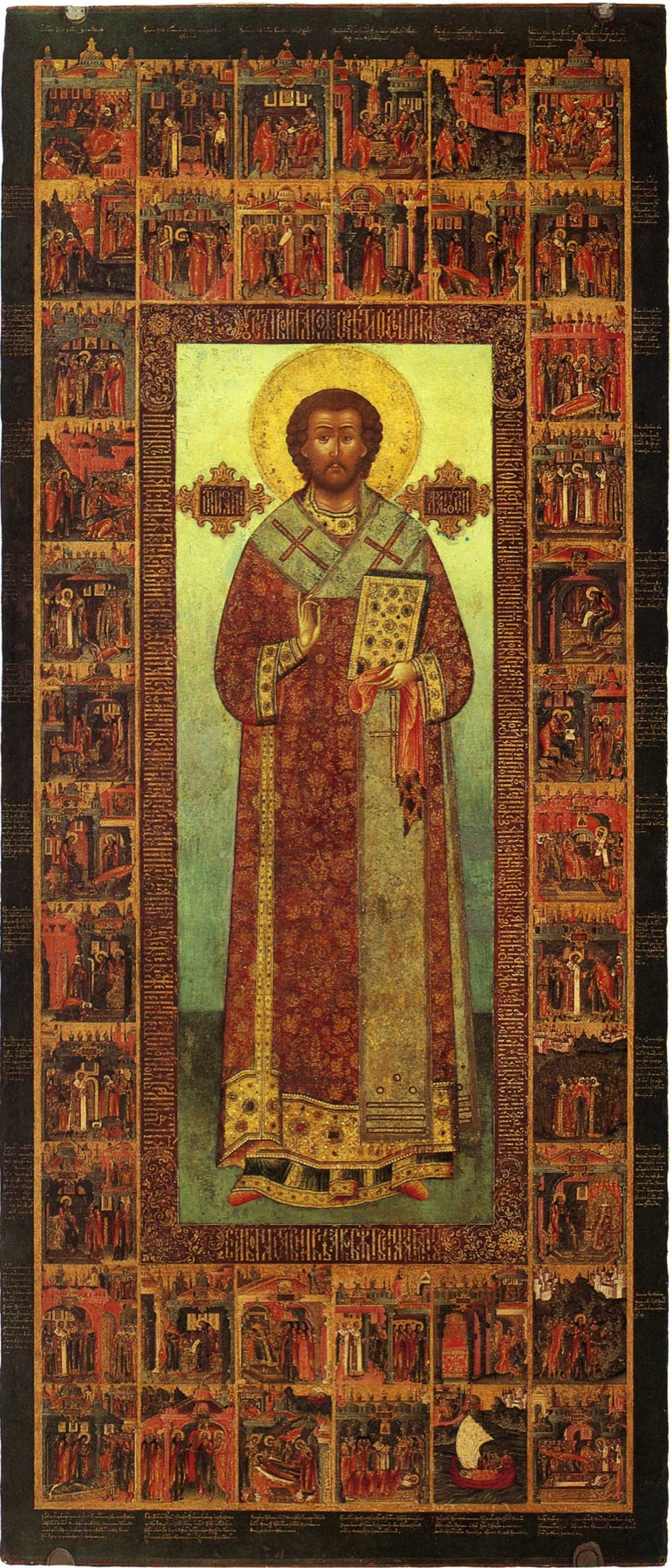
Many Orthodox Christians receive or use a Christian name connected to a saint, especially at baptism or chrismation. The feast day of that saint may become the person's name day. In many Orthodox cultures, name days are celebrated with prayer, church attendance, hospitality, and remembrance of the saint.
Patron saints should be understood inside the communion of the Church. Orthodox Christians ask saints to pray for them because the saints are alive in Christ, not because saints replace Christ. All honor given to saints is finally directed to God, who is wondrous in His saints.
A patron saint is received inside the Church.
The saint is not a mascot, aesthetic identity, or private spiritual brand. Patronage belongs to baptismal life, prayer, parish guidance, and communion in Christ.
The exact saint matters.
Many names have several saints. The patron should be connected to a specific saint, feast day, parish calendar, and living practice.
Intercession leads to imitation.
Asking a saint's prayers should lead to repentance, humility, mercy, worship, and steadier Christian life.
A Name Received, Not Performed
A patron saint should deepen baptismal life, not become a religious personality project.
The healthiest approach is simple: begin with your given or baptismal name, identify the saint, ask your priest, keep the feast with prayer, and let the saint's life call you toward Christ.
If your given name has an Orthodox saintly form, that may be the most stable path.
Do not assume one universal date for common names such as John, Nicholas, Mary, George, or Anna.
Converts and catechumens should handle baptismal names with the priest and sponsor.
Attend services if possible, read the saint's life, ask intercession, and practice hospitality without vanity.
Orthodox patron saint learning sequence
Use this order before searching random name lists. It keeps the question ecclesial instead of aesthetic.
Patron Saint Decision Guide
The right question is not: which saint fits my personality?
A patron saint is received as part of Orthodox life, not assembled as a private identity. The safest path begins with the name already carried, the specific saint, the parish calendar, and the priest's guidance, then turns the feast day into prayer.
Patron Saint Core Map
A patron saint is received in the Church, not selected as a spiritual aesthetic.
Orthodox patronage becomes healthy when it stays connected to baptismal life, a specific saint, the parish calendar, prayer, intercession, imitation, and pastoral guidance. It becomes weak when it turns into personality matching, online identity, or religious collecting.
Name Reception Matrix
The best answer depends on how the name is being received.
A child born into an Orthodox family, a catechumen preparing for reception, a person with a clear saintly name, and someone with no obvious Orthodox form need different kinds of care. The stable center is still the same: priest, parish, saint, calendar, prayer.
Patronage Reception System
A serious patron-saint guide must help people receive a saint without inventing an identity.
Patronage becomes Orthodox when it is tied to baptismal life, a specific saint, parish guidance, calendar practice, prayer, and imitation of holiness. It becomes distorted when the saint is treated as a mascot, aesthetic, personality match, or private spiritual brand.
A given name with a saintly form can be a humble path. A dramatic new name is not automatically more Orthodox.
Common names may belong to many saints, so the specific saint, feast day, calendar, and local custom matter.
Catechumens, converts, children, and uncertain cases should involve the priest, sponsor, family memory, and parish practice.
The name day should lead to the saint's life, intercession, gratitude, Liturgy where possible, and concrete repentance.
Patronage is stable over years. It should produce humility and mercy rather than novelty, anxiety, or online performance.
Orthodox Daily Prayer can connect saints, name days, icons, Scripture, and prayer while pointing uncertain cases back to parish life.
Patronage Stability Map
Patronage matures when the saint becomes a steady companion in repentance, not a changing identity label.
The Orthodox instinct is not to collect impressive saints, chase rare names, or build a dramatic self-image. The better path is quieter: receive a name, keep the feast, ask intercession, read the life again, and let the saint correct the heart over years.
Given names, baptismal names, priestly counsel, sponsors, family memory, and parish practice should come before personal branding.
Common names need a real saint, feast day, calendar, and life, otherwise patronage becomes vague religious decoration.
Name days should call the person back to Liturgy where possible, thanksgiving, intercession, almsgiving, and humility.
“Holy Saint N., pray to God for me” can teach more stability than restless searches for a more impressive saint.
Priest, sponsor, services, confession, Communion, icons, and the calendar keep devotion from becoming private fantasy.
If the saint teaches mercy, patience, courage, repentance, or confession of Christ, the remembrance should become practice.
Personal, parish, and family patrons
| Type | Meaning |
|---|---|
| Personal patron | A saint connected to one's Christian name, baptismal name, or spiritual devotion. |
| Parish patron | The saint or feast to whom a parish church is dedicated. |
| Family patron | In some cultures, especially Serbian Slava, a family keeps a patron saint feast. |
| Local patron | A saint deeply connected to a region, monastery, city, or people. |
Given name, baptismal name, and Christian identity
In many cases the simplest path is to begin with the name a person already bears. If the name is connected to an Orthodox saint, biblical figure, or saintly form in another language, the baptismal or patron connection may already be close at hand. This can keep the choice humble and stable.
Sometimes a convert's civil name is not obviously connected to an Orthodox saint, or the person may have several possible saintly forms. In that case the question should be handled with the priest and sponsor, not by anxiety or internet performance. The name should help the person enter Church life more deeply, not create a private religious persona.
One name can point to many saints
Names such as John, Nicholas, George, Mary, Katherine, Michael, Demetrios, Anna, Elizabeth, and many others may point to more than one saint. The patron saint is therefore not always identified by the first name alone. The actual saint and feast day matter.
This is why name-day questions can become confusing. A person named John might be connected to the Forerunner, the Theologian, Chrysostom, Climacus, of Damascus, of Kronstadt, or another saint. A calendar search can begin the work, but parish guidance clarifies the actual patron.
How to choose or receive a patron saint
Converts should not treat the choice of a patron saint like branding. A name is received with prayer, humility, and pastoral guidance. Sometimes a person keeps a given name if it already has a saintly form; sometimes a baptismal name is chosen with the priest.
Good reasons include a saint connected to your name, parish, family, spiritual struggle, or genuine devotion. Bad reasons include aesthetic obsession, internet identity, exoticism, or choosing a saint mainly to signal a personality type.
The patron saint is not chosen to create an online identity. The saint is received as an intercessor and teacher of repentance. A convert who feels drawn to a dramatic saint should still ask whether that devotion is stable, humble, and connected to actual parish life.
A patron saint decision path
A serious decision path is usually simpler than people expect. Start with the name you already carry, then ask whether it has a recognized Orthodox saintly form. If it does, that may be the most stable answer. If it does not, the priest may help identify a baptismal name or patron saint that can be received without theatricality.
| Situation | Stable Orthodox instinct | What to avoid |
|---|---|---|
| Your given name already has a saint. | Consider keeping the name and learning the exact saint and feast. | Rejecting a simple path because it feels less dramatic. |
| Several saints share the name. | Ask which saint your parish, priest, or family tradition identifies. | Choosing only the most famous or visually appealing option. |
| Your name has no obvious Orthodox form. | Receive guidance about a baptismal name with humility. | Building a religious persona around an exotic name. |
| You feel drawn to a saint. | Read the life, pray, and ask whether the devotion produces repentance. | Confusing emotional intensity with spiritual stability. |
| Better question | Why it helps |
|---|---|
| Is there already a saint connected to my name? | It avoids treating patronage as personal branding. |
| Which saint's life can teach repentance? | It focuses attention on holiness, not drama. |
| What does my priest recommend? | It keeps the decision inside parish life. |
| Which feast day will I actually keep? | It connects the name to calendar, prayer, and worship. |
A patron saint is a relationship of prayer, not a brand.
The safest Orthodox instinct is to receive a patron saint humbly inside the Church. A saint is not chosen to decorate the self, signal taste, or build an online identity. The saint becomes a companion in repentance: someone whose prayers you ask, whose feast you remember, and whose life quietly corrects your own.
For converts and catechumens
Catechumens often feel pressure to find the perfect Orthodox name. That pressure can become unhelpful. The Church does not ask a person to invent a dramatic religious identity; she receives the person into Christ. If your given name already has a saintly form, that may be a beautifully simple path. If not, your priest may help you choose a baptismal name connected to a saint whose life can sustain prayer over time.
A good conversion question is not "Which saint feels most impressive?" but "Which name can I receive without theatricality, keep in prayer, and carry faithfully for the rest of my life?" Patronage becomes real through years of ordinary practice: services, confession, Communion, reading, fasting, forgiveness, and returning to prayer after distraction.
Begin by checking whether your existing name has a biblical, Orthodox, or saintly form.
Ask your priest before finalizing a baptismal name or feast day.
Read the saint's life for repentance, endurance, mercy, and faithfulness.
Choose a date you can actually remember in prayer and parish life.
For children and families
In Orthodox families, a child's patron saint can become one of the earliest ways a child learns that the Church is personal. The name day can be kept with a short prayer, a candle, an icon, a simple explanation of the saint's life, and a blessing from the parish whenever possible. It does not need to become a large event to be meaningful.
Parents should avoid making patron saints into pressure or spiritual comparison. A child does not need an impressive saint story to have a real patron. The most important lesson is that every Christian life is called to holiness, and that the saints are family in Christ rather than distant religious figures.
How to pray with a patron saint
Prayer to a patron saint should stay simple and ecclesial. Many Orthodox Christians ask, "Holy Saint N., pray to God for me." They may read the saint's troparion, kontakion, or life on the feast day, keep an icon in the prayer corner, or remember the saint during a morning or evening rule. The goal is not emotional intensity every time, but faithful remembrance.
A practical weekly pattern can be modest: learn the saint's feast day, read one reliable life, ask the saint's prayers once a day for a week, and notice one virtue to imitate. If the saint was merciful, practice mercy. If the saint endured suffering, ask for patience. If the saint defended the faith, ask for humility and courage rather than argumentativeness.
When devotion becomes unhealthy
Devotion to a patron saint can become distorted when it turns into obsession, fear, magical thinking, ethnic rivalry, or identity performance. Saints should not be used as lucky charms, internet avatars, or weapons against other Christians. They should make a person more prayerful, more repentant, more patient, and more rooted in the parish.
If a saint's story causes anxiety, pride, or confusion, slow down and ask for guidance. The Orthodox path is not private intensity. It is life in the Church, under pastoral care, with prayer that becomes steady over time.
How to keep patronage stable over years
A patron saint becomes real through repetition. The name is remembered at prayer, the feast day returns each year, the saint's life is read again, and the person slowly notices what virtue is being asked of them. Stability matters more than novelty.
This is why changing saints, collecting patronages, or constantly searching for a more impressive saint can become spiritually unhelpful. A quiet, ordinary patronage kept for years may teach more than a dramatic devotion that fades after a few months. The question is not whether the saint still feels exciting, but whether the remembrance keeps leading back to Christ, repentance, and parish life.
How to keep a name day
Many faithful attend services when possible, read the saint's life, ask the saint's prayers, give thanks, and share hospitality. The form varies by culture. In some places the name day is more important than a birthday; in others it is kept quietly.
A name day can be kept without performance: light a candle, pray before the icon, read the saint's life, give alms, attend a service if available, or invite others with gratitude. The point is not to display devotion but to remember that holiness is personal and possible.
The name day should be checked according to the saint, the parish calendar, and the calendar practice of the local Church. Old Calendar and New Calendar differences can affect the civil date, and some saints have more than one commemoration. Exactness matters most when the day affects worship, fasting, a family custom, or a baptismal record.
Patron saints without superstition
Orthodox Christians do not treat patron saints as private spiritual luck, magical protectors, or replacements for Christ. A saint's intercession is part of the communion of the Church. The faithful ask for prayers, honor the saint's memory, and seek to imitate the saint's faithfulness to God.
It is also possible to have several meaningful saintly connections: a baptismal patron, a parish patron, a family patron, a local saint, or a saint whose life has helped one's repentance. These relationships should deepen prayer, not create confusion or spiritual collecting.
What to avoid when choosing a patron saint
A patron saint should not be chosen mainly because the icon looks beautiful, the story feels intense, the name sounds rare, or the saint seems useful for an online identity. These motives can appear pious while still keeping the self at the center.
A healthier sign is quiet attraction joined to humility: the saint's life makes you want to repent, pray, endure, forgive, worship, and become more faithful in ordinary life. If a devotion makes you proud, theatrical, argumentative, or detached from parish life, it needs correction.
If you do not know your patron saint
Some people grow up with a name but no clear knowledge of the specific saint. Others enter Orthodoxy from a non-Orthodox background. The best first step is simple: ask the priest, look at the parish calendar, and learn which saint is connected to the name in your local community.
If several saints are possible, do not force a quick answer from a search engine. Read, pray, ask, and let the decision happen inside the Church rather than in isolation.
Parish patrons and family patrons
A parish patron is the saint or feast to whom a church is dedicated. The parish's patronal feast is not merely an anniversary; it is part of the community's identity in worship. A family patron can also exist in certain Orthodox cultures, most visibly in Serbian Slava, where the patron saint is kept as a family feast passed through generations.
These forms of patronage are related but not identical. A personal patron saint belongs to baptismal identity and name-day remembrance. A parish patron shapes the worshipping community. A family patron may carry inherited household memory. All should lead toward Christ, not replace Him.
Patron saints and daily attention
A patron saint is remembered best when the remembrance becomes ordinary and faithful. This can mean a short prayer, reading the saint's life, keeping the feast day, greeting someone on a name day, or noticing how the saint's witness corrects one's own habits.
A digital calendar can help with memory, but it cannot create devotion by itself. Orthodox Daily Prayer can place saints, Scripture, fasting awareness, and daily prayer in one rhythm; the actual relationship with a patron saint still grows through parish worship, confession, Communion, humility, and time.
Patron saint learning sequence continued
Patronage Context
A patron saint is received through prayer, not selected as an aesthetic identity.
This topic sits at the meeting point of baptismal names, the saints, icons, parish life, and the Church calendar. Read the surrounding guides when a patron saint question becomes practical.
If you are preparing for baptism or chrismation, ask your priest about names and local practice. Online lists can help you learn, but reception into the Church is pastoral and parish-based.
Source note
This article follows Orthodox teaching on saints and intercession and directs readers to official saint-life calendars. Cultural practices such as Slava or name-day customs are not identical in every Orthodox community.
Questions people ask
Do Orthodox Christians have patron saints?
Yes. Many have a personal patron saint connected to their Christian name, baptismal name, or spiritual life.
Is a patron saint the same as worshiping a saint?
No. Worship belongs to God alone. Orthodox Christians honor saints and ask their intercessions because they are alive in Christ.
What is a name day?
A name day is the feast of the saint whose name a person bears, often kept with prayer and hospitality.
Can I have more than one patron saint?
A person may have a baptismal patron and also a parish, family, or local saint who is especially meaningful. This should deepen prayer rather than become spiritual collecting.
What if my birth name is not obviously Orthodox?
Ask your priest. Some names have saintly forms or related Christian names; in other cases a baptismal name may be received during conversion.
How should a convert choose a patron saint?
A convert should choose or receive a patron saint with the guidance of the parish priest, sponsor, and local practice. The choice should be rooted in baptismal life, prayer, repentance, and stability rather than personal branding.
Can a patron saint change later?
A baptismal patron is normally treated as stable. A person may develop devotion to additional saints, but changing a patron saint is not something to handle casually or privately; ask your priest.
Should I choose a patron saint because I like the icon or name?
No. Beauty can draw attention, but a patron saint should be received through prayer, parish guidance, and a stable connection to repentance rather than aesthetic taste.
What if my priest suggests keeping my given name?
That can be a very Orthodox and humble path if the name has a saintly form or Christian connection. A dramatic new name is not more spiritual than faithful reception of a simple one.
Is a patron saint a spiritual personality match?
No. A patron saint is received in the life of the Church as an intercessor and witness to Christ. The question is not personality matching but prayer, repentance, stability, and parish guidance.
Source Trail
Read this topic with the Church, not only the internet.
These links give a cautious path for checking the topic further. They do not replace parish worship, confession, pastoral guidance, or the calendar used by your bishop and local parish.
Saints In Daily Life
Remember saints as part of prayer, not trivia.
Orthodox Daily Prayer helps keep saints, prayer, Scripture, and the Church calendar close to everyday attention.