Orthodox Christianity is learned most deeply in the Church: by attending services, praying, listening, asking questions, reading patiently, and speaking with a priest. This page gives a simple beginning, not a replacement for parish life.
Begin in worship.
The first serious step is not winning arguments online; it is standing in a canonical Orthodox parish and learning how the Church prays.
Learn slowly enough to change.
Orthodoxy forms attention, repentance, humility, and sacramental belonging. It should not become a new aesthetic identity overnight.
Keep real questions local.
Fasting, catechesis, confession, Communion, and family situations belong with a parish priest, not only with articles or videos.
A beginner does not need to become intense
Many people first discover Orthodoxy through icons, chant, history, or online discussion. Those can awaken interest, but the normal beginning is quieter: attend services, read the Creed and the Gospels, ask the priest, pray a little, and avoid turning early enthusiasm into judgment of other people.
First Month
A calm first month is better than a frantic first week.
Orthodoxy is not entered by collecting every controversy, calendar debate, or fasting rule immediately. A grounded beginning builds contact with worship, Scripture, prayer, and a real parish.
- Visit, or plan a visit.Find a canonical Orthodox parish, attend quietly, and do not worry about understanding every movement in the service.
- Read the Creed and one Gospel.Let the basic confession of faith and the words of Christ come before online arguments and secondary issues.
- Begin a tiny prayer rhythm.Use the Lord's Prayer, a short morning or evening prayer, and a few names for intercession rather than an intense self-designed rule.
- Ask the parish how to learn.Catechism, reading lists, fasting, confession, and reception questions belong in the local Church, not only in internet research.
Orthodox Life
The whole Orthodox life is one connected path, not a pile of religious topics.
Beginners often meet Orthodoxy through one doorway: icons, chant, fasting, saints, history, or online apologetics. A healthier map keeps those subjects connected to worship, doctrine, Scripture, repentance, sacraments, and parish life.
Start Where You Are
A good beginner page should send people to the next faithful action.
Some readers need a first visit plan. Others need to understand saints, fasting, calendars, or why the Church is not simply a content library. These doorways keep the next step practical and connected to real Orthodox life.
- If you have never visitedRead the first-visit guide, then attend Vespers or Divine Liturgy without trying to perform expertise.First visit guide
- If doctrine feels confusingBegin with the Creed and the Holy Trinity before trying to compare every Christian tradition at once.Holy Trinity guide
- If practices look strangeStudy icons, saints, fasting, and prayer as parts of worship and repentance, not as exotic customs.Icons guide
- If you may want to convertMove slowly toward parish catechesis. Becoming Orthodox is ecclesial formation, not a private online decision.Catechumen guide
Beginner Routes
Choose a beginner route before you choose an opinion.
Most beginners do not need more intensity. They need the right first doorway. Start with the question closest to your real situation, then let the path return you to worship, prayer, Scripture, and parish guidance.
Beginner Map
Start with worship, not internet certainty.
A serious Orthodox beginning is concrete: visit a parish, hear the Creed, learn the Gospel, ask local questions, and let prayer become steady before opinions become loud.
Orthodoxy is not first encountered as a set of takes. It is prayed, sung, confessed, and received in the Church.
Plan a first visitThe Nicene Creed is a compact map of Orthodox faith: Trinity, Incarnation, Church, baptism, resurrection, and the age to come.
Read the Creed guideA canonical parish protects beginners from building a private Orthodoxy from fragments, aesthetics, and comment threads.
Understand parish lifeIf you want to become Orthodox, the next step is not speed. It is formation in worship, doctrine, prayer, repentance, and community.
Read the catechumen pathFormation
A good beginning becomes quieter and more truthful.
Orthodox learning should lead a person toward Christ, worship, repentance, humility, and parish stability. If learning makes someone suspicious of every parish, addicted to controversy, or eager to perform certainty, the order has gone wrong.
- Do not receive Communion yetVisitors and inquirers should not receive Holy Communion. Ask the priest what is appropriate in that parish.
- Do not start with severityFasting, prayer rules, confession, and family situations need pastoral guidance. Extreme private rules are not a mature beginning.
- Do not make ethnicity the centerLanguage, music, food, and local customs can be beautiful, but Orthodoxy is the Church's life in Christ, not an aesthetic costume.
- Do returnRepeated attendance teaches more than one dramatic first impression. Orthodoxy is understood slowly through worship, Scripture, and ordinary faithfulness.
Discernment Ledger
A serious beginner learns to separate Orthodox life from online intensity, aesthetics, and private certainty.
Many people discover Orthodoxy through beautiful images, chants, history clips, or arguments. A healthy beginning receives those interests carefully and then moves toward worship, a canonical parish, modest prayer, trusted sources, and pastoral guidance.
Use official parish directories where possible, then confirm service times and visitor expectations directly with the parish.
One unfamiliar Liturgy can feel overwhelming. Several visits reveal the rhythm, Scripture, hymns, gestures, and patience of the Church.
Use online material that sends you back to Scripture, worship, repentance, and parish life rather than suspicion or performance.
A short prayer rule, a Gospel reading, and regular services are healthier than sudden severity that cannot be kept peacefully.
Language, food, music, and inherited parish habits can be beautiful, but Orthodoxy is life in Christ, not a costume.
The better signs are patience, repentance, prayer, willingness to listen, and love for real people in an actual parish.
Orthodox Christianity beginner learning sequence
A healthier beginning moves from worship to doctrine, prayer, parish stability, and catechesis.
Begin with worship
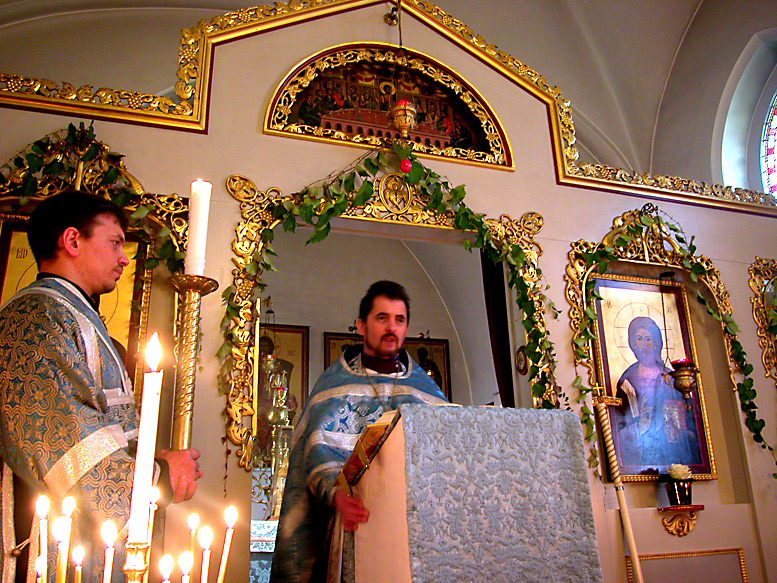
If you are curious about Orthodoxy, visit a canonical Orthodox parish for the Divine Liturgy. Do not worry if you do not understand everything. Orthodox worship teaches through Scripture, hymns, icons, incense, gestures, silence, and the gathered prayer of the Church.
A first visit is not an exam. You can stand quietly, observe, and let the service carry you before trying to decode every gesture. The Divine Liturgy is dense because it is not a lecture. It is the prayer of the Church: Scripture proclaimed and sung, thanksgiving offered, the Eucharist prepared, and the faithful gathered in Christ.
If Sunday Liturgy feels overwhelming, a Saturday Vespers service can be a gentler first doorway. It is usually quieter in many parishes and easier for a first conversation afterward. Either way, the goal is not instant mastery but repeated exposure to the worshipping life of the Church.
What to learn first
| Topic | Why it matters |
|---|---|
| The Holy Trinity | Orthodox prayer is directed to the Father, through the Son, in the Holy Spirit. |
| The Incarnation | The Son of God truly becomes man; this shapes icons, feasts, salvation, and worship. |
| The Divine Liturgy | The Church's central worship gathers Scripture, thanksgiving, offering, and Eucharist. |
| Scripture and Tradition | The Bible is read within the living faith, worship, councils, and saints of the Church. |
| Prayer and repentance | Orthodoxy is not only information; it is a way of healing and communion with God. |
What Orthodox Christianity is not
Orthodoxy is not merely an ancient aesthetic, ethnic identity, internet ideology, or stricter version of generic Christianity. It is the life of the Church: worship of the Holy Trinity, confession of Christ, sacramental communion, repentance, Scripture, Holy Tradition, saints, prayer, fasting, mercy, and parish life under a bishop.
This matters for beginners because many people first encounter Orthodoxy through icons, chant, architecture, calendar debates, or social media. Those can open curiosity, but they are not the center. The center is Christ and life in His Church.
Begin with the Gospel
The center is Jesus Christ: His Incarnation, Cross, Resurrection, Ascension, and life given to the Church.
Learn inside worship
Orthodox doctrine is not detached theory. It is confessed in the Creed, sung in services, and lived sacramentally.
Let depth come slowly
The safest beginning is stable attendance, modest prayer, serious reading, and pastoral guidance, not spiritual intensity.
What to do during a first service
Arrive a little early if possible, dress modestly without anxiety, silence your phone, and stand or sit where you can observe without feeling exposed. Do not receive Holy Communion unless you are an Orthodox Christian prepared to commune according to parish practice. If people venerate icons, light candles, or cross themselves, you may observe respectfully without copying everything immediately.
After the service, introduce yourself simply if there is a chance. Say that you are visiting and learning. Many parishes have coffee hour or a place where visitors can ask questions. If the priest is busy, ask whether there is an email, catechism class, or time to talk.
A simple first month
Attend the Divine Liturgy more than once. Read the Nicene Creed slowly. Begin with a small morning or evening prayer. Read a Gospel passage. Ask the priest what catechism or introductory book your parish recommends. Avoid building your understanding only from short videos or comment threads.
A first 30-day path that stays grounded
For the first week, simply visit or plan a visit to a canonical Orthodox parish and read the Nicene Creed without trying to solve every historical question. In the second week, attend again if possible, notice the repeated prayers, and read one Gospel chapter a day. In the third week, ask the priest or parish contact how inquirers usually learn there. In the fourth week, begin a small daily prayer rhythm that you can actually keep.
This pace may sound modest, but it is healthier than collecting controversy. Orthodox Christianity is not entered by mastering every jurisdictional, calendar, or fasting debate. A person begins well by becoming teachable, stable, prayerful, and present in the Church.
A serious first six months
After the first visits, the next step is not to collect opinions. It is to become stable: attend one parish regularly, learn the order of services, read the Gospel, ask about catechesis, and begin a modest rule of prayer. If you are married, have children, live with family, or come from another Christian background, speak honestly with the priest about your real situation.
| Stage | Healthy focus | Risk to avoid |
|---|---|---|
| First visits | Observe worship, meet the parish, ask basic questions. | Judging everything from one unfamiliar service. |
| Early learning | Creed, Gospel, Divine Liturgy, icons, saints, prayer, fasting. | Replacing catechesis with online arguments. |
| Parish stability | Regular attendance, priestly guidance, confession questions, catechism. | Church-shopping for an aesthetic or ideology. |
| Catechumenate | Formation in faith, worship, repentance, sacraments, and community. | Treating reception into the Church as personal branding. |
How catechesis usually feels
Catechesis is not only information transfer. It is formation in worship, doctrine, prayer, repentance, sacramental life, and parish belonging. A catechumen learns the Creed, Scripture, the Divine Liturgy, fasting, confession, Communion, saints, icons, and the practical life of the local parish.
The length and shape of catechesis varies by parish and bishop. That variation should not be treated as suspicious. A priest may slow someone down because the person needs stability, family conversations, healing from previous religious wounds, or time to learn how to attend services faithfully. Reception into the Church should not be rushed as a personal milestone.
What not to do at the beginning
Do not start by debating calendars, jurisdictions, political identity, internet controversies, or the strictest fasting rule you can find. Those topics may matter in their proper place, but they are not the doorway into Orthodox life. Begin with Christ, worship, repentance, prayer, and the local parish.
Also avoid treating Orthodoxy as a personality change. You do not need a new online persona, a sudden ethnic costume, or a dramatic public declaration. A quieter path is usually healthier: show up, pray, read, listen, ask, repent, and return.
A better beginner path
This route keeps beginners connected to the whole Orthodox life instead of isolated topics.
Three pillars for the first season
A beginner can become overwhelmed because Orthodoxy is wide: theology, worship, saints, calendars, fasting, icons, Scripture, languages, history, and parish customs. The first season should be simpler. Build three pillars: attend worship, pray a small rule, and ask local questions. Those three habits keep learning connected to real life.
Attendance teaches the body and attention. Prayer teaches dependence on God. Local questions keep the person from building a private version of Orthodoxy from fragments. If a beginner keeps those pillars, deeper study becomes safer because it has somewhere to land.
How to stay sane online
Online Orthodox content can be useful, especially when it points back to Scripture, worship, reliable sources, and parish life. It becomes unhealthy when it rewards suspicion, outrage, aesthetic fantasy, or contempt for ordinary people. A beginner should measure online learning by its fruit: does it lead to prayer, humility, patience, and real Church life?
A good rule is simple: let online learning answer concrete questions, then return to the parish. If a video makes you despise ordinary parishes, distrust every priest, mock other Christians, or feel spiritually superior after two weeks of research, it is not helping you become Orthodox.
How to recognize a healthy beginning
A healthy beginning usually becomes quieter, not louder. The person starts attending services, asking normal questions, praying a little, reading Scripture, and becoming less addicted to controversy. The first signs of real growth are often patience, humility, steadiness, and a willingness to be taught.
An unhealthy beginning often feels urgent and suspicious: every parish is judged immediately, every custom becomes a test, and every online debate feels spiritually necessary. Orthodoxy is not learned well through panic. It is received through worship, repentance, catechesis, and time.
Questions beginners ask
Do I need to understand everything before visiting?
No. Visiting respectfully is part of learning. Orthodox worship is dense, and understanding grows slowly through repeated attendance.
Should I start fasting immediately?
Begin carefully and ask a priest. Fasting is part of Church life, but beginners should avoid extreme rules without pastoral guidance.
What should I read first?
Start with the Gospels, the Nicene Creed, a parish-recommended catechism or introduction, and the service texts you hear in church.
What is the most important first step?
Visit a canonical Orthodox parish, attend services patiently, and ask the priest how to begin learning in that local community.
Is Orthodox Christianity mainly ancient tradition?
Orthodoxy is ancient, but it is not nostalgia. Holy Tradition is the living apostolic faith of the Church: worship, doctrine, Scripture, sacraments, saints, councils, repentance, and life in Christ.
How do I know if I am learning too much online?
If online learning makes you suspicious of every parish, eager to argue, contemptuous of other people, or detached from worship and prayer, it is becoming unhealthy.
How do I know whether a parish is canonical?
Use official diocesan or assembly parish directories where available, look for communion with a recognized Orthodox bishop, and ask the parish directly if you are unsure. A parish should connect you to the worshiping Church, not to a private personality or isolated group.
How the app fits
Orthodox Daily Prayer can help a beginner keep a quiet daily rhythm with prayers, Scripture, fasting reminders, and church-year orientation. It should support parish life, not replace it.
The best use is practical: remember morning and evening prayer, read Scripture, notice fasting seasons, learn saints and feast days, and keep a simple rhythm between parish services. The app should make ordinary prayer easier, not make a beginner feel that Orthodoxy is a private project on a screen.
Source note
This beginner guide follows a conservative order used across Orthodox catechetical life: begin with worship, the Creed, Scripture, prayer, parish attendance, and priestly guidance before advanced controversies.
Source Trail
Read this topic with the Church, not only the internet.
These links give a cautious path for checking the topic further. They do not replace parish worship, confession, pastoral guidance, or the calendar used by your bishop and local parish.
Start Gently
Build a daily rhythm without drowning in noise.
Orthodox Daily Prayer keeps prayer, Scripture, fasting awareness, saints, and the Church calendar together in one quiet place.
This guide is introductory. If you want to become Orthodox, the normal path begins with a parish, a priest, catechesis, and reception into the Church according to local pastoral practice.