The Orthodox Church confesses one divine nature and three divine Persons. The Father is unbegotten, the Son is begotten of the Father, and the Holy Spirit proceeds from the Father. This faith is confessed in the Symbol of Faith and lived in prayer, baptism, worship, and the sacraments. The doctrine of the Trinity is not an optional advanced topic; it is the heart of Christian worship.
No tritheism
Orthodoxy does not confess three divine beings. The Father, Son, and Holy Spirit are one God.
No masks
The Persons are not roles, costumes, or moods of one person. They are truly distinct without division.
Doctrine protects prayer
Trinitarian precision exists so that Christian worship of Christ and the Holy Spirit remains truthful.
Doctrine For Worship
The Trinity is not a puzzle to solve, but the living God the Church worships.
Orthodox language about essence, Persons, begetting, and procession protects prayer from distortion. It should lead to reverence, not clever analogies.
The Father, Son, and Holy Spirit are not three gods or separate divine beings.
The Father is not the Son, the Son is not the Spirit, and the Spirit is not a mere force.
The Church's worship gives the safest language for speaking of the Trinity.
Most easy comparisons collapse into modalism, tritheism, or confusion.
Trinity Discernment Guide
Trinitarian doctrine is the grammar of Orthodox worship.
The doctrine becomes intelligible when six realities stay together: one God, three Persons, the Creed, baptism, worship of Christ, and the Holy Spirit as Lord. Separated from prayer, it becomes a puzzle; loosened from doctrine, worship loses its truth.
Trinity Core Map
Orthodox Trinitarian faith begins in worship, not in clever analogies.
The Church confesses one God: the Father, the Son, and the Holy Spirit. The terms essence, Person, begetting, and procession are not decorations for specialists; they guard the worshiping confession received in Scripture, baptism, the Creed, Liturgy, doxology, and sacramental life.
Orthodox Trinity Architecture
The Orthodox confession of the Trinity is learned through the Church's worship before it is explained as terminology.
A serious introduction should not begin with diagrams. It should show how Trinitarian faith is received: in the Creed, baptism, Liturgy, doxology, prayer, and salvation as communion with the living God. The terms are precise because the worship is real.
The Church confesses the Father, the Son, and the Holy Spirit together, without reducing the mystery to a private explanation.
Baptism is not generic spirituality. It is entrance into life in the name of the Father, and of the Son, and of the Holy Spirit.
Blessings, litanies, hymns, Eucharistic thanksgiving, and doxologies teach one worship of the Father, Son, and Holy Spirit.
If the Son were only a creature, Orthodox worship of Christ would collapse. The Creed guards the truth of salvation.
Chrismation, sanctification, Scripture, and prayer are not driven by an impersonal power but by the Lord and Giver of Life.
The Father sends, the Son becomes incarnate and saves, and the Holy Spirit gives life and unites the faithful to Christ.
Orthodox Holy Trinity learning sequence
Begin with the confession the Church prays, then learn the terms that protect that confession.
Revealed, not invented
Orthodox teaching about the Trinity is rooted in God's revelation, especially in Jesus Christ and the sending of the Holy Spirit. Christians are baptized in the name of the Father and of the Son and of the Holy Spirit, and every Divine Liturgy is filled with Trinitarian praise.
This matters because Orthodox Christians do not begin with an abstract philosophical puzzle and then try to fit Scripture into it. The Church receives the living God as He reveals Himself: the Father, the Son who becomes incarnate, and the Holy Spirit who gives life. The language of doctrine protects that revelation from being flattened into something easier but false.
| Person | Orthodox confession |
|---|---|
| The Father | Unbegotten, the source and fountainhead within the Holy Trinity. |
| The Son | Begotten of the Father before all ages, incarnate as Jesus Christ for our salvation. |
| The Holy Spirit | Proceeding from the Father, the Lord and Giver of Life, worshiped with the Father and the Son. |
One essence, three Persons
Orthodoxy does not teach three gods. Nor does it teach that Father, Son, and Holy Spirit are only three names or modes of one solitary person. The Church confesses one God in three Persons, sharing one divine essence, eternally united without confusion.
The word essence points to what God is: one divine nature, one divine being, one divine life. The word Person points to who God is: the Father, the Son, and the Holy Spirit. This is not a mathematical trick. It is careful language for the mystery received in worship, Scripture, baptism, and the Creed.
Persons without division
Orthodox language distinguishes between what God is and who God is. God is one in divine essence, nature, being, will, and action. God is the Father, the Son, and the Holy Spirit. The Father is not the Son, the Son is not the Spirit, and the Spirit is not the Father, yet the three Persons are not separated into rival divine beings.
This careful distinction matters because Orthodox Christianity does not begin with an isolated divine individual and then add relationships later. The living God revealed in Christ is eternally communion: Father, Son, and Holy Spirit.
What is shared, and what is personal
Orthodox teaching speaks carefully about what is common to the Holy Trinity and what is personal. The Father, Son, and Holy Spirit share one divine essence, one divine will, one divine action, one divine glory, and one worship. They are not three competing centers of power.
At the same time, the Persons are truly distinct. The Father is unbegotten. The Son is begotten of the Father before all ages. The Holy Spirit proceeds from the Father. These personal distinctions are not temporary jobs or masks; they belong eternally to who God is.
Trinitarian Guardrail System
Every simple explanation must protect unity, distinction, worship, and salvation.
A serious Trinity guide cannot only say “three in one.” It must show what Orthodox language guards: one God, three real Persons, the full divinity of the Son, the Lordship of the Spirit, the Father's personal property, and the worshiping life of the Church.
The Father, Son, and Holy Spirit are not three gods, three beings, or three competing divine projects.
The Father is not the Son, the Son is not the Spirit, and the Spirit is not a temporary role or mask.
The Son is eternally begotten of the Father and incarnate for our salvation; worship of Christ depends on this truth.
The Holy Spirit is worshiped and glorified with the Father and the Son, not treated as a force or mood.
Orthodoxy receives the Creed's confession that the Son is begotten of the Father and the Spirit proceeds from the Father.
Good teaching leads to truthful doxology, baptismal faith, humility, and communion with the living God.
| Orthodox distinction | What it protects |
|---|---|
| One divine essence | There are not three gods or three divine beings. |
| Three divine Persons | Father, Son, and Holy Spirit are not masks or temporary roles. |
| One divine will and action | The Trinity is not divided into rival purposes. |
| Personal properties | The Father is unbegotten, the Son begotten, and the Spirit proceeds from the Father. |
| Error to avoid | Why Orthodoxy rejects it |
|---|---|
| Modalism | Father, Son, and Holy Spirit are not merely three roles or masks of one person. |
| Tritheism | The Church does not confess three gods, but one God in three Persons. |
| Arianism | The Son is not a creature; He is true God, begotten of the Father before all ages. |
| Reducing the Spirit | The Holy Spirit is the Lord and Giver of Life, worshiped and glorified with the Father and the Son. |
Avoid shallow analogies
Simple analogies often distort the doctrine. The Trinity is not three masks of one person, nor three separate gods. Orthodox prayer does not try to reduce the mystery to a diagram; it receives the mystery in worship and repentance.
Learn the Church's words first
For beginners, analogies can feel helpful but often teach the wrong thing. It is safer to learn the Creed, the baptismal formula, the doxologies, and the language of Orthodox worship before trying to explain the Trinity with objects or diagrams.
Doctrine protects worship
Trinitarian language can feel technical, but the precision exists to protect worship. If the Son is treated as a creature, Christian worship of Christ collapses. If the Holy Spirit is reduced to an impersonal force, prayer and sanctification are distorted. If the three Persons are confused, the Gospel loses the real communion revealed by Christ.
What the Trinity corrects
The Trinity corrects the idea that Christianity is vague belief in a distant supreme being. It also corrects the idea that Jesus is merely a teacher, prophet, or created mediator. Orthodox Christians worship Christ because the Son is truly God. They invoke the Holy Spirit because the Spirit is Lord and Giver of Life, not a symbol of religious energy.
For seekers, this means that Orthodox faith cannot be reduced to morality, ethnicity, culture, or aesthetics. The Church's prayer is addressed to the living God revealed as Father, Son, and Holy Spirit.
The Trinity in worship
Orthodox services constantly praise the Father, the Son, and the Holy Spirit. The sign of the Cross, baptism, blessings, doxologies, hymns, and the Divine Liturgy all form the faithful in Trinitarian prayer before they can explain the doctrine in detail.
One of the most common Orthodox patterns is doxology: giving glory to the Father, and to the Son, and to the Holy Spirit. This repeated praise trains the heart. Before a beginner can explain "one essence and three Persons," the Church teaches the body and voice to worship the Trinity.
| Where a beginner meets the Trinity | What it teaches |
|---|---|
| Baptism | Christian life begins in the name of the Father, Son, and Holy Spirit. |
| The Creed | The Church confesses the Father, the Son, and the Holy Spirit together. |
| Doxologies | Orthodox prayer gives one glory and worship to the Trinity. |
| The sign of the Cross | The body confesses the Trinity and the saving Cross together. |
| The Divine Liturgy | Thanksgiving, offering, blessing, and Communion are Trinitarian. |
The Trinity and the sign of the Cross
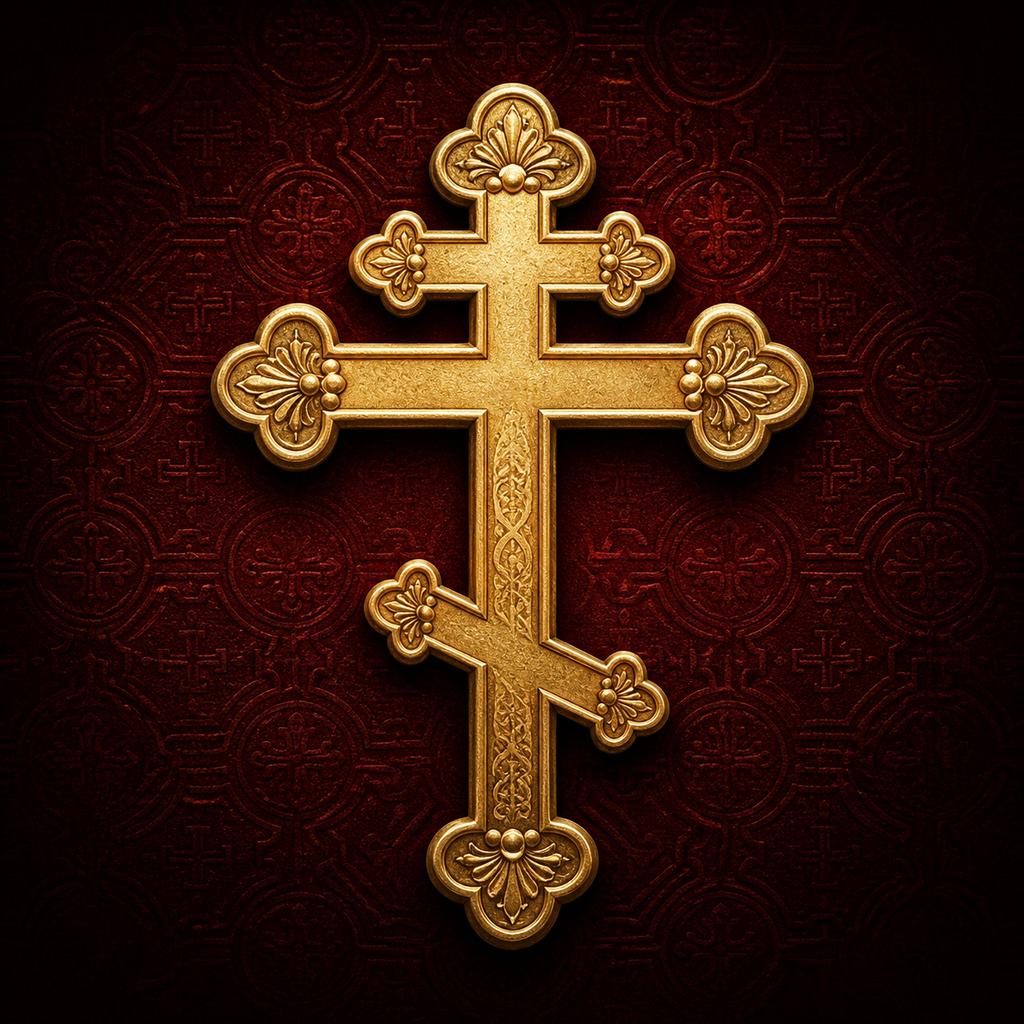
The sign of the Cross is one of the simplest ways Orthodox Christians carry Trinitarian faith into the body. The faithful bless themselves in the name of the Father, and of the Son, and of the Holy Spirit while tracing the Cross of Christ. Doctrine, worship, body, and salvation meet in one small act.
This is not superstition. It is confession. The Christian remembers the Holy Trinity and the saving Cross not only with the mind but with the whole person. For a beginner, learning the sign of the Cross respectfully can be an early way to see that Orthodox theology is embodied prayer.
Prayer to the Trinity
Orthodox prayer is deeply Trinitarian: to the Father, through the Son, in the Holy Spirit. The faithful constantly bless, glorify, and give thanks to the Holy Trinity.
The Holy Spirit is Lord, not religious energy
Orthodox Christianity does not treat the Holy Spirit as an impersonal force, mood, or symbol of spiritual intensity. The Creed calls the Holy Spirit the Lord and Giver of Life, who proceeds from the Father and is worshiped and glorified together with the Father and the Son.
This matters pastorally as well as doctrinally. Prayer, sanctification, chrismation, Scripture, the sacraments, and the life of the Church are not driven by an abstract spiritual power. They are the work of the living God. The Spirit gives life and unites the faithful to Christ without becoming a substitute for Christ or a vague religious atmosphere.
Worship Guardrails
Every error about the Trinity eventually distorts prayer.
The Church's technical language is not intellectual decoration. It keeps Christian prayer addressed to the living God as He has revealed Himself.
- 01Against tritheism.Orthodox Christians do not pray to three gods or three competing divine wills.
- 02Against modalism.The Father, Son, and Spirit are not costumes, roles, or phases of one person.
- 03Against Arianism.The Son is true God, so worship of Christ is not idolatry.
- 04Against reducing the Spirit.The Holy Spirit is Lord and Giver of Life, not an impersonal sacred energy.
Why it matters for salvation
Salvation is communion with the living God. The Father sends the Son; the Son becomes incarnate, dies, and rises; the Holy Spirit gives life, sanctifies, and unites the faithful to Christ in the Church. Orthodox theology therefore speaks of salvation as participation in divine life, not merely legal status.
This does not mean human beings become God by nature. Orthodox teaching on theosis means participation in divine life by grace. The distinction is important: salvation is real communion with God, but creatures do not become the divine essence. The Father, Son, and Holy Spirit remain the one uncreated God; the faithful are healed, illumined, and united to God by grace.
Source and sender.
The Father sends the Son and the Holy Spirit; salvation begins in divine love, not human achievement.
Incarnate and risen.
The Son becomes truly human, dies, rises, and restores human nature in Himself.
Life-giver and sanctifier.
The Holy Spirit unites the faithful to Christ in the Church and makes Christian life possible.
How beginners should approach the mystery
A beginner does not need to master technical vocabulary before praying. The safest order is to receive the Church's words, worship with the Church, learn the Creed, and avoid replacing revealed doctrine with clever diagrams. Orthodox theology is precise, but its purpose is communion with God, not intellectual display.
When the Church says that the Father is unbegotten, the Son is begotten, and the Holy Spirit proceeds from the Father, it is not trying to explain God away. It is guarding the revealed distinction of the divine Persons while confessing one divine essence and one worship.
Terms beginners should know
Some theological words are unavoidable, but they should be learned slowly. They are guardrails, not trophies. A beginner does not need to sound technical; a beginner needs to avoid false simplicity.
| Term | Plain orientation |
|---|---|
| Essence / nature | What God is: one divine being and life. |
| Person / hypostasis | Who God is: Father, Son, and Holy Spirit. |
| Begotten | The Son is eternally from the Father, not created in time. |
| Proceeding | The Holy Spirit is eternally from the Father, according to the Orthodox Creed. |
| Doxology | A prayer of glory to the Father, Son, and Holy Spirit. |
Why Trinitarian doctrine protects prayer
The doctrine of the Holy Trinity is not an abstract puzzle added onto Christian life. It protects the actual shape of Orthodox prayer. Christians pray to the Father, through the Son, in the Holy Spirit because God has revealed Himself this way in Christ and in the life of the Church.
If the Son were not truly God, worship of Christ would be idolatry rather than salvation. If the Holy Spirit were merely a power, sanctification would no longer be communion with a divine Person. If Father, Son, and Spirit were three separate gods, Christian worship would lose its confession of the one God. The Church's careful language guards the faithful from these distortions so that prayer remains truthful.
Trinity study path
These pages connect Trinitarian doctrine with the Creed, worship, baptism, and salvation.
A beginner path through Trinitarian faith
Use this order if the topic feels too abstract. The Church teaches the Trinity through worship before technical explanation.
Common questions about the Holy Trinity
Do Orthodox Christians believe in the Trinity?
Yes. Orthodox Christians worship one God in three Persons: the Father, the Son, and the Holy Spirit. This is confessed in the Creed, baptism, doxologies, blessings, and the Divine Liturgy.
Do Orthodox Christians believe Jesus is God?
Yes. Orthodox Christianity confesses Jesus Christ as true God and true man, eternally begotten of the Father and incarnate for our salvation. This is central to the Creed and to Orthodox worship.
Why are simple Trinity analogies dangerous?
Many analogies accidentally suggest modalism, tritheism, or other distortions. Orthodox Christians receive the mystery of the Trinity through Scripture, worship, the Creed, and the life of the Church rather than reducing God to a diagram.
What does one essence and three Persons mean?
Orthodox Christians confess one divine essence, nature, will, and action, while truly distinguishing the Father, the Son, and the Holy Spirit as three divine Persons.
Why does the Trinity matter for salvation?
Salvation is communion with the living God. The Father sends the Son, the Son becomes incarnate and saves, and the Holy Spirit gives life and unites the faithful to Christ in the Church.
Is the Holy Spirit a force or a person in Orthodoxy?
Orthodox Christians confess the Holy Spirit as the Lord and Giver of Life, worshiped and glorified with the Father and the Son. The Spirit is not an impersonal force.
Why does Orthodox Christianity say the Holy Spirit proceeds from the Father?
The Orthodox Church receives the Creed's confession that the Holy Spirit proceeds from the Father. This protects the Father's personal property within the Trinity while confessing one divine essence and worship.
Source note
This guide follows the Orthodox Church's Nicene confession and standard catechetical teaching on the Father, Son, and Holy Spirit. It is intentionally introductory and avoids speculative analogies.
Source Trail
Read this topic with the Church, not only the internet.
These links give a cautious path for checking the topic further. They do not replace parish worship, confession, pastoral guidance, or the calendar used by your bishop and local parish.
Pray Trinitarianly
Let doctrine become worship, not noise.
Orthodox Daily Prayer keeps daily prayers, Scripture, the Creed, feasts, and saints close to the rhythm of the Church.
This page is introductory. For deeper study, use catechetical material from a canonical Orthodox parish or diocese.