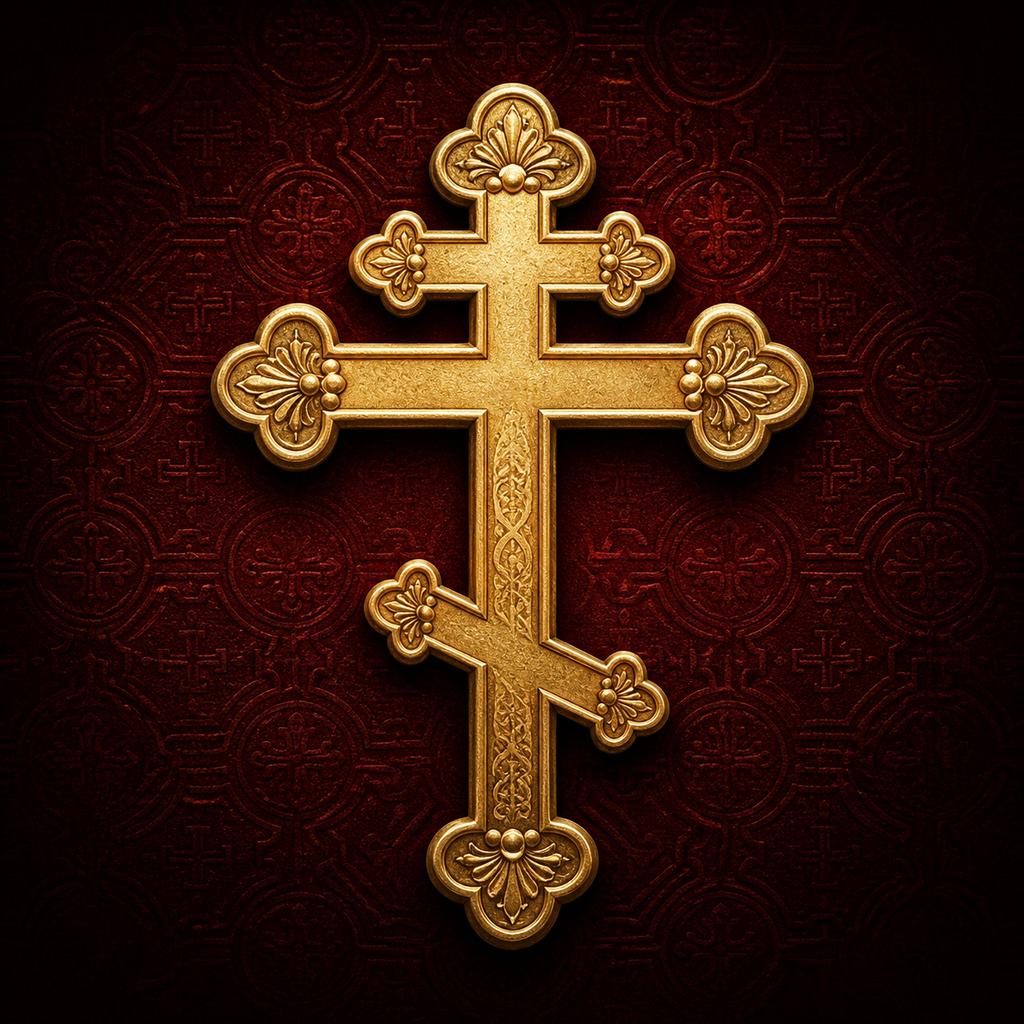

Orthodox Baptism is participation in the death and resurrection of Christ. It is not only a sign of moral change; it is entrance into new life by water and the Holy Spirit. In the Orthodox Church, Baptism is joined to the larger life of the Church: Chrismation, the Eucharist, prayer, repentance, and continued growth in Christ.
Reception is into Christ and His Church.
Baptism is not a private milestone or symbolic self-expression. It is new birth in Christ and entry into the sacramental life of the Church.
Chrismation is the gift of the Spirit.
The anointing with holy chrism is not a graduation ceremony. It seals the newly received Christian for life in the Holy Spirit and Eucharistic communion.
Reception is never self-diagnosed.
Prior baptismal history, catechesis, sponsors, and the manner of reception belong to priest, bishop, parish practice, and pastoral discernment.
Reception Into The Church
Baptism and Chrismation are entrance into a life, not the end of a search.
Orthodox reception is sacramental and ecclesial. It joins a person to Christ and His Church, then begins a lifelong rhythm of Liturgy, prayer, repentance, fasting, Communion, and parish belonging.
Reception questions belong to a canonical parish under priest and bishop, not to private internet rulings.
Catechesis teaches the Creed, worship, Scripture, prayer, fasting, sacraments, and moral life as one Orthodox path.
Baptism, Chrismation, confession of faith, sponsors, and timing are handled pastorally according to local practice.
The newly illumined Christian needs steady prayer, confession, Communion, mercy, and parish life after the day itself.
Initiation Architecture
Baptism and Chrismation form one entrance into Pascha, Pentecost, and the chalice.
Orthodox initiation is not a private rite of passage. Baptism joins the person to Christ's death and Resurrection; Chrismation seals the gift of the Holy Spirit; Communion receives the newly illumined into Eucharistic life. The day is beautiful because it begins a life, not because it completes a religious search.
The service begins with a real turning: rejection of evil, confession of Christ, and entrance into the faith of the Church rather than vague spirituality.
Baptism is not merely a sign of moral improvement. It is participation in Christ's Pascha and a new birth by water and the Spirit.
The seal of the gift of the Holy Spirit gives the newly baptized the grace and calling to live the life received in Baptism.
The newly illumined are not spectators. Orthodox entrance opens into the Divine Liturgy, the chalice, parish discipline, and lifelong repentance.
Baptism and Chrismation learning sequence
Entrance into the Orthodox Church is sacramental, ecclesial, and lifelong: Baptism, Chrismation, Communion, parish life.
Baptism And Chrismation Discernment Guide
The right next step depends on who is being received.
Baptism and Chrismation are never handled as private spiritual self-certification. The questions are concrete: adult or child, prior baptismal history, sponsor requirements, catechesis, parish practice, and life after reception. These belong to the Church's pastoral care.
Baptism And Chrismation Core Map
Reception into Orthodoxy is water, Spirit, Eucharist, parish, and lifelong obedience.
Orthodox Baptism and Chrismation are not a conversion aesthetic, a private identity marker, or a ceremony that can be detached from the Church. They are entrance into Christ's death and Resurrection, the seal of the Holy Spirit, and a concrete life of Communion, prayer, repentance, and parish belonging.
Reception Guardrails
Do not turn reception into internet certainty, family pressure, or a spiritual performance.
The Orthodox Church receives real persons, not abstract cases. The same outward question can require different pastoral handling depending on age, prior baptism, parish practice, sponsor readiness, family situation, and the bishop's order.
After Reception Formation
The first year should make the new life livable, not louder, stricter, or more performative.
After Baptism or Chrismation, the newly illumined Christian needs ordinary stability: one parish, steady worship, modest prayer, pastoral guidance, confession and Communion according to local practice, and a patient household rhythm that can actually be kept.
Belonging grows through repeated services, names, meals, pastoral care, correction, and service, not constant church-shopping.
New Orthodox Christians usually need consistency more than intensity. A livable rule can deepen over time.
The chalice is not casual access or anxious achievement; it is received with parish guidance and repentance.
Health, children, work, family circumstances, and spiritual immaturity should be handled with priestly guidance.
Parents and godparents should help the baptized child grow through prayer, Communion, feasts, saints, and parish belonging.
The first year is better spent listening, worshiping, repenting, and learning the Church from within.
Baptism
In Baptism, the person is united to Christ's death and resurrection, renounces evil, and is brought into the life of the Church. The service includes prayers, exorcisms, the confession of faith, blessing of water, immersion or washing according to local practice, and clothing in the baptismal garment.
Chrismation
Chrismation is the anointing with holy chrism and the seal of the gift of the Holy Spirit. In Orthodox practice, Baptism, Chrismation, and first Communion are closely joined, including for infants.
| Mystery | Orthodox emphasis |
|---|---|
| Baptism | New birth in Christ and participation in His death and resurrection. |
| Chrismation | The seal of the gift of the Holy Spirit, given through anointing with holy chrism. |
| Holy Communion | Entrance into Eucharistic life, not a later graduation from childhood or instruction. |
Sponsors and godparents
Godparents or sponsors are not ceremonial extras. They stand with the person being received and help support their Christian life. Local requirements for sponsors should be followed carefully.
Infants and adults
The Orthodox Church baptizes infants as well as adult converts. Infants are received into the full sacramental life of the Church; adults are normally prepared through catechesis, confession, and pastoral instruction. In both cases, Baptism is the beginning of a life that must be nourished by prayer, worship, repentance, and Communion.
Reception may differ
For adults coming from other Christian backgrounds, the manner of reception can vary according to bishop, jurisdiction, pastoral judgment, and prior baptismal history. This is why the local priest's guidance is essential.
After reception
Becoming Orthodox is not the end of the journey. The newly received Christian continues learning the rhythm of the Church: the Divine Liturgy, confession, fasting with guidance, the Church year, personal prayer, acts of mercy, and life in the parish.
Why Baptism is not treated as a private ceremony
Baptism belongs to the life of the Church. The person is not simply marking a personal milestone; they are being joined to Christ and His Body. This is why the service is connected to faith, renunciation, sponsors, the parish, Chrismation, Communion, and continued Christian life.
Renunciation, faith, and the Creed
Orthodox Baptism includes renunciation of evil and confession of faith. This is not decorative language. The person being baptized, or the sponsors on behalf of a child, turns away from the old life and confesses the faith of the Church. Baptism is therefore not a vague blessing ceremony; it is entrance into a definite life in Christ.
The Creed matters because the Church does not baptize into private spirituality. The newly illumined Christian is received into the apostolic faith confessed in worship, guarded by the Church, and lived through prayer, sacrament, repentance, and mercy.
Sponsors are responsible witnesses
A sponsor or godparent should be more than a family honor role. In Orthodox practice, the sponsor stands with the person being received and bears responsibility to encourage Christian life. For a child, this includes helping the parents raise the child within prayer, Liturgy, Communion, confession when the child is ready, and the feasts and fasts of the Church.
Local rules about sponsors can be strict because the role is spiritual. A parish may require that a sponsor be an Orthodox Christian in good standing. Families should ask early rather than assuming that any beloved relative can serve liturgically.
Infant Baptism and adult catechumens
Infant Baptism shows that the Church receives the whole person into the life of Christ before the child can explain the faith intellectually. The child then grows into what has been given through worship, family prayer, Communion, teaching, and parish belonging.
Adult catechumens usually walk a more explicit path of instruction and discernment before reception. They learn how Orthodoxy prays, worships, fasts, reads Scripture, honors the saints, and understands the Church. This is not merely a class to pass. It is a gradual entrance into a way of life.
Reception from other Christian backgrounds
People coming from other Christian communities should not assume their reception will be identical everywhere. Orthodox bishops and jurisdictions may apply reception by Baptism, Chrismation, confession of faith, or other pastoral forms according to canonical guidance and prior baptismal history. The important point for the inquirer is obedience and patience, not self-diagnosis.
This is one reason internet arguments about reception often become unhealthy. The person seeking the Church needs a real priest, a real parish, and the blessing of the bishop's practice, not an online debate used to pressure clergy.
Do not decide your own reception method from online debates.
Questions about prior baptism, Chrismation, confession of faith, sponsors, timing, and preparation must be handled in a canonical parish under the priest and bishop. The seeker needs obedience and patience more than a private ruling.
The order matters
Orthodox practice holds Baptism, Chrismation, and Communion together because entrance into the Church is entrance into a whole life. The newly illumined person is not only forgiven, not only anointed, and not only welcomed socially. They are brought into the sacramental life of the Church, where faith is nourished by worship, teaching, repentance, and the Eucharist.
This is especially important for beginners from traditions where Baptism, confirmation, and Communion are separated by age or instruction. Orthodoxy does teach, form, and catechize, but the mysteries are not treated as rewards for intellectual achievement. They are gifts that begin and sustain life in Christ.
What should change after reception?
Reception into the Church should not become a dramatic finish line followed by ordinary forgetfulness. The newly illumined Christian needs a livable rhythm: attending the Divine Liturgy, receiving Communion with guidance, learning confession, praying at home, keeping the calendar, fasting with sobriety, and staying connected to the parish.
A daily prayer app can be helpful here because beginners often struggle with scattered information. It can gather prayers, readings, saints, fasting awareness, and reminders in one quiet place. But the app cannot become the parish. Baptism and Chrismation lead into embodied church life, not private religious self-management.
What Baptism and Chrismation correct
Baptism and Chrismation correct the idea that Christianity is mainly private conviction. The person is received into Christ and His Church, with a concrete sacramental life, community, worship, and pastoral care.
They also correct the idea that reception is a finish line. The newly received Christian is not done; they are beginning to live the faith they have received. The mysteries open a life of prayer, repentance, Communion, fasting with guidance, mercy, and parish belonging.
How families and catechumens can prepare soberly
Preparation should be practical and prayerful: attend services, learn the Creed, ask about sponsors, discuss prior baptismal history honestly, receive the parish's instruction, and make plans for life after reception. For families with children, preparation also includes learning how the child will continue in Communion, prayer, name days, confession when appropriate, and parish life.
The goal is not to make the day visually impressive. The goal is to enter the Church truthfully and to continue afterward with a livable rhythm of worship, prayer, repentance, and gratitude.
Baptism is not an aesthetic conversion moment
Modern seekers can be tempted to treat reception into Orthodoxy as a dramatic identity moment: a beautiful photograph, a public announcement, a new online persona, or the final proof that they have found the right tradition. Orthodox Baptism and Chrismation are deeper and quieter than that. They are death and resurrection in Christ, the seal of the Holy Spirit, and the beginning of obedience inside the Church.
This does not mean joy should be hidden. Baptism is joyful. But the joy is ecclesial, not performative. The newly illumined person should leave the font not with a spiritual brand, but with a new life to keep: prayer, repentance, Communion, humility, and belonging to the parish.
The first year after reception matters
Many people prepare intensely before becoming Orthodox, then feel strangely exposed afterward. The first year should be deliberately simple: attend one parish, receive guidance about Communion and Confession, keep a small prayer rule, avoid online controversy, learn the calendar slowly, and let ordinary parish life do its quiet work.
A first-year rhythm after Baptism or Chrismation
| Rhythm | Practice | Guardrail |
|---|---|---|
| Weekly | Attend the Divine Liturgy as consistently as possible. | Do not church-shop because ordinary parish life feels less dramatic than conversion. |
| Daily | Keep a small prayer rule that can actually be kept. | Avoid imitating monastic intensity without guidance. |
| Seasonal | Learn fasting seasons and feasts through the parish calendar. | Ask before applying strict rules to health, family, work, or children. |
| Pastoral | Learn when and how to confess and receive Communion locally. | Do not replace parish guidance with internet rules. |
Questions to ask your parish
| Question | Why it matters |
|---|---|
| How should a catechumen prepare? | Preparation differs for adults, children, families, and people coming from other Christian backgrounds. |
| Who may serve as sponsor or godparent? | Sponsors have real spiritual responsibility and local requirements. |
| How does first Communion happen? | Baptism and Chrismation normally lead directly into Eucharistic life. |
| What should happen afterward? | Reception begins a lifelong pattern of Liturgy, prayer, confession, fasting, and parish life. |
Common questions about Baptism and Chrismation
What is Chrismation?
Chrismation is the anointing with holy chrism and the seal of the gift of the Holy Spirit. In Orthodox practice it is closely joined to Baptism and Eucharistic life.
Do Orthodox Christians baptize infants?
Yes. The Orthodox Church baptizes infants as well as adults, receiving them into the sacramental life of the Church. Infants are not treated as outsiders waiting for a later graduation into the Church.
Is every convert received the same way?
No. Reception can differ according to bishop, jurisdiction, pastoral judgment, and prior baptismal history. The local priest gives concrete guidance.
What happens after Baptism and Chrismation?
The newly received Christian continues in the life of the Church through Liturgy, Communion, prayer, confession, fasting with guidance, catechesis, and parish life.
Can an adult decide online whether they need Baptism or Chrismation?
No. Reception into the Orthodox Church must be handled by the parish priest under the bishop's practice. Prior baptismal history, catechesis, confession of faith, and pastoral discernment matter.
Why are Baptism, Chrismation, and Communion joined in Orthodoxy?
Because entrance into the Church is entrance into the whole life of Christ: new birth, the seal of the Holy Spirit, and Eucharistic communion. The mysteries are not treated as disconnected religious milestones.
What should families ask before a child's Baptism?
Ask about sponsor requirements, preparation, how the child will receive Communion, name day or saint questions, and how the family will continue in parish life afterward.
Baptism and Chrismation study path
These pages explain the surrounding life that makes Baptism and Chrismation intelligible.
Source note
This guide follows Orthodox teaching on Baptism, Chrismation, and Eucharistic entrance into the Church. Reception practices for converts are pastoral and may differ by bishop, jurisdiction, and prior baptismal history.
Source Trail
Read this topic with the Church, not only the internet.
These links give a cautious path for checking the topic further. They do not replace parish worship, confession, pastoral guidance, or the calendar used by your bishop and local parish.
After Reception
Build a daily rhythm after entering the Church.
Orthodox Daily Prayer helps newly received Christians keep prayer, readings, saints, fasting awareness, and the Church calendar close to ordinary life.
This page gives a general introduction only. Reception into the Church is always handled by the Church, not by private decision.