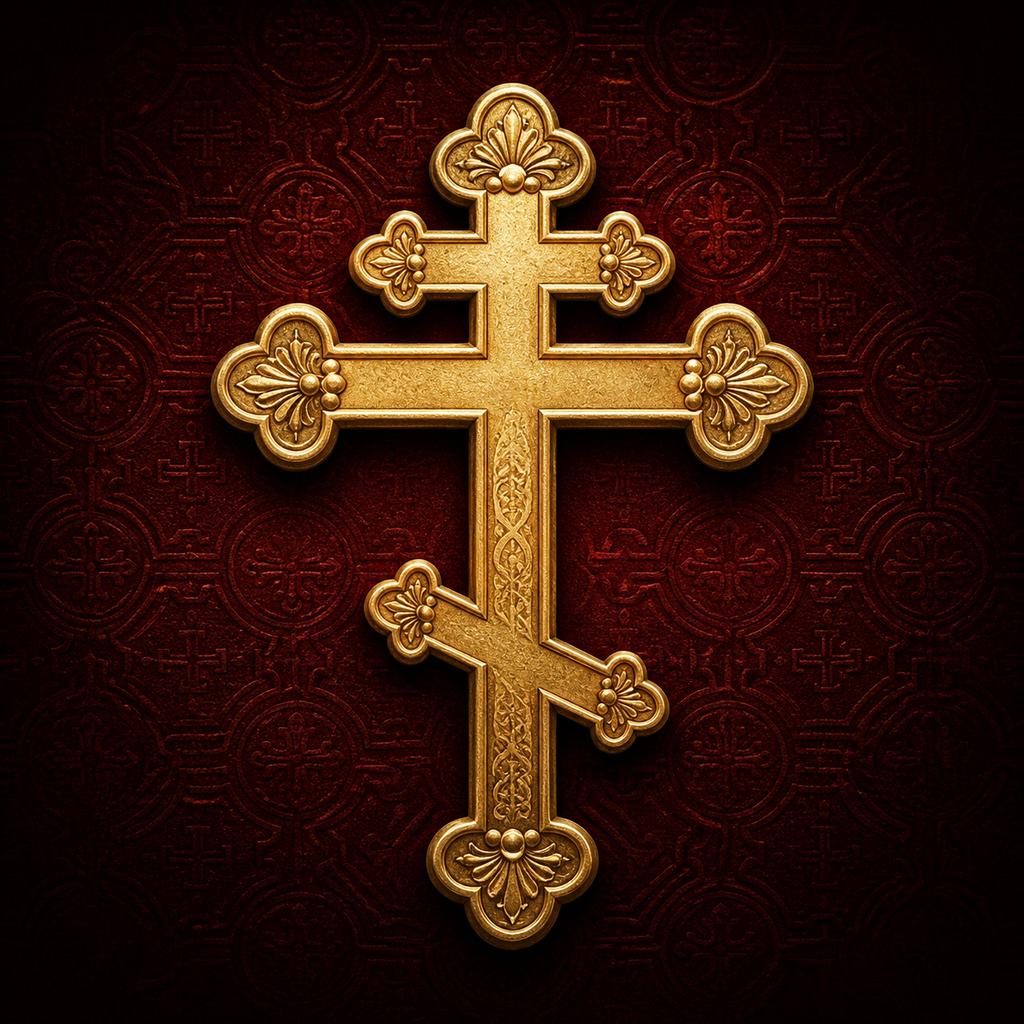

Many catechetical texts list seven major Holy Mysteries: Baptism, Chrismation, the Eucharist, Confession, Holy Unction, Marriage, and Ordination. Orthodox teaching, however, does not reduce God's sacramental life to a closed checklist. The Church's whole life is filled with blessing, prayer, worship, and grace.
God acts
The Mysteries are not symbolic reminders only. Orthodox Christians confess that God truly gives grace through the Church's sacramental life.
Not private rites
Sacraments belong to bishop, priest, parish, worship, repentance, and communion, not to isolated religious preference.
Receive with truth
Preparation does not earn grace; it helps the person receive God's gift with repentance, faith, humility, and obedience.
Sacramental Discernment
Approach the Mysteries through the Church, not as isolated religious decisions.
A serious Orthodox explanation should help a reader ask better questions, not make private rulings about Baptism, Communion, confession, marriage, or ordination. The Mysteries are received inside parish life and pastoral care.
- Start with worship.Attend the Divine Liturgy and learn how the Church prays before trying to separate sacramental life into abstract topics.
- Name the concrete question.Reception into the Church, Communion preparation, confession rhythm, marriage, illness, or ordination each require different pastoral guidance.
- Bring it to the parish.The local priest and bishop's practice govern concrete sacramental questions; a website can orient but cannot decide.
- Let daily life become preparation.Prayer, repentance, Scripture, fasting, mercy, and reconciliation help sacramental life remain real rather than ceremonial.
Holy Mysteries Discernment Guide
The Mysteries are the Church's life in Christ, not religious services on demand.
Use the familiar sevenfold list as a map, not as a cage. Orthodox sacramental life is received inside worship, bishop, priesthood, repentance, parish order, and communion with the Church.
Holy Mysteries Core Map
The Mysteries are Christ's life given in the Church, not religious services on demand.
Orthodox sacramental life is received inside worship, bishop, priesthood, parish order, repentance, preparation, and communion. The familiar sevenfold list helps beginners, but the whole Church is sacramental because grace draws real persons into life in Christ.
Sacramental Taxonomy
The sevenfold list is a catechetical doorway into the Church's whole sacramental life.
Orthodox writers often name seven major Mysteries, but the point is not to turn grace into a closed technical inventory. The list helps readers see how Christ receives, nourishes, heals, restores, blesses, and orders the faithful inside the Church.
They are not private identity markers. They reveal new birth, the gift of the Holy Spirit, and incorporation into Eucharistic life.
Holy Communion gathers Scripture, offering, thanksgiving, sacrifice, and the faithful receiving Christ's Body and Blood.
The Mystery is not self-improvement theater; it is truthful return to God under pastoral care.
Orthodox healing includes soul and body without promising a mechanical cure or reducing illness to moral failure.
Crowning blesses a household as a path of salvation; ordination serves the Church through apostolic order.
Reception, Communion discipline, confession rhythm, marriage preparation, and ordination belong to priest, bishop, and parish.
Sacramental Guardrails
The Mysteries must be protected from symbolism, magic, and private consumer choice.
Orthodox sacramental life is neither empty ritual nor automatic mechanism. The Mysteries are real encounters with Christ, received with faith, repentance, preparation, obedience, and life in the Church.
Mystery Reception System
The Holy Mysteries are received as life in Christ, not managed as religious transactions.
A serious sacramental guide should protect four truths at once: God truly gives grace, the Church receives the gift in visible actions, preparation is repentance rather than payment, and concrete questions belong to priest, bishop, and parish life.
The Mysteries are real means of grace, not empty symbols, but grace is never reduced to a mechanism.
Reception, Communion discipline, confession, marriage, and ordination are not private online decisions.
Christian life begins as participation in the death and Resurrection of Christ, sealed by the Spirit and fed at the chalice.
The Mysteries meet sin, sickness, weakness, and need without becoming therapy-only language or automatic magic.
The Mysteries bless households, ministry, responsibility, sacrifice, and obedience inside the Church's order.
Scripture, fasting, mercy, forgiveness, and repentance help the faithful approach the Mysteries with attention.
Orthodox Holy Mysteries learning sequence
Understand the Mysteries as the Church's sacramental life, not isolated religious services.
Why Orthodox Christians say Mystery
The word mystery does not mean something vague or irrational. It means that God's grace is truly given and received, but never exhausted by explanation. The Church can describe the outward rite and confess what God gives, yet the life of God remains deeper than definition.
This is why Orthodox Christians usually approach the Mysteries with preparation, reverence, and obedience to the Church rather than as isolated religious services. The Mysteries belong to the whole life of faith, repentance, worship, and communion.
The whole Church is sacramental
For that reason, the familiar list of seven major Mysteries is useful, but it must be held with care. It helps beginners learn the main sacramental actions of the Church. It should not be used as if Orthodoxy had only seven places where grace appears. The Church's worship, calendar, fasting, confession, almsgiving, and ordinary parish obedience all train a person to live sacramentally.
A clear catechetical map
The seven major Mysteries help people name the central sacramental actions received in Orthodox parish life.
Not a closed machine
The list is not the boundary of God's grace, and it should not flatten the Church into a mechanical system.
Always inside the Church
The Mysteries belong to the bishop, priesthood, worship, discipline, repentance, and communion of the Church.
Baptism, Chrismation, and Communion
Baptism is entrance into the death and resurrection of Christ. Chrismation, normally given together with Baptism in Orthodox practice, is the seal of the gift of the Holy Spirit. The newly received person is then brought into Eucharistic communion.
This pattern is important: Christian life is not only intellectual agreement. A person is received into the Church through water, Spirit, and Eucharistic communion. Baptism is not merely a symbol of belonging; it is participation in Christ's death and Resurrection.
| Mystery | Ordinary place in Orthodox life | Pastoral note |
|---|---|---|
| Baptism | Entrance into Christ's death and Resurrection. | Reception practices should be handled by the parish priest and bishop. |
| Chrismation | The seal of the gift of the Holy Spirit. | Normally joined to baptism in Orthodox practice. |
| Eucharist | Communion in the Body and Blood of Christ. | Received by Orthodox Christians according to local preparation and blessing. |
| Confession | Repentance, forgiveness, reconciliation, and spiritual healing. | The rhythm of confession varies by parish and spiritual father. |
| Holy Unction | Prayer for healing of soul and body. | Not a mechanical guarantee of physical cure. |
| Marriage | A crowned path of fidelity, sacrifice, and salvation. | Marriage preparation belongs to parish and diocesan practice. |
| Ordination | Bishops, priests, and deacons are set apart for service. | Ordination is never self-appointed; it belongs to the order of the Church. |
Confession and healing
Confession is the mystery of repentance and reconciliation. Holy Unction is connected with healing of soul and body. Both remind the faithful that salvation is not abstract: Christ meets real wounds, sins, weakness, and need.
Confession is not therapy with religious language, though it can bring deep healing. It is repentance before God in the presence of the Church's priest. Holy Unction is not magic or a guarantee of physical cure; it is prayer for healing, mercy, forgiveness, and restoration.
Marriage and Ordination
Marriage blesses the union of husband and wife as a path of faithfulness, sacrifice, and salvation. Ordination sets apart bishops, priests, and deacons for service to the Church according to Orthodox order.
Orthodox marriage is not only a legal union plus a blessing. It is a path of mutual self-giving in Christ. Ordination is not a private career choice; it is service within the apostolic order of the Church and under obedience to the bishop.
Why the Eucharist is central
Holy Communion stands at the center of sacramental life because the faithful receive the Body and Blood of Christ. The Eucharist is not one devotion among many; it is the Church gathered in thanksgiving, sacrifice, communion, and the life of the Kingdom.
The Eucharist also keeps Orthodox faith from becoming merely private spirituality. The Church is gathered, the Scriptures are proclaimed, the gifts are offered, the Holy Spirit is invoked, and the faithful receive Communion in the one Body of Christ. The center is not a lecture, a mood, or a religious performance. The center is Christ Himself, given to His Church.
This is why Orthodox Christians speak carefully about preparation for Communion. Preparation is not a way to make oneself worthy by personal achievement. It is a way to approach the chalice truthfully: reconciled where possible, repentant, attentive, obedient to the Church, and aware that Communion is both gift and judgment.
What the Holy Mysteries are not
Clear boundaries protect the dignity of the Mysteries and help seekers avoid common online misunderstandings.
Preparation is part of the Mystery
Orthodox sacramental life includes preparation because the Mysteries are received by real persons who need repentance, healing, and reconciliation. Preparation may include prayer, fasting, confession, forgiveness, reading the pre-Communion prayers, and speaking with the priest. The exact rhythm differs by parish and pastoral direction.
Preparation should not be understood as earning grace. It is a way of approaching God's gift with truth. A person who prepares for Communion is not proving worthiness; the person is asking to receive Christ with repentance, faith, humility, and love. This is also why visitors should not approach the chalice without being Orthodox and properly prepared.
Pastoral boundary
A website can explain what the Holy Mysteries mean, but it cannot decide whether someone should be received by Baptism or Chrismation, how often a person should confess, whether someone should approach Communion, or how a marriage should be handled. Those questions belong to the parish priest and bishop.
Not a mechanical system
The Holy Mysteries should not be treated mechanically, as if grace were an automatic religious transaction. The Church calls the faithful to faith, repentance, preparation, and life in Christ. The Mysteries heal and unite, but they are not a substitute for conversion of heart.
Why this matters for seekers
Many people first approach Orthodoxy through icons, chant, fasting, or online explanations. Those can open the door, but the Holy Mysteries show that Orthodoxy is not a private aesthetic or study project. The Christian life is entry into the Church's sacramental communion with Christ.
This is why serious inquiry should move toward an actual parish. Reading can clarify vocabulary. Prayer can open the heart. But Baptism, Chrismation, confession, Communion, marriage, and ordination all require the concrete order of the Church. The Mysteries keep Orthodox faith embodied, accountable, and ecclesial.
Sacramental life and daily prayer
Daily prayer does not replace the Holy Mysteries, but it helps a person live toward them. Morning prayer, evening prayer, Scripture, fasting, almsgiving, forgiveness, and remembrance of the saints train the heart to receive the Church's sacramental life with attention instead of treating it as an occasional ceremony.
This matters especially for people discovering Orthodoxy online. An app, article, video, or reading plan can support attention, but the Mysteries are not digital experiences. They belong to the gathered Church, to the altar, to confession, to real names, to real bodies, to priestly blessing, and to the difficult conversion of ordinary life.
How the Mysteries relate to salvation and Theosis
The Holy Mysteries are not separate from Orthodox teaching on salvation. They are part of the way Christ heals, illumines, unites, and transforms the faithful. Orthodox theology often speaks of salvation as participation in the life of God by grace, not by nature. This is why sacramental life cannot be reduced to a legal formality or a sentimental ceremony.
Baptism is new birth and burial with Christ. Chrismation is the seal of the Holy Spirit. Communion unites the faithful to Christ's Body and Blood. Confession restores the wounded person through repentance and forgiveness. Unction prays for healing of soul and body. Marriage becomes a path of self-giving love. Ordination serves the building up of the Church. In all of this, the goal is not religious branding. The goal is life in Christ.
Beginner path through sacramental life
If you are new to Orthodoxy, begin with the Church's rhythm rather than trying to solve every sacramental question alone.
Why the Mysteries are not private religious services
The Holy Mysteries belong to the Church's concrete life: bishop, priest, parish, worship, fasting, confession, prayer, discipline, and love of neighbor. They are not spiritual products selected by an individual. They are received inside communion with the Church.
This is why an Orthodox educational site must be careful. It can explain terms, remove confusion, and help a person prepare better questions. It cannot determine reception into the Church, set confession discipline, decide Communion practice, approve a marriage, or replace the pastoral responsibility of the priest and bishop.
Sacramental study path
Read these pages together if you want a clearer picture of how the Holy Mysteries fit inside parish life.
Common questions about the Holy Mysteries
What are the Holy Mysteries?
Holy Mysteries is the common Orthodox term for sacraments: visible actions in which God gives grace and draws the faithful into the life of Christ.
Are there seven Orthodox sacraments?
Many catechetical texts list seven major Holy Mysteries, but Orthodox teaching does not reduce the sacramental life of the Church to a closed checklist. The whole life of the Church is filled with blessing, prayer, worship, and grace.
Why is the Eucharist central?
The Eucharist is central because the faithful receive the Body and Blood of Christ and the Church is gathered in thanksgiving, sacrifice, communion, and the life of the Kingdom.
Can the Holy Mysteries be understood apart from parish life?
No. The Holy Mysteries belong to the worship, bishop, priesthood, discipline, repentance, and concrete parish life of the Orthodox Church.
Are the Holy Mysteries only symbols?
No. Orthodox Christians do not treat the Mysteries as empty symbols or reminders only. The outward actions are real means by which God gives grace, while the gift remains deeper than human explanation.
Why should sacramental questions be brought to a priest?
Because reception into the Church, confession discipline, Communion preparation, marriage questions, and ordination belong to concrete parish life, the bishop's order, and pastoral care.
Source note
This guide follows Orthodox catechetical teaching on the Holy Mysteries while avoiding the mistake of reducing Orthodox sacramental life to a closed mechanical list. Concrete sacramental questions belong to the parish priest and bishop.
Source Trail
Read this topic with the Church, not only the internet.
These links give a cautious path for checking the topic further. They do not replace parish worship, confession, pastoral guidance, or the calendar used by your bishop and local parish.
Sacramental Life
Let daily prayer keep you close to the life of the Church.
Orthodox Daily Prayer helps connect Scripture, prayer, fasting awareness, saints, and the calendar so learning does not remain abstract.
Specific requirements for reception into the Church, confession discipline, marriage, and sacramental participation are pastoral matters. Always speak with the local priest.