Holy Orders is the Mystery of ordination. Bishops, priests, and deacons are set apart for service to the Church, not for private religious status. Ordination belongs to the order, worship, teaching, and pastoral care of the Church.
Orthodox ordination is never self-appointed. It is given through the laying on of hands by the bishop, within the liturgical life of the Church, and for concrete service to the people of God.
Ordination belongs to the Church.
No one self-appoints as Orthodox clergy. Holy Orders are received through the bishop within canonical worship and accountability.
Authority is responsibility.
Bishops, priests, and deacons serve the Church's worship, doctrine, pastoral care, and unity; ordination is not celebrity or private status.
Online religion has limits.
Articles and videos can teach vocabulary, but they cannot replace parish clergy, sacramental order, confession, or episcopal oversight.
Church Order
Ordination is received inside the Church, not claimed online.
Holy Orders protects worship, doctrine, pastoral care, and accountability by placing ministry under the bishop and inside the public prayer of the Church.
- Look for communion.A priest, deacon, parish, or teacher should be visibly connected to a canonical bishop and diocese.
- Read authority as service.Ordained ministry should lead people toward Liturgy, repentance, charity, and stability, not fear or personality dependence.
- Keep discernment local.Questions about vocation, obedience, abuse, or pastoral direction belong to parish and diocesan accountability, not anonymous internet judgment.
Ordination Accountability System
Holy Orders makes ministry visible, accountable, and ecclesial.
Orthodox ordination is not private charisma becoming official. It is service received inside the Church, under the bishop, for the Eucharistic, doctrinal, pastoral, and charitable life of the faithful.
Ordination, doctrine, parish order, and liturgical communion are held together through episcopal oversight.
His ministry centers on worship, preaching, confession, Communion preparation, care, burial, and everyday pastoral steadiness.
Diaconal service keeps liturgical order, proclamation, charity, and attention to practical needs visibly connected.
The whole Body prays, responds, serves, gives, repents, teaches children, receives Communion, and bears witness.
Character, formation, family life, parish stability, theological training, and the bishop's blessing all matter.
True reverence for clergy includes accountability, protection of the vulnerable, and refusal of spiritual manipulation.
Holy Orders Core Map
Holy Orders is apostolic service for the Church, not private religious status.
Orthodox ordination is received through the bishop in the worshiping Church. Bishops, priests, and deacons serve the Eucharistic, doctrinal, pastoral, and charitable life of the whole Body; their authority is real because it is accountable, liturgical, and ordered toward Christ.
Ordination Guardrails
A serious Orthodox understanding of clergy must avoid both contempt and personality worship.
Holy Orders deserves reverence, but reverence is not naivety. Orthodox authority is accountable to Christ, doctrine, bishop, canonical order, parish life, and care for the vulnerable. It should never become domination, secrecy, fear, or private branding.
Lay Participation
Holy Orders serves the whole Body; it does not turn the faithful into spectators.
The bishop, priest, and deacon have real ordained responsibilities, but Orthodox parish life also depends on the faithful: prayer, responses, family formation, offerings, service to the poor, teaching children, caring for the sick, and carrying the Church's life into the home.
Responses, singing, attention, offerings, Communion, and reverence make the parish a worshiping Body.
Children learn Orthodoxy through prayer, meals, saints, fasting guidance, forgiveness, and ordinary family steadiness.
Cleaning, chanting, prosphora, coffee hour, rides, visits, almsgiving, bookkeeping, and repairs can all become faithful service.
Readers, chanters, catechists, donors, and online voices should not replace priest, bishop, confession, or parish order.
Healthy parish life refuses manipulation, secrecy around harm, personality dependence, and contempt for ordinary accountability.
Mercy, patience, chastity, generosity, truthfulness, and prayer become the Church's witness outside the building.
Orthodox Holy Orders learning sequence
Holy Orders is best understood through service, accountability, and the Church's concrete sacramental life.
Bishops, priests, and deacons
| Order | Ordinary role |
|---|---|
| Bishop | Guardian of apostolic faith, liturgical unity, ordination, and pastoral oversight. |
| Priest | Serves the parish under the bishop, presiding at services and pastoral care. |
| Deacon | Serves liturgically and pastorally, assisting the bishop and priest. |
| Laity | Not ordained to clerical office, yet essential members of the royal priesthood of the Church. |
Minor orders and parish service
Many Orthodox parishes also have readers, chanters, altar servers, subdeacons, choir directors, parish council members, catechists, prosphora bakers, and people who care for candles, flowers, books, cleaning, hospitality, and the poor. Some of these roles are formally blessed or tonsured in particular traditions; others are ordinary parish obediences.
This matters because Orthodox service is larger than clerical office. A reader or chanter is not a priest. A gifted teacher is not automatically a spiritual father. A person with online influence is not thereby given ecclesial authority. The Church has real order, but that order exists so the whole parish can pray and serve in peace.
Service, not spiritual rank
Holy Orders can be misunderstood when viewed through ambition or power. Orthodox ordination is service, obedience, and responsibility. Clergy are not religious celebrities. Their ministry exists for worship, teaching, sacraments, pastoral care, and the unity of the Church.
This point matters because religious visibility can easily be confused with holiness. A priest may be a gifted preacher, a deacon may have a beautiful voice, and a bishop may carry public authority, but ordained ministry is judged by faithfulness, humility, doctrine, pastoral care, and service to Christ's Church, not by charisma.
Discernment and obedience
No one should discern ordination alone from internet enthusiasm. A vocation is tested over time through parish life, spiritual fatherhood, bishop's blessing, theological formation, character, family circumstances, and the needs of the Church.
In Orthodox practice, discernment is usually slow because ordination affects more than one person. It affects a parish, a bishop, a family, the candidate's spiritual life, and the people who may later come to him for confession, counsel, baptism, burial, crisis, and ordinary pastoral care. Speed is not a virtue when a soul is being entrusted with responsibility for other souls.
Marriage, celibacy, and timing
Orthodox churches have both married and celibate clergy. A man who is married before ordination may be ordained deacon or priest if the bishop blesses it and the other requirements are met. A man does not simply decide after ordination to marry; questions of marriage, celibacy, monasticism, widowed clergy, and episcopal eligibility are handled within the canonical discipline of the Church and the authority of the bishop.
This is one reason internet summaries often mislead people. The usual Orthodox distinction between married parish clergy and celibate or monastic clergy is real, but the practical details belong to each local Church, diocese, bishop, seminary process, and pastoral circumstance. A seeker should learn the pattern, then ask in the Church rather than building a theory from fragments.
Ordination inside the Liturgy
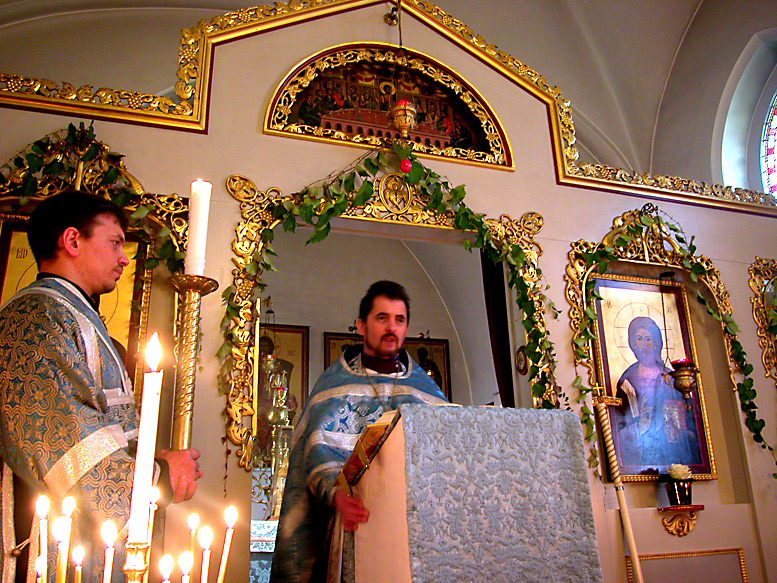
Orthodox ordination is not a private credentialing ceremony. It takes place in the Church's worship, with prayer, laying on of hands, and the bishop's authority. The liturgical setting shows that ordained ministry exists for the Eucharistic and pastoral life of the Church.
The timing of ordinations within the services also teaches something. The ordained ministry is not added from outside as administration. It arises within worship and returns to worship. The priest and deacon serve the altar, the Gospel, the chalice, the people, and the bishop's pastoral responsibility.
Axios and the people's witness
Ordination is public because ministry is not private property. In the service the Church prays, the bishop lays hands, the clergy participate, and the people witness what is happening. The acclamation often heard as Axios, meaning worthy, is not applause for a personal achievement. It is a sober liturgical witness that the person is being received into a responsibility that belongs to the Church.
The public character of ordination protects everyone involved. It reminds the ordained man that his ministry is accountable. It reminds the faithful that clergy serve within the Church's worship and order. It also keeps spiritual authority from becoming a private brand detached from bishop, altar, parish, and doctrine.
Apostolic order and accountability
The bishop is not merely an administrator. He is a sign of apostolic continuity, guardian of doctrine, and center of liturgical unity for the local Church. Priests serve under the bishop. Deacons serve in liturgical, charitable, and pastoral ways according to the bishop's and parish's needs.
This order also protects the faithful from self-appointed teachers. Orthodoxy does not recognize private claims to priesthood apart from the Church's ordination and canonical order.
The laity are not spectators
Holy Orders does not mean that only clergy matter. The whole Church is called to holiness, prayer, witness, almsgiving, and worship. Clergy serve the people of God so that the whole Body may live faithfully in Christ.
The laity sing, respond, bring children to baptism, prepare offerings, confess, commune, serve the poor, teach children, keep prayer at home, care for the sick, and bury the departed. Without faithful lay life, parish life becomes hollow. Holy Orders exists for the building up of the whole Body, not for replacing the Body with clergy.
Authority as accountability
Orthodox authority is not meant to be personal domination. A bishop, priest, or deacon receives responsibility before God and the Church. The higher the office, the more serious the accountability. This is why ordination is surrounded by prayer, public worship, canonical order, and the memory of apostolic continuity.
For lay readers, this matters because trust in clergy should be neither cynical nor naive. The Church honors ordained ministry, but also places ministry inside obedience, tradition, bishop, parish life, and pastoral accountability. Private charisma is not the measure of Orthodox authority.
Healthy respect and unhealthy fear
Orthodox Christians should respect clergy without turning that respect into fear, dependency, or personality worship. A priest is not a life coach with absolute control over every decision, and a spiritual father is not a substitute for conscience, family responsibility, medical care, civil law, or the bishop's order. Real pastoral authority should make a person more stable, repentant, prayerful, and connected to the Church, not more isolated or anxious.
At the same time, suspicion of every priest is not spiritual maturity. The better path is sober trust: attend services, learn the faith, ask questions, confess honestly, and stay inside the ordinary life of the parish. When something seems confusing or harmful, bring it to appropriate pastoral authority rather than letting internet arguments become the final court of appeal.
When clergy fail
Because clergy are human, failure is possible. Orthodox Christians should not use the theology of Holy Orders to excuse abuse, manipulation, financial misconduct, doctrinal distortion, or spiritual control. The Church's order includes accountability precisely because ministry is serious.
If someone encounters serious misconduct, they should seek appropriate help through parish, diocesan, and civil channels as the situation requires. Respect for priesthood is not silence before harm. True reverence for Holy Orders includes protecting the vulnerable and preserving the Church's pastoral integrity.
Healthy authority should make the parish more truthful
Good pastoral authority does not isolate people, demand secrecy for wrongdoing, replace conscience, or turn obedience into fear. It protects worship, doctrine, repentance, confession, Communion, family responsibility, and care for the vulnerable. When authority is confusing or harmful, the answer is not online panic; it is appropriate parish, diocesan, and, when necessary, civil accountability.
Why online religion cannot replace parish order
Modern readers can learn a great deal online, but Orthodox Christianity is not assembled from independent teachers. The sacramental life of the Church is local and embodied: a bishop, a parish, clergy, laity, worship, confession, Communion, and pastoral care. Holy Orders reminds seekers that the Church is not a content library. It is a living Body with order and responsibility.
Discernment for readers and catechumens
For someone learning Orthodoxy, Holy Orders teaches a practical habit: do not treat the internet as your bishop. Podcasts, videos, articles, and apps can help a seeker learn vocabulary and ask better questions, but they cannot absolve sins, bless Communion, receive someone into the Church, or carry pastoral responsibility for a soul.
This does not mean online learning is useless. It means online learning should lead toward parish life, not away from it. A serious Orthodox app should therefore point users toward prayer, Scripture, the calendar, and the Church's life rather than encouraging private religious independence.
A checklist for evaluating Orthodox teaching online
A reader should ask whether the teacher is connected to a canonical Orthodox parish or jurisdiction, whether the teaching leads toward worship and repentance, whether it respects bishops and parish life without hiding abuse, and whether it avoids turning Orthodoxy into outrage, tribal identity, or private expertise. The safest online teaching makes a person more prayerful, more stable, and more willing to live in the Church.
| Signal | Healthier pattern | Warning sign |
|---|---|---|
| Authority | Connected to canonical parish life and received teaching. | Self-appointed certainty with contempt for ordinary parishes. |
| Fruit | Prayer, humility, repentance, patience, and worship. | Suspicion, superiority, fear, and endless argument. |
| Pastoral limits | Sends personal matters back to priest, parish, and bishop. | Gives universal commands for strangers' confession, fasting, marriage, or Communion. |
Understand ordained ministry
Questions about ordination belong to a priest, spiritual father, and bishop. This guide explains meaning; it does not provide vocational direction.
Source note
This article follows Orthodox teaching on Holy Orders and the Orthodox Church in America's explanation of ordination and ordained ministry.
Questions people ask
What are Holy Orders?
Holy Orders is the Orthodox mystery of ordination for bishops, priests, and deacons.
Can someone make himself a priest?
No. Orthodox ordination belongs to the Church and is given through the bishop.
Are clergy above the laity?
Clergy have ordained responsibilities, but the whole Church is called to holiness and faithful service.
Can a person choose ordination as a private career?
No. Discernment is tested through the Church, spiritual guidance, theological formation, character, and the bishop's blessing.
Why does apostolic order matter?
It protects the Church's worship, doctrine, pastoral care, and unity from private self-appointment.
Can online teachers replace parish clergy?
No. Online teaching can help people learn, but Orthodox pastoral care, confession, Communion, and sacramental order belong to the parish and bishop.
Source Trail
Read this topic with the Church, not only the internet.
These links give a cautious path for checking the topic further. They do not replace parish worship, confession, pastoral guidance, or the calendar used by your bishop and local parish.
Parish Life
Learn the Church through prayer and worship.
Orthodox Daily Prayer helps readers stay close to prayer, Scripture, saints, fasting awareness, and the Church calendar.