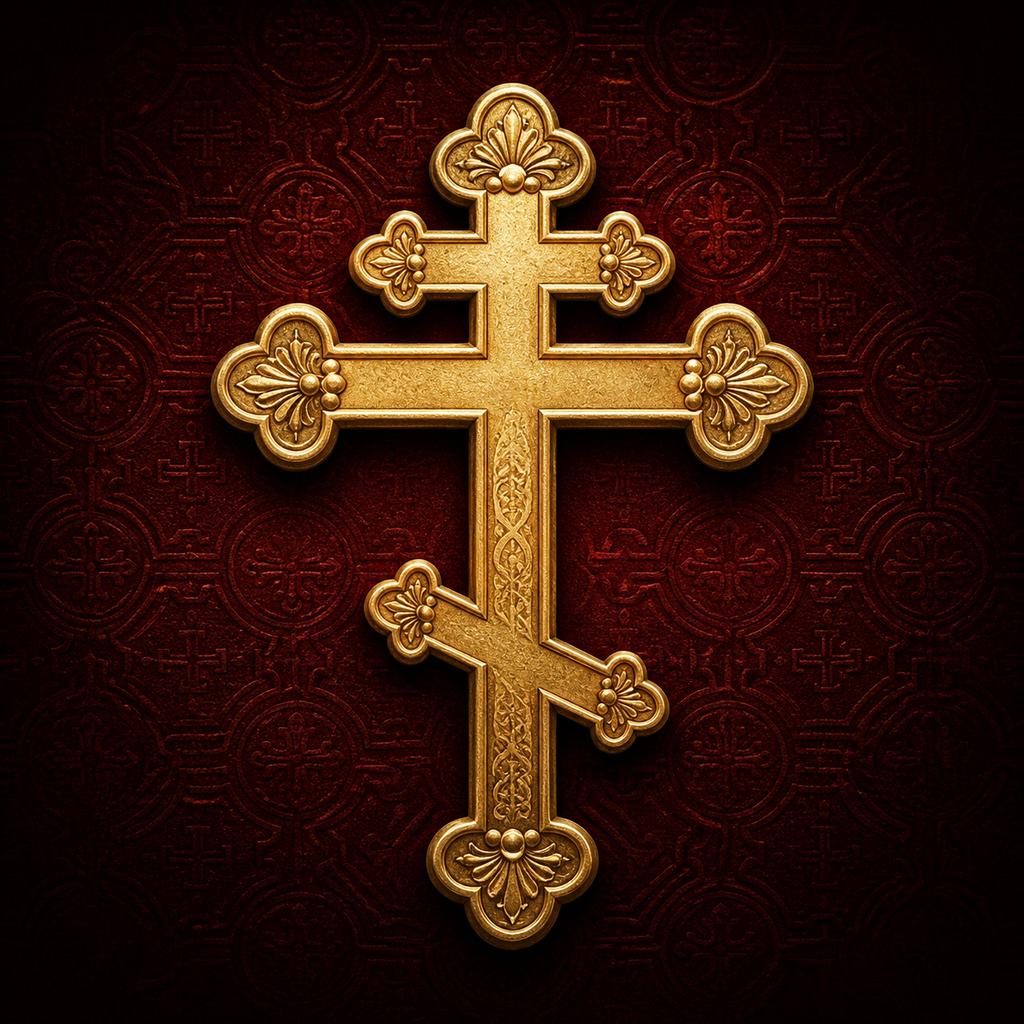

This page is written from an Orthodox perspective, but it should not be read as a complete description of every Catholic or Protestant community. Protestant traditions are especially diverse. The goal is orientation, not scoring points.
Do not begin with contempt.
Orthodox comparison should tell the truth without mocking Catholics, Protestants, or the real faith many people have received in those communities.
Learn Orthodoxy positively.
The Orthodox Church is not mainly a reaction against the West. Begin with Christ, worship, the Creed, Scripture, Tradition, sacraments, saints, and parish life.
Name diversity honestly.
Roman Catholicism and Protestant traditions are not the same thing, and Protestant communities differ widely from one another.
Comparison Method
Comparison should clarify Orthodoxy, not create contempt.
The most useful comparison begins with the positive Orthodox claim: the Church as worshiping communion, apostolic continuity, Scripture in Tradition, sacramental life, and healing in Christ.
- Start with Church life.Ask how authority, worship, councils, sacraments, bishops, saints, and Scripture function inside a living community.
- Avoid slogans.Roman Catholic and Protestant traditions are diverse. Serious comparison should name real differences without reducing people to internet caricatures.
- Return to worship.If comparison only produces argument, it has failed. The next step should be Liturgy, catechesis, prayer, and conversation with a priest.
Comparison should heal confusion, not feed pride
If comparison makes a reader more contemptuous, theatrical, or addicted to argument, it is spiritually unhealthy. A better comparison clarifies real differences and then leads the person toward worship, prayer, humility, catechesis, and conversation with a priest.
Comparison learning sequence
Compare responsibly by beginning with Church life and ending in worship, not argument.
Comparison Decision Guide
Compare from the question, not from the argument.
A person comparing Orthodox, Catholic, and Protestant Christianity may be asking about authority, Scripture, sacraments, worship, saints, salvation, or a painful church history. Each question needs a careful answer and a different next step.
Comparison Map
The fairest comparison begins with what each tradition means by Church.
Orthodoxy should not be explained as an anti-Catholic or anti-Protestant reaction. The deeper comparison asks how Scripture, Tradition, authority, sacraments, worship, saints, and salvation are held together inside the life of the Church.
Fairness Ledger
Christian comparison should name real differences without turning people into targets.
Many people arrive at Orthodoxy through confusion, disappointment, or sincere questions. A serious comparison can be clear about papacy, Scripture, Tradition, sacraments, icons, saints, and salvation while refusing contempt, lazy summaries, and conversion by outrage.
Many Catholics and Protestants confess Christ, read Scripture, pray, baptize, repent, and seek God; those realities should not be mocked.
Papacy, the Filioque, ecclesiology, Scripture and Tradition, sacraments, icons, saints, and authority remain serious questions.
Orthodoxy recognizes ancient primacy while rejecting later universal papal jurisdiction and doctrinal claims as later defined.
Anglican, Lutheran, Reformed, Baptist, Pentecostal, Methodist, and non-denominational communities are not interchangeable.
The heart is Christ, worship, the Creed, Scripture in Tradition, sacraments, saints, repentance, and parish life.
If comparison produces contempt, anxiety, or performance, it has stopped serving truth and needs to return to prayer.
The deepest difference
For Orthodox Christians, the Church is the living Body of Christ, preserving the apostolic faith in Scripture, Holy Tradition, the Ecumenical Councils, the sacramental life, the saints, and worship. Differences with other Christians often come back to how authority, continuity, and the life of the Church are understood.
The Orthodox approach begins with communion rather than private religious theory. The faith is received in the Church's worship, guarded by bishops in apostolic succession, expressed by the saints, and confessed through Scripture, councils, hymnography, fasting, icons, and the Holy Mysteries. This does not mean every Orthodox person is holy or every local situation is simple. It means Orthodoxy understands Christianity as a concrete ecclesial life, not only a set of ideas.
| Question | Orthodox emphasis | Why it matters |
|---|---|---|
| Authority | Scripture within Holy Tradition, received in the life of the Church. | The Bible is not separated from worship, councils, saints, and apostolic continuity. |
| Papacy | The bishop of Rome historically had primacy, but Orthodoxy rejects universal papal supremacy as later defined in Roman Catholicism. | This is central to the division between Orthodox and Roman Catholic churches. |
| Creed | Orthodoxy preserves the Nicene-Constantinopolitan Creed without the later Western Filioque addition. | The Creed is not only a text; it is a liturgical confession of the Holy Trinity. |
| Worship | The Divine Liturgy, icons, incense, hymnography, fasting, and the Church year form the faithful. | Doctrine is prayed and embodied, not only explained. |
| Sacraments | The Holy Mysteries are central to life in Christ, especially Baptism, Chrismation, Eucharist, and Confession. | Salvation is lived sacramentally and communally, not as a private idea alone. |
| Icons and saints | Icons and saints witness to the Incarnation and the communion of the Church in Christ. | Veneration is distinguished from worship, which belongs to God alone. |
The shared Christian grammar
Many comparisons become misleading because they begin with conflict. Orthodox, Roman Catholic, and many historic Protestant Christians share belief in the Holy Trinity, the Incarnation of Christ, the authority of Scripture, baptism, prayer, and the need for repentance. Orthodox Christians should acknowledge this honestly while still speaking clearly about real divisions.
The most useful question is not "which side wins an argument online?" but "what kind of Church life is being described?" Orthodoxy asks whether doctrine, worship, ascetic life, bishops, saints, sacraments, and councils are held together as one received life in Christ.
Is Orthodoxy closer to Catholicism or Protestantism?
The answer depends on what is being compared. Orthodoxy shares many ancient visible structures with Roman Catholicism: bishops, sacraments, saints, liturgical worship, councils, monastic life, and a strong sense of the Church as visible communion. But the divisions over papal authority, the Filioque, later doctrinal definitions, and the reception of doctrine are serious.
Compared with many Protestant traditions, Orthodoxy often differs more visibly in worship, sacraments, icons, saints, bishops, fasting, and Holy Tradition. But Protestant communities are diverse, and some historic Protestants retain more liturgical and sacramental language than others. The serious Orthodox answer is therefore not a simple ranking. Orthodoxy should be understood positively on its own terms.
What Orthodox Christians can affirm first
A serious Orthodox comparison should begin by naming what can be affirmed. Many Catholic and Protestant Christians love Christ, read Scripture, pray, baptize, confess the Trinity, care for the poor, and seek repentance. Orthodox Christians should not deny these realities in order to make a sharper argument.
At the same time, shared Christian language does not erase real division. Words such as Church, Tradition, sacrament, authority, grace, salvation, and Scripture can be used differently. The work of comparison is to understand those differences carefully rather than pretending they do not matter.
| Shared word | Why the meaning needs care |
|---|---|
| Church | Orthodoxy understands the Church as concrete Eucharistic communion, apostolic faith, bishops, councils, saints, and worship, not only a gathering of believers. |
| Tradition | Holy Tradition is not mere custom; it is the living transmission of the apostolic faith in Scripture, worship, councils, saints, and prayer. |
| Sacrament | Orthodoxy speaks of the Holy Mysteries as real participation in the life of Christ, not only symbolic reminders. |
| Salvation | Orthodoxy holds forgiveness, healing, communion with God, and theosis together rather than reducing salvation to one legal or emotional category. |
Orthodox and Catholic
Orthodox and Roman Catholic Christians share many ancient elements: belief in the Trinity, the Incarnation, sacraments, episcopal order, saints, and liturgical worship. The major divisions include papal authority, the Filioque, later doctrinal definitions, and different ways of understanding authority and development.
The Orthodox Church recognizes that Rome held a real primacy in the ancient Church, but rejects later definitions of universal papal jurisdiction and infallibility. Orthodox theology also preserves the Nicene-Constantinopolitan Creed without the Filioque addition. These questions are not small footnotes; they touch ecclesiology, Trinitarian theology, and how the Church receives doctrine.
A careful comparison should avoid saying that Catholics simply have "too much structure" or that Orthodox Christians have "no authority." That is lazy. The real question is how primacy, conciliarity, episcopal order, and doctrinal reception work together. Orthodoxy sees the fullness of the Church preserved in conciliar life, Eucharistic communion, bishops, councils, saints, and worship, without later papal definitions becoming the center of ecclesial unity.
The Filioque without internet slogans
The Filioque is the Western addition "and the Son" to the Creed's statement about the procession of the Holy Spirit. Orthodox objections are not only about one Latin word. They concern the authority to alter the Creed used by the whole Church and the theological language used for the eternal relations of Father, Son, and Holy Spirit.
For beginners, the safest summary is this: Orthodoxy keeps the Creed as confessed by the Ecumenical Councils and is cautious about theological language that confuses the Father's monarchy within Trinitarian doctrine. This topic deserves careful catechesis, not quick online victories.
Orthodox and Protestant
Protestant communities vary greatly, so one comparison cannot describe all of them. In general, Orthodoxy differs from many Protestant traditions in its understanding of Holy Tradition, the sacraments, icons, saints, episcopal continuity, liturgical worship, and the relationship between Scripture and the Church.
Orthodoxy does not treat Scripture and Tradition as enemies. Scripture is the inspired witness of the apostolic faith, read and prayed inside the Church that received it. This is why Orthodox worship is so saturated with biblical language, even when the service looks unfamiliar to someone from a modern low-church background.
It is also important to distinguish Protestant traditions from one another. A Lutheran, Anglican, Baptist, Reformed, Pentecostal, Methodist, and non-denominational Christian may have very different views of sacraments, worship, authority, and church history. Orthodoxy should not flatten them into a single caricature. A respectful inquirer asks what a particular person or community actually believes.
Scripture alone and Scripture in the Church
Many Protestant traditions use some form of sola scriptura, though they define it differently. Orthodoxy does not answer this by lowering Scripture. It answers by refusing to separate Scripture from the Church's worship, sacramental life, bishops, saints, councils, and received interpretation.
The Bible did not fall from heaven as an isolated manual. It is read, copied, proclaimed, prayed, and interpreted in the life of the Church. Orthodox Christians hear Scripture in the Divine Liturgy, Vespers, Matins, feasts, fasts, icons, psalms, hymns, and the writings of the Fathers. Scripture is central precisely because it is not cut away from the Body that received it.
Why Protestant diversity matters
A Baptist, Lutheran, Reformed, Anglican, Pentecostal, Methodist, and non-denominational Christian may disagree sharply with one another about baptism, the Eucharist, bishops, saints, icons, liturgy, church authority, and spiritual gifts. Therefore, an Orthodox page should not say "Protestants believe..." as if one sentence could cover everyone.
It is more accurate to say that Orthodoxy differs from many Protestant traditions in recurring areas: the place of Holy Tradition, the sacramental life, episcopal continuity, liturgical worship, icons, saints, and the interpretation of Scripture inside the Church. Specific conversations should ask what a particular person or community actually teaches.
Do not flatten people.
Other Christians should not be reduced to slogans such as "legalistic," "emotional," "modern," or "without tradition."
Do name real divisions.
Papacy, the Filioque, authority, Scripture, Holy Tradition, sacraments, icons, and ecclesiology are serious questions.
Let comparison become encounter.
The responsible next step is not endless debate, but attending services, learning the Creed, and speaking with a priest.
How to compare responsibly
| Better question | Why it helps |
|---|---|
| How does this tradition understand the Church? | Most differences eventually involve authority, continuity, sacraments, and worship. |
| How is doctrine prayed? | In Orthodoxy, the Creed, icons, hymnography, feasts, and fasting teach theology liturgically. |
| What is salvation? | Orthodoxy emphasizes forgiveness, healing, communion, and theosis together. |
| Who can guide me locally? | A canonical parish and priest are safer than isolated online debate. |
What beginners should avoid
Do not begin by despising other Christians. Do not reduce Orthodox Christianity to being "not Catholic" or "not Protestant." Orthodoxy should be approached positively: Christ, the Church, worship, repentance, Scripture, Tradition, the saints, and the healing of the human person.
Also avoid making comparison the emotional engine of conversion. Some people become interested in Orthodoxy because they are angry at a previous church. That pain may be real, but anger is not a stable foundation for Orthodox life. The better foundation is Christ, worship, repentance, truth, and a parish where the person can be healed rather than merely validated.
Why comparison should lead to worship
Comparison can clarify questions, but it cannot replace encounter with the Orthodox Church. The main differences become clearer inside worship: the Creed is prayed, icons are venerated, Scripture is proclaimed, the Eucharist is central, saints are remembered, and authority is experienced as parish and episcopal life rather than as a theory alone.
If comparison only produces contempt, anxiety, or argument, it has failed spiritually. A healthier comparison helps an inquirer ask better questions and then return to prayer, parish life, and catechesis.
What a respectful conclusion looks like
A respectful Orthodox conclusion can be both clear and humble: real divisions exist, and they matter; other Christians should not be mocked; Orthodoxy must be learned positively; and the final test of learning is not winning a comparison chart but entering repentance, worship, and communion with Christ in the Church.
This is why the page points readers toward parish life. A person cannot compare their way into Orthodoxy forever. At some point the question becomes concrete: will I attend services, learn the Creed, speak with a priest, and let the Church teach me how to pray?
Do Orthodox Christians think other Christians are not Christian?
Orthodox Christians should avoid careless answers here. Many Catholics and Protestants confess Jesus Christ, read Scripture, pray, baptize, love God, and seek repentance. Those realities should not be mocked or denied. At the same time, Orthodoxy does not treat divisions in doctrine, sacraments, authority, and communion as irrelevant.
A careful Orthodox answer can say both things: there is real Christian faith outside visible Orthodox communion, and the fullness of Orthodox ecclesial life matters. This is why the page avoids contempt while still naming real differences.
Common questions about Christian differences
What is the main difference between Orthodox and Catholic Christianity?
From an Orthodox perspective, the central differences include papal universal jurisdiction, later Western doctrinal definitions, the Filioque, and different ways of understanding authority, councils, and continuity.
What is the main difference between Orthodox and Protestant Christianity?
Protestant traditions differ widely, but Orthodoxy generally differs in its understanding of Holy Tradition, sacraments, icons, saints, episcopal continuity, liturgical worship, and Scripture within the Church.
Should beginners start with arguments against other Christians?
No. Beginners should first learn Orthodox Christianity positively through Christ, worship, parish life, Scripture, Holy Tradition, prayer, repentance, and the sacraments.
Do Orthodox Christians reject Scripture?
No. Scripture is central in Orthodox worship and teaching. Orthodoxy rejects separating Scripture from the Church's worship, Holy Tradition, councils, saints, and received interpretation.
Do Orthodox Christians think all Protestants believe the same thing?
No. Protestant communities are very diverse. A responsible Orthodox comparison should name common areas of difference while avoiding a single caricature of all Protestants.
Is Orthodoxy closer to Catholicism or Protestantism?
Orthodoxy shares many ancient structures with Roman Catholicism, such as bishops, sacraments, saints, and liturgical worship, but differs sharply on papal authority, the Filioque, and later doctrinal definitions. With many Protestant traditions, Orthodoxy differs on Scripture and Tradition, sacraments, icons, saints, and ecclesiology.
Do Orthodox Christians think Catholics and Protestants are not Christian?
Orthodox Christians can acknowledge that many Catholics and Protestants confess Christ, read Scripture, pray, and seek God, while also saying that real divisions in doctrine, authority, sacraments, and communion matter.
Comparison study path
These pages explain the Orthodox foundations behind the differences.
Source note
This page presents a simplified Orthodox-oriented overview. Catholic and Protestant traditions are internally diverse, so serious comparison should use primary sources, careful catechesis, and respectful conversation.
Source Trail
Read this topic with the Church, not only the internet.
These links give a cautious path for checking the topic further. They do not replace parish worship, confession, pastoral guidance, or the calendar used by your bishop and local parish.
Learn Positively
Move from comparison into daily Orthodox practice.
Orthodox Daily Prayer helps inquirers keep prayer, Scripture, saints, fasting awareness, and the Church calendar close while learning the faith without polemical noise.
This page is introductory and simplified. For serious doctrinal questions, use responsible catechetical sources and speak with a priest in a canonical Orthodox parish.