Holy Thursday stands at the turning point of Holy Week. The Church remembers the Mystical Supper, Christ's humility, the betrayal of Judas, and the Passion Gospels that lead the faithful toward the Cross.
In many Orthodox parishes, the Divine Liturgy of Holy Thursday is connected with the remembrance of the Mystical Supper. Later, the service of the Twelve Passion Gospels draws the Church into the suffering of Christ through extended Gospel readings.
Christ gives Himself and reveals the Eucharistic life of the Church on the road to the Cross.
Holy things can be approached without conversion; Judas is remembered as a sober warning to every heart.
The washing of feet and the commandment of love judge every form of religious pride.
Mystical Supper
Holy Thursday holds Communion, humility, betrayal, and the Cross together.
The day is not only a remembrance of a sacred meal. It reveals Christ giving Himself while human hearts are still confused, proud, fearful, and capable of betrayal.
- Approach Communion through the parish.Preparation, confession, fasting, and blessing belong to local pastoral guidance, not self-invitation.
- Hear the warning of Judas.Holy things can be near the hands while the heart remains unconverted; the day calls for sobriety.
- Let love become concrete.The washing of feet and the commandment of love judge pride and turn Eucharistic life toward service.
Pastoral note
If you hope to receive Holy Communion on Holy Thursday, follow your parish's preparation and the priest's blessing. Visitors may attend reverently, but Communion is not self-invited or decided from an online guide.
Mystical Supper System
Holy Thursday is the threshold where Communion, humility, betrayal, and the Passion meet.
Orthodox Holy Thursday is not a single devotional topic. The Church remembers the Passover meal of the New Covenant, the washing of the disciples' feet, Judas' betrayal, Gethsemane, and the Gospel witness that leads into Holy Friday. The day teaches that Eucharistic life cannot be separated from repentance, humility, and love.
The Church does not treat the Supper as symbolic nostalgia. It is remembered inside the Eucharistic life that points to the Kingdom.
The Lord and Teacher kneels before His disciples, making humility inseparable from Orthodox worship.
Judas is remembered soberly because religious nearness without repentance can become divided love.
Parish preparation for Communion belongs to confession, reconciliation, fasting guidance, and the blessing of the priest.
The Twelve Passion Gospels draw the faithful from supper and betrayal toward trial, Cross, and burial.
Holy Thursday shows that Christ's mission is not only to found a rite, but to bring human beings to the table of His Kingdom.
The Mystical Supper
The Last Supper is not treated as a past religious meal only. Orthodox worship receives it eucharistically. Christ gives Himself, commands love, and reveals humility before the disciples fail to understand the full weight of what is happening.
Holy Thursday holds several mysteries together: the Eucharist, the washing of feet, the commandment of love, the betrayal of Judas, and the movement toward Gethsemane, trial, and Crucifixion. It is therefore not only a "Communion day." It is the revelation that Christ gives Himself completely while human hearts are still confused, fearful, and divided.
What usually happens liturgically
Parish schedules vary, but Holy Thursday often includes the Vesperal Divine Liturgy of Saint Basil connected with the Mystical Supper, and later the Matins service with the Twelve Passion Gospels, commonly served on Thursday evening. Some cathedral or monastery customs may include the washing of feet. Local practice should always be checked with the parish.
This means Holy Thursday is not a single simple service. It is a movement through Eucharist, humility, betrayal, Gethsemane, trial, and Passion. The faithful are not merely remembering facts; they are being drawn into the Church's liturgical passage toward the Cross.
Why Holy Thursday begins the Passion in the Church's hearing
Holy Thursday gathers the Church around the table of the Mystical Supper and then leads the faithful into the Passion through the Gospel readings. This order matters. The Cross is not separated from the Eucharist, and the Eucharist is not separated from the Cross. Christ gives Himself sacramentally and then goes freely toward suffering and death.
This prevents a shallow reading of Communion as a private religious moment. Holy Communion is the gift of the Crucified and Risen Lord, received inside repentance, reconciliation, humility, and the life of the Church.
Washing of feet and the commandment of love
The washing of feet, where observed liturgically, shows that Christ's lordship is revealed as self-emptying service. Even where the rite is not served publicly, the Gospel theme remains central. The Lord and Teacher kneels before His disciples and gives the commandment of love.
Holy Thursday therefore judges every form of religious pride. The person who approaches holy things while despising others has not understood the day. The Eucharistic life of the Church is inseparable from humility, forgiveness, and service.
Holy Thursday learning sequence
Holy Thursday is best read as one movement: gift, humility, betrayal, Gospel witness, Cross. Each theme corrects a shallow reading of the day.
Great and Holy Thursday
Read Holy Thursday as Eucharist, humility, agony, and betrayal held together.
Orthodox Holy Thursday is not a single-theme day. The Church remembers the Mystical Supper, the washing of the disciples' feet, Christ's prayer and agony, and the betrayal that leads into the Passion. The Twelve Gospels then teach the faithful to hear the Cross slowly.
| Theme | Meaning |
|---|---|
| Mystical Supper | Christ gives Himself and reveals the Eucharistic life of the Church. |
| Humility | The washing of feet shows lordship as self-emptying love. |
| Betrayal | Judas shows the tragedy of a heart near holy things yet turned away. |
| Passion Gospels | The Church listens as Christ moves toward trial, suffering, and the Cross. |
The Twelve Passion Gospels
The evening service of the Twelve Gospels is long because the Church listens carefully. The faithful hear the Lord's betrayal, trial, suffering, Crucifixion, and burial through the Gospel witness. The length is part of the pedagogy: Holy Week slows the heart so that the Passion is not reduced to a quick summary.
Standing through the readings is not an athletic test. It is a form of attention. People who cannot stand the whole time should participate as they are able, with humility rather than comparison.
Why people hold candles
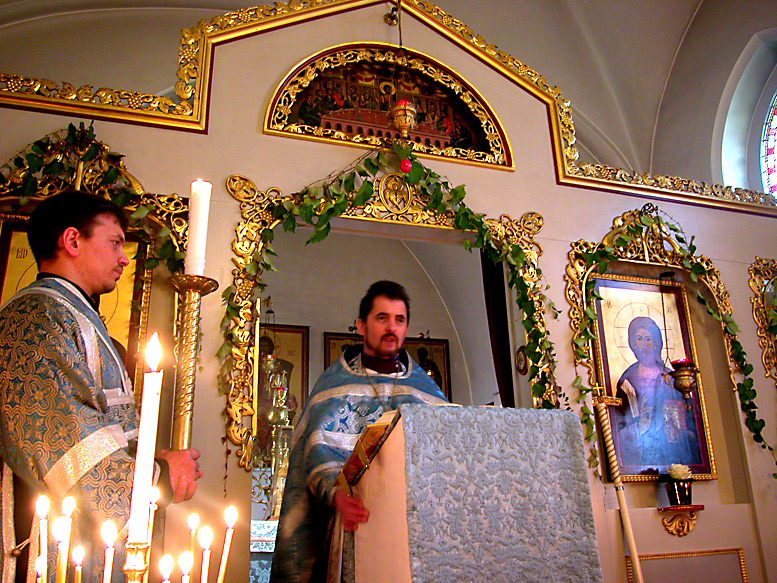
In many parishes, the faithful hold candles during portions of the Passion Gospel service. Customs differ, but the basic meaning is clear: the Church keeps watch with Christ. The candle is not a prop for atmosphere; it is a small sign of prayerful presence while the Gospel of the Passion is proclaimed.
Visitors should not worry about doing everything perfectly. Watch the parish, follow quietly where appropriate, and ask questions afterward. Holy Week is learned by participation over years, not by instant performance.
How to approach Holy Thursday
Come with sobriety rather than emotional consumption. The services ask the faithful to examine love, betrayal, Communion, and the cost of discipleship. Preparation for Communion should follow parish guidance, not private improvisation.
If you hope to receive Holy Communion on Holy Thursday, follow the preparation expected in your parish. Orthodox Communion is not self-invited. It belongs to the sacramental life of the Church, confession and reconciliation as guided locally, and the blessing of the priest.
Love and betrayal stand close together
Holy Thursday is spiritually unsettling because the Eucharist and betrayal are remembered in the same movement. Christ gives Himself completely, while Judas turns away and the disciples are still weak. The Church does not hide this tension. It teaches that nearness to holy things must become repentance, humility, and love, not religious familiarity.
This is why the day is not only historical memory. It asks whether the Christian receives Christ with gratitude or approaches the mysteries casually. It also asks whether love remains theoretical while the heart keeps resentment, pride, or self-protection.
Why Judas is remembered so sharply
Judas is not remembered in order to create contempt for one person from the past. His betrayal reveals a danger inside religious life itself: a person can stand close to Christ, hear holy words, and still allow the heart to become divided. Holy Thursday therefore warns against familiarity without conversion.
This warning should be received personally and soberly. The Church places betrayal beside the Mystical Supper so that Communion is never detached from repentance, reconciliation, humility, and love.
Why the service can feel long
The Twelve Passion Gospels slow the reader down. Instead of summarizing the Passion in a few sentences, the Church lets the Gospel witness speak at length. This length forms attention. It allows betrayal, trial, mockery, silence, Crucifixion, and burial to be heard as a single saving movement rather than scattered scenes.
Common misunderstandings
| Misunderstanding | Orthodox correction |
|---|---|
| Holy Thursday is only about receiving Communion. | The day is Eucharistic, but it also holds humility, betrayal, Gethsemane, the Passion Gospels, and the Cross. |
| The Twelve Gospels are long only for tradition's sake. | Their length forms attention and allows the Passion to be heard rather than summarized. |
| Judas is remembered so we can despise him. | Judas warns every Christian against nearness to holy things without repentance and love. |
| Standing through everything proves devotion. | Participation should be humble and bodily limits should be handled without comparison. |
For first-time visitors
Holy Thursday evening can be intense for a first Orthodox service. The readings are long, the church may be dark, people may stand for extended periods, and the mood is sober. You can still attend respectfully. Sit when needed, stand when able, and do not turn physical endurance into the measure of participation.
It may help to read the Gospel Passion narratives before arriving. But even without preparation, the service can teach through repetition, chant, silence, and the slow unfolding of the readings. The important thing is to be present with humility.
How to prepare without reducing the day to logistics
Practical preparation matters: check service times, plan travel, eat and fast according to parish guidance, and arrive with enough quiet to listen. But Holy Thursday is not only a scheduling problem. It asks the person to prepare the heart for gift, betrayal, self-emptying love, and the Cross.
A useful preparation is to read John 13-17 and the Passion narratives, examine resentments, seek peace where possible, and ask whether love has become only an idea. The day calls for attention, not religious efficiency.
Holy Thursday should not become Communion logistics
The day is not improved by anxiety about doing every detail perfectly. The more Orthodox way is sober preparation: check the parish schedule, follow the fasting and Communion guidance you have been given, ask forgiveness where possible, and let the readings teach you slowly.
A careful Holy Thursday path
Because Orthodox parishes may serve the Vesperal Liturgy, the Twelve Passion Gospels, or local customs at different times, the safest way to understand Holy Thursday is by its theological movement rather than by a single universal timetable.
| Movement | What to notice | Why it matters |
|---|---|---|
| Mystical Supper | Christ gives Himself before the disciples understand the Passion. | The Eucharist is inseparable from the Cross and from life in the Church. |
| Commandment of love | The Lord reveals authority as humility and self-emptying service. | Orthodox worship cannot be separated from forgiveness, mercy, and concrete love. |
| Betrayal | Judas stands near holy things while his heart turns away. | The day warns against religious familiarity without repentance. |
| Passion Gospels | The Church listens at length as Christ goes freely toward suffering. | Holy Week forms attention; it does not rush the faithful past the Cross. |
| Holy Friday | The Cross and tomb become the center of the Church's prayer. | Holy Thursday only makes full sense inside the whole Paschal passage. |
Place Holy Thursday inside the week
A serious Orthodox calendar should help people see where they are: not only the date, but the spiritual sequence. Holy Thursday belongs between watchfulness and the Cross.
Eucharist and self-emptying belong together
Holy Thursday should not be reduced to a single topic, even though it is deeply Eucharistic. The Mystical Supper is surrounded by humility, commandment, betrayal, and the movement toward the Cross. Orthodox worship holds these together because Communion is not separated from the life of self-giving love.
This matters pastorally. To approach Holy Communion while ignoring reconciliation, humility, and mercy would misunderstand the day. Holy Thursday calls the faithful to receive Christ's gift and to be judged by the love with which He gives Himself.
What Holy Thursday asks of the heart
Holy Thursday asks whether the Christian receives Christ as gift or uses holy things as proof of religious identity. The day brings together Eucharist, commandment, betrayal, and Passion so that no one can separate sacrament from repentance or worship from love.
For serious seekers, this is one of the clearest windows into Orthodoxy. The Church does not treat Communion as a symbol detached from life, nor as a private spiritual possession. The Eucharistic life is received in humility, obedience, reconciliation, and the concrete commandment to love.
Holy Thursday study path
Read Holy Thursday together with Eucharist, betrayal, the Cross, and Pascha.
Source note
This guide follows Orthodox Holy Week liturgical teaching and the Orthodox Church in America's material on Holy Thursday. Local service order can vary by parish.
Questions people ask
What is remembered on Orthodox Holy Thursday?
The Mystical Supper, Christ's humility, betrayal, and the beginning of the Passion are central themes.
What are the Twelve Gospels?
They are extended Passion Gospel readings served in many parishes on Holy Thursday evening.
Is Holy Thursday about Communion?
Yes, but always within the wider mystery of Christ's self-giving, love, betrayal, and Passion.
Can visitors attend the Twelve Gospels service?
Yes. Visitors may attend respectfully, sit when needed, and follow the parish quietly without trying to do everything perfectly.
Source Trail
Read this topic with the Church, not only the internet.
These links give a cautious path for checking the topic further. They do not replace parish worship, confession, pastoral guidance, or the calendar used by your bishop and local parish.
Holy Week Rhythm
Keep the readings close when the week becomes intense.
The app helps keep prayer, Scripture, fasting awareness, and the calendar together.