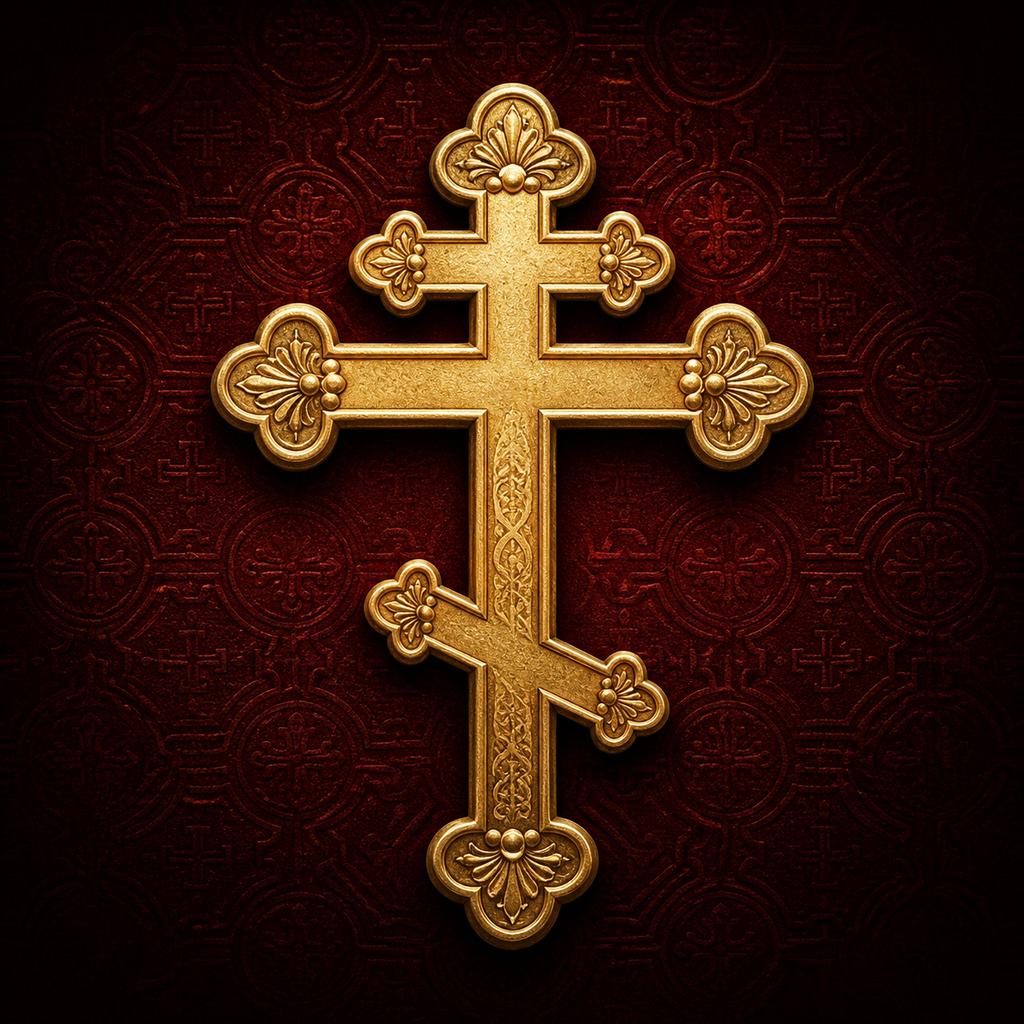
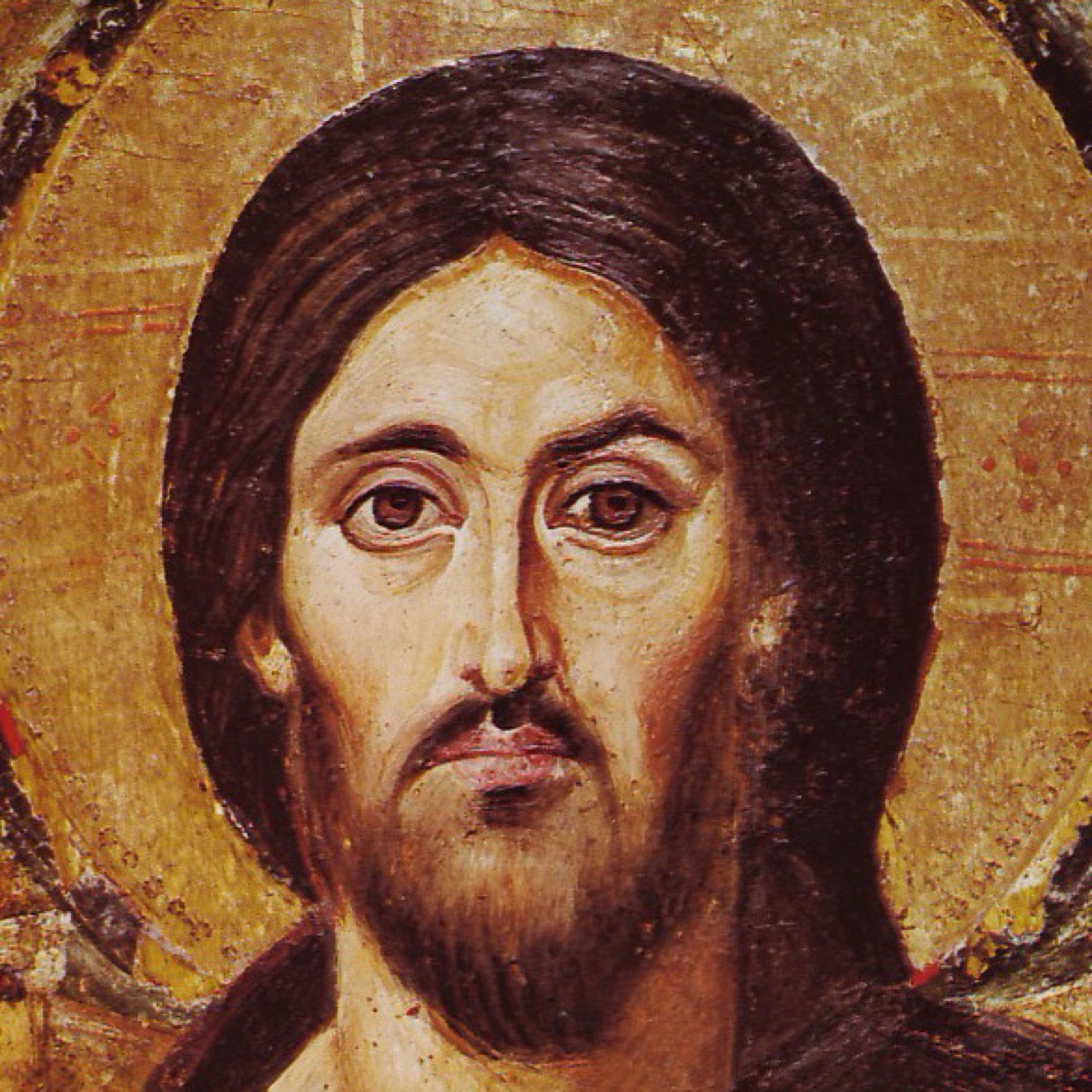
Holy Friday is the day of the Lord's Crucifixion and burial. Orthodox worship approaches it with solemnity, fasting, Gospel readings, veneration of the Cross, and lamentation before the tomb of Christ.
The services do not invite theatrical grief. They teach the faithful to stand before the mystery of divine love entering death. The Cross reveals both human violence and God's self-emptying mercy.
Christ is not defeated by death. He gives Himself freely for the life of the world.
The Church grieves truthfully before the Cross and tomb, but never as people without Pascha.
The day asks for attention, restraint, prayer, fasting as guided, and mercy rather than spectacle.
Before The Tomb
Holy Friday is grief held inside the victory of Christ.
The Church does not rush past the Crucifixion. It stands before the Cross and tomb with reverence, repentance, silence, and hope already beginning to burn beneath the sorrow.
- Stand with the Passion.The Gospel readings, hymns, Cross, and burial icon teach the faithful to behold Christ's voluntary suffering.
- Do not make grief theatrical.Holy Friday is solemn, but not despairing. Orthodox sorrow is truthful because Pascha is coming.
- Keep the day with restraint.Fasting, quiet, service attendance, and mercy should match parish guidance and real capacity.
Pastoral note
Holy Friday can touch real grief. If the services awaken sorrow, bring it before Christ rather than trying to perform religious emotion. People with health, work, family, or trauma-related limits should keep the day with guidance, humility, and peace.
The Cross and the tomb
In many parishes, the icon of Christ's burial, often called the epitaphios or plaschanitsa depending on tradition, is placed for veneration. The Church sings lamentations, not as despair, but as worship at the place where Life lies in the tomb.
Holy Friday is not a performance of sadness. Orthodox worship stands before the Cross because the Cross reveals the depth of divine love. Christ does not suffer as a helpless victim of history. He gives Himself freely, and His silence before violence becomes the judgment of human pride and the revelation of God's mercy.
Holy Friday learning sequence
Holy Friday should be read slowly: Cross, Gospel witness, burial, lamentation, and the quiet movement toward Holy Saturday.
Passion And Burial
Read Holy Friday as the voluntary Passion, burial, and hope before Pascha.
Orthodox Holy Friday is solemn, but not nihilistic. The Church listens to Scripture, venerates the Cross, gathers around the burial icon, and laments with hope because Christ enters death as the Life of the world.
Passion Witness System
Holy Friday is learned by standing inside Scripture, worship, silence, and the tomb.
The services do not create religious atmosphere first and meaning second. Orthodox Holy Friday begins with witness: the Passion Gospels, prophecy, psalms, apostolic readings, Royal Hours, veneration, burial, lamentation, and the Church's refusal to separate grief from Pascha.
Often served Thursday evening, this service places betrayal, trial, Cross, and death before the faithful through Gospel witness.
The Cross is interpreted by the whole scriptural world, not by private emotion alone.
The Church stands before the Crucifixion and burial rather than moving as if the day were ordinary.
Local names and customs differ, but the meaning is the Lord's true burial and voluntary descent into death.
Holy Friday permits sorrow while refusing nihilism, because the Crucified One is the Life of the world.
Holy Friday is distorted if it is cut away from Holy Saturday, the descent to the dead, and Pascha.
| Element | Meaning |
|---|---|
| Cross | Christ suffers voluntarily for the life of the world. |
| Burial | The Lord truly enters death and the tomb. |
| Lamentations | The Church grieves with hope, already facing Pascha. |
| Fasting | The day is kept with seriousness according to parish and pastoral guidance. |
Veneration without despair
When the faithful venerate the Cross or the burial icon, they are not venerating defeat. They are honoring Christ's voluntary Passion and confessing that the Lord enters even death to save. The solemnity of the day is therefore filled with hope, even before the Paschal proclamation is heard.
Holy Friday also teaches restraint. Words become fewer, services become heavier, and ordinary distractions feel out of place. This is not because creation is evil, but because the Church is standing at the mystery of the Lord's death.
The epitaphios, plaschanitsa, and local names
Different Orthodox traditions may use different words for the burial icon-cloth: epitaphios, plaschanitsa, shroud, or other local terms. The exact customs around procession, flowers, veneration, and placement can vary by parish. The common meaning is the same: the Church gathers around the burial of Christ and worships the Lord who truly enters the tomb.
Visitors should not worry if they do not know when to bow, cross themselves, or approach. Watch the parish, move slowly, and remain reverent. If you are unsure, it is perfectly acceptable to stand quietly. Reverence is not measured by performing every gesture perfectly.
Royal Hours and the Gospel witness
Many Orthodox parishes keep Holy Friday with solemn services that include Scripture, hymns, veneration, and the remembrance of Christ's Passion. The Royal Hours and other services gather prophecy, psalms, apostolic readings, and Gospel readings so that the Cross is heard through the whole witness of Scripture.
This protects Holy Friday from becoming a purely visual or emotional event. The Church does not simply look at a Cross; she listens to the Word of God and lets the readings interpret the Passion.
That scriptural density matters. Without the readings, the Cross can be reduced to a symbol onto which people project private emotion. With the readings, the Church hears betrayal, trial, mockery, silence, crucifixion, burial, prophecy, lament, and obedience inside the whole story of God's saving work.
In many Orthodox parishes, the Matins of Holy Friday with the Twelve Passion Gospels is served on Thursday evening, while the Royal Hours are served on Friday morning. Local schedules vary, but the structure matters: the Passion is received through sustained listening before it is processed emotionally or visually.
How to approach Holy Friday
Keep the day as quietly as possible. Attend services if you can. Resist the urge to turn the day into religious content. The Church asks for reverence, repentance, silence, and gratitude before the Crucified Lord.
The Cross judges and heals
Holy Friday does not present the Cross as an abstract religious symbol. It shows human betrayal, fear, violence, mockery, and injustice gathered around the innocent Christ. At the same time, it reveals divine love that does not answer evil with revenge. The Cross judges the world by exposing sin, and it heals the world by revealing self-emptying mercy.
This is why Orthodox veneration of the Cross is not morbid. The faithful bow before the Crucified Lord because His suffering is voluntary and saving. The Cross is not separated from Pascha, but Pascha is not allowed to become shallow optimism detached from the cost of love.
Voluntary Passion, not divine defeat
Orthodox worship repeatedly emphasizes that Christ goes to His Passion voluntarily. This protects Holy Friday from the idea that death simply overpowered Him. The Lord who raises Lazarus and enters Jerusalem freely also gives Himself freely. His humility is not weakness; it is the power of divine love revealed through self-emptying.
This matters pastorally because many people stand before the Cross with their own experiences of injustice, grief, or fear. The Church does not say suffering is good in itself. It says Christ has entered suffering and death in order to transfigure and conquer them. The Cross is saving because of who hangs upon it: the incarnate Son of God.
Fasting and silence
Holy Friday is commonly kept with seriousness and fasting according to pastoral guidance. The discipline is not meant to display toughness. It makes room for attention. Silence, restraint, and prayer help the faithful stand before the Passion without rushing away from it.
People with illness, pregnancy, demanding work, age, or other burdens should follow pastoral guidance rather than internet rules. The point of the day is not to prove endurance. The point is repentance, reverence, and love before the Crucified Lord. A person who cannot keep a strict fast can still keep Holy Friday with attention, prayer, less noise, and charity.
Holy Friday is also commonly marked by the absence of the Divine Liturgy. This absence should not be misunderstood as emptiness. It is a solemn liturgical pause before the Cross and burial of the Lord, a way the Church lets the Passion shape the whole day.
Why Orthodox grief is not despair
Holy Friday allows real grief. The Church does not rush past the Cross, explain away suffering, or pretend that death is harmless. At the same time, Orthodox grief is never hopeless, because the one hanging on the Cross is the Lord of glory and the Life of the world.
This is why the services can feel both devastating and strangely steady. The faithful stand before the Crucified Christ not to admire tragedy, but to worship the love that freely enters death in order to destroy it from within.
The Mother of God and human sorrow
Holy Friday is also heard through the sorrow of the Theotokos. Orthodox hymnography gives voice to the Mother standing near the Passion of her Son. This is not sentimental decoration. It shows that the Cross enters real human grief, maternal sorrow, and the wound of love. The Church does not make suffering abstract.
For people carrying grief, this matters. Holy Friday does not tell mourners to be untouched by pain. It teaches them to bring pain into the presence of Christ, where sorrow is not denied but is held inside the coming victory of Pascha.
What to do with anger on Holy Friday
The Passion narratives expose betrayal, cowardice, injustice, mockery, and violence. It is natural that anger may arise. Orthodox worship does not invite the faithful to turn that anger into contempt for particular people or groups. The services ask each person to see the human condition, including the betrayal and fear that can live in one's own heart.
Holy Friday is therefore not a day for blaming others from a distance. It is a day to stand before Christ, confess the world's violence and one's own sin, and ask for the mercy that flows from His voluntary Passion.
What Holy Friday is not
Holy Friday is not a reenactment staged for religious effect, and it is not an invitation to enjoy sadness. It is also not a day to isolate the Cross from the Resurrection. Orthodox worship gives the Cross its full weight precisely because Pascha is real. The grief is truthful, but it is never nihilistic.
For visitors, this can be important. The dark colors, solemn hymns, long services, and veneration of the burial icon may feel intense. The center is not theatrical mourning, but worship of Christ who voluntarily enters death for the life of the world.
Why Holy Friday should not be isolated from Holy Saturday
Holy Friday reaches toward Holy Saturday. The Cross leads to burial; burial leads to the mystery of Christ's descent to the dead; and the hidden victory of Holy Saturday opens into Pascha. Separating these days can distort the whole week. The Cross is not understood fully without the tomb, and the tomb is not understood fully without the Resurrection.
This is why a serious Holy Week rhythm tries to keep the sequence together, even if only through readings and short prayers at home. The Church is not giving disconnected commemorations. It is leading the faithful through the saving work of Christ step by step.
For people who cannot attend the services
Some people cannot be present on Holy Friday because of work, illness, caregiving, distance, or family circumstances. They should not turn absence into despair. A simple rule can still keep the day: read the Passion Gospels or a smaller portion, pray before an icon of Christ, avoid unnecessary noise, remember the suffering and the departed, and ask God for repentance.
An app can assist with reminders, Scripture, and a quiet prayer rhythm, but Holy Friday belongs to the Church's worship. The best use of digital tools is to keep the person connected to that worship and to help them return to the parish when they can.
Why Holy Friday reaches people beyond church walls
Even people far from Orthodox practice often recognize the gravity of the Cross. Holy Friday speaks to betrayal, injustice, violence, grief, silence, and death without pretending they are small. But it also refuses to let those realities define the world finally. The Crucified One is the Life of the world.
This makes Holy Friday a serious doorway for seekers. It does not offer easy comfort. It offers Christ, who enters the deepest human darkness voluntarily and opens the path toward Pascha. The Church's task is to present that truth without theatrical sadness and without flattening it into a motivational lesson.
Holy Friday study path
Read Holy Friday through the Cross, burial, Holy Saturday, and Pascha.
Source note
This guide follows Orthodox Holy Week liturgical teaching and the Orthodox Church in America's material on Holy Friday. Local customs and names for the burial icon vary.
Questions people ask
What happens on Orthodox Holy Friday?
The Church commemorates the Crucifixion, death, and burial of Christ through solemn services and veneration.
What is the epitaphios?
It is the icon-cloth of Christ's burial, venerated in many Orthodox parishes during Holy Friday services.
Is Holy Friday only sad?
No. It is deeply solemn, but Orthodox worship grieves in the light of Christ's coming Resurrection.
Is there Divine Liturgy on Orthodox Holy Friday?
In ordinary Orthodox practice, the Divine Liturgy is not celebrated on Holy Friday because the Church stands before the Crucifixion, death, and burial of Christ.
Source Trail
Read this topic with the Church, not only the internet.
These links give a cautious path for checking the topic further. They do not replace parish worship, confession, pastoral guidance, or the calendar used by your bishop and local parish.
Before The Tomb
Let Holy Week slow the heart.
The app helps keep prayer, Scripture, and the Church calendar present without turning faith into noise.