The Exaltation of the Cross is kept on September 14 according to the parish calendar. It is one of the great feasts of the Church and is normally observed as a fast day, even though it is a feast, because the Cross is inseparable from Christ's Passion.
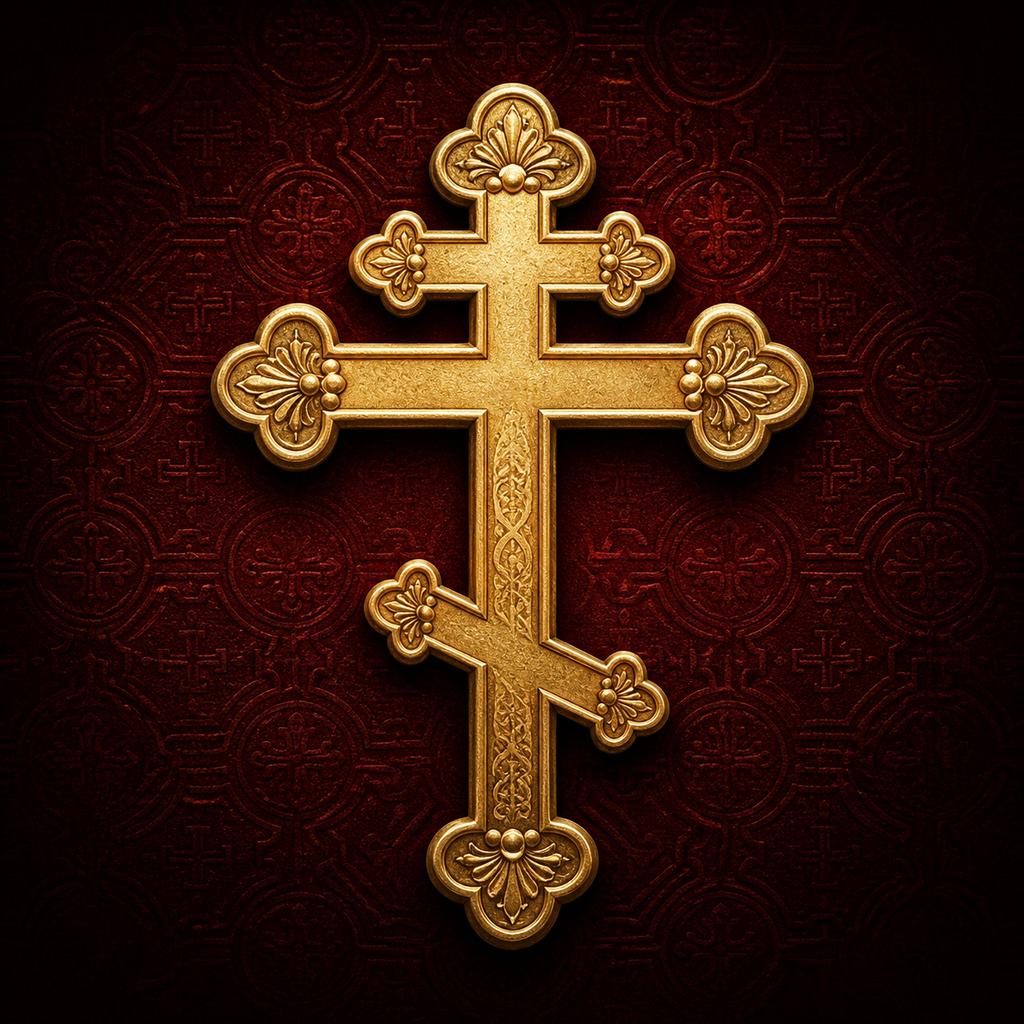
Orthodox Christians venerate the Cross because Christ used the instrument of death as the instrument of salvation. The feast teaches that the Cross is not humiliation without glory, nor glory without suffering. It is the place where divine love is revealed as self-offering.
The Cross belongs to Christ.
Orthodox Christians do not isolate the Cross from the Crucified and Risen Lord. The feast is Christological before it is devotional.
Joyful, sober, and fasting.
The Church exalts the sign of victory while remembering the Passion, which is why the day is commonly kept with fasting.
Never romanticize harm.
The Cross is Christ's voluntary self-offering, not a religious excuse for abuse, coercion, or untreated suffering.
Feast Reading
The Cross is victory because Christ's love descends into death.
The Exaltation is solemn and triumphant at once. Orthodox worship bows before the Cross because the Crucified and Risen Lord has made it the sign of salvation.
- Venerate Christ, not an object alone.The Cross is honored because of the Lord who was crucified upon it and rose from the dead.
- Keep the fasting tone.The feast is joyful, but sober, because it remembers the Passion and calls the faithful to repentance.
- Reject misuse.The Cross should never become tribal decoration, political weapon, or religious cover for harm.
Exaltation of the Cross learning sequence
This feast joins victory, sacrifice, veneration, fasting, and ordinary discipleship.
Feast Context
Read the Cross as worship, fasting, and discipleship together.
The Exaltation is strongest when it is not reduced to a symbol. Orthodox worship keeps Christ, Holy Friday, veneration, fasting, calendar practice, and ordinary repentance together so the Cross remains the sign of self-giving victory rather than decoration or power language.
Cross Allegiance System
The Exaltation asks who receives the Christian's deepest loyalty.
The feast has historical memory, imperial language, public ritual, biblical readings, fasting, and veneration. Orthodox worship gathers those layers and redirects them toward Christ crucified and risen, so the Cross becomes a pledge of repentance rather than a badge of domination.
The Church remembers the finding of the Cross and its elevation, but the feast is not archaeology alone.
The liturgical action teaches public allegiance to Christ, not spectacle or religious theatre.
The feast draws together biblical images that show salvation through the Crucified Lord.
Fasting guards the feast from shallow triumphalism and returns the heart to repentance.
Orthodox prayer spiritualizes conquest language, refusing to make the Cross a weapon of worldly pride.
The feast calls for courage, truth, protection of the wounded, mercy, and voluntary self-giving in Christ.
What the feast teaches
| Theme | Meaning |
|---|---|
| Date | September 14 on the church calendar used by the parish. |
| Veneration | The Cross is honored because of Christ, not as an object apart from Him. |
| Fasting | The feast is often kept with fasting because it recalls the Passion. |
| Victory | The Cross is the sign of Christ's victory over sin, death, and corruption. |
Not a symbol of power politics
The Cross can be misused when treated as tribal identity, decoration, or political weapon. Orthodox worship returns the Cross to its true meaning: Christ crucified, risen, and calling His disciples to humility, repentance, and love.
Historical memory and liturgical meaning
The feast remembers the finding of the Cross associated with Saint Helen and the public elevation of the Cross for veneration, as well as later historical remembrance of its recovery. But Orthodox worship does not leave the feast as archaeology. The historical Cross is honored because the Crucified and Risen Christ has made the Cross the sign of victory.
This is why the feast can be both solemn and joyful. The Church exalts the Cross, yet fasts. The faithful bow before the Cross, yet sing of victory. The paradox is the heart of Christian life: glory is revealed through self-giving love.
The feast also carries a sober warning about public religion. The Cross was once displayed as an emblem of empire, yet Orthodox hymnography does not let the Christian stop at national pride, military victory, or visible power. In the Church's worship, the true enemy is sin, death, corruption, demonic deception, and the divided heart. The Cross claims the whole person for Christ's Kingdom, which is not measured by earthly success.
Forefeast, afterfeast, and the wider rhythm
The Exaltation is not only a single isolated calendar square. Orthodox liturgical life surrounds major feasts with preparation and continuation. The OCA calendar notes a one-day forefeast on September 13 and an afterfeast from September 15 through September 21. Local service schedules still depend on the parish.
This wider rhythm helps the faithful avoid treating the feast as a one-day religious fact. The Cross is contemplated before and after the feast because its meaning reaches into the whole Christian life: worship, repentance, suffering, victory, and hope.
How to keep the day
Attend the parish services when possible, venerate the Cross reverently, read the hymns, and keep the fasting rule according to local guidance. The day should deepen gratitude and repentance, not produce theatrical severity.
Why the Cross is lifted up
The liturgical exaltation or elevation of the Cross is not theatrical display. The Cross is lifted up so the faithful can behold the sign of Christ's victory and respond with reverence. The gesture teaches that salvation is not hidden in human success, force, or self-protection, but revealed in the crucified love of Christ.
In many traditions, the people respond with repeated cries for mercy. This is the right response to the Cross. The Christian does not look at the Cross as a neutral object, but as the place where God's mercy, judgment, sacrifice, and victory meet.
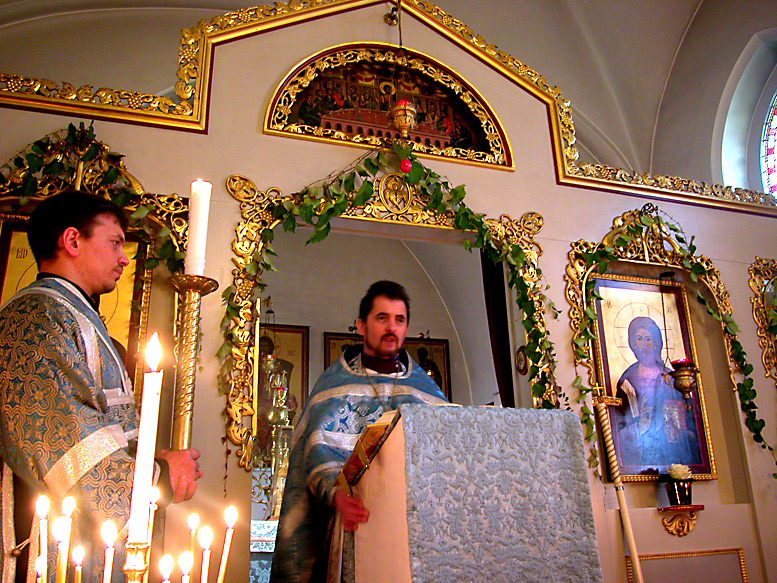
The elevation also teaches the body. The faithful stand, bow, make the sign of the Cross, and venerate. This bodily response matters because Orthodoxy does not treat salvation as an idea floating above ordinary life. The Cross must reach the hands, speech, habits, money, relationships, anger, grief, and choices of the person who venerates it.
The Cross in the calendar
The Exaltation is one of several moments in the Orthodox year when the Cross is brought strongly before the faithful. Holy Friday contemplates the Crucifixion in the Passion. The Third Sunday of Great Lent places the Cross before the faithful in the middle of the fast. The Exaltation in September returns the whole year to the sign of Christ's victory.
This repeated remembrance is pastoral. The Church knows that Christians forget the shape of discipleship. The Cross returns again and again so that repentance, endurance, forgiveness, and hope can be renewed.
Veneration is not worship of wood
Orthodox Christians worship God alone. When the faithful venerate the Cross, the honor passes to Christ who was crucified upon it. This distinction matters because Orthodox devotion is physical and reverent, but not idolatrous. Bowing, kissing, and signing oneself with the Cross are bodily ways of confessing Christ's victory.
The Cross also shapes ordinary discipleship. To honor the Cross while refusing humility, forgiveness, repentance, and mercy would be a contradiction. The feast calls the Christian to receive the Cross not only as a symbol to display, but as the pattern of Christ-like love.
The sign of the Cross
The sign of the Cross is one of the most visible Orthodox habits, but it should never become empty motion. It is a bodily confession of the Trinity, the Incarnation, the Passion, and Christ's victory. The hand moves in prayer because the whole person is called into faith, not only the mind.
For visitors, it is better to observe humbly than to imitate nervously. For Orthodox Christians, it is better to make the sign of the Cross attentively than frequently without attention. The body can teach the heart, but only when the gesture remains prayerful.
Why fasting belongs to a feast
The Exaltation of the Cross is joyful because the Cross is victory, yet sober because that victory comes through the Passion. This is why many Orthodox calendars mark the day with fasting. The fast helps the faithful honor the Cross without turning the feast into triumphal decoration.
As always, the exact fasting practice should follow parish and pastoral guidance. The point is not private severity, but reverent participation in the Church's memory of Christ's saving sacrifice.
Old Calendar and New Calendar dates
The feast is September 14 on the church calendar used by the parish. In communities using the Julian calendar for fixed feasts, September 14 currently appears as September 27 on the civil Gregorian calendar during the years 1900 through 2099. The feast is the same; the civil date differs because of calendar practice.
Readers should therefore check the parish calendar rather than assume that every Orthodox church nearby will observe the feast on the same civil date. This is especially important in cities with multiple Orthodox jurisdictions.
How the Cross shapes ordinary discipleship
The feast is not only about a historical event or a liturgical object placed for veneration. It asks whether the Christian life is being shaped by the Cross: forgiveness instead of revenge, humility instead of display, mercy instead of hardness, and repentance instead of self-defense.
This is why the Cross cannot be treated as decoration or identity alone. To make the sign of the Cross, venerate the Cross, or wear a cross should point toward a life being conformed to Christ's self-giving love.
Common mistakes to avoid
One mistake is to make the Cross merely decorative. Another is to make it a badge of superiority. A third is to speak of victory while avoiding repentance. Orthodox worship refuses all three. The Cross reveals victory precisely through humility, obedience, sacrifice, and mercy.
This is also why the feast should not be used as a weapon against other people. The Cross first judges and heals the one who venerates it. Only then can it become a sign of peace, courage, and hope.
Crosses worn, displayed, and made with the hand
Many Orthodox Christians wear a cross, keep crosses in the home, make the sign of the Cross, and venerate the Cross in church. These practices should not become empty religious branding. They are reminders that the whole person belongs to Christ: body, speech, habits, relationships, suffering, work, and death.
For beginners, the safest way to learn these practices is in parish life. Watch how the faithful venerate, ask questions quietly, and avoid treating gestures as either magic or mere cultural decoration. The Cross is confessed by the body because salvation heals the whole person.
The Cross and suffering
The feast should be handled carefully around human suffering. Orthodoxy does not tell people to love pain for its own sake or to accept abuse in silence. The Cross is Christ's voluntary self-offering, not a tool for excusing cruelty. Pastoral guidance is essential when suffering involves danger, violence, exploitation, or trauma.
At the same time, the Cross gives courage for suffering that cannot be avoided: illness, grief, persecution, repentance, sacrifice, and costly love. The Christian does not seek suffering as a performance, but learns to meet unavoidable suffering in Christ.
The Cross should never be used to silence the wounded
A serious Orthodox explanation must say this plainly: taking up the Cross does not mean staying in danger, hiding abuse, refusing medical care, or letting someone else weaponize pious language. The feast calls Christians to Christ-like love, truth, repentance, and courage. In situations of harm, the right response may include pastoral help, practical protection, medical care, civil authorities, and trusted support.
A reader's checklist for September 14
Before the feast, check your parish calendar, especially if several Orthodox jurisdictions are nearby. If services are offered, attend with attention rather than trying to reduce the feast to facts. If fasting is appointed, keep it according to your actual situation and guidance. If the Cross is placed for veneration, approach without hurry, remembering that bodily reverence should become forgiveness, humility, and mercy.
| Question | A careful Orthodox answer |
|---|---|
| What should I check first? | The parish service schedule and calendar usage, because Old/New Calendar practice can affect the civil date. |
| What should I read? | The Gospel and hymns of the feast, plus Holy Friday and the Cross in Great Lent for wider context. |
| What should change? | The feast should move the heart toward repentance, forgiveness, courage, mercy, and truthful love. |
Exaltation of the Cross study path
Read the feast through Holy Week, fasting, icons, and discipleship.
Source note
This article follows Orthodox liturgical teaching and the Orthodox Church in America's material on the Elevation of the Cross. Calendar and fasting practice should be confirmed with your parish.
Questions people ask
When is the Exaltation of the Cross?
It is kept on September 14 according to the parish calendar.
Why do Orthodox Christians venerate the Cross?
They honor the Cross because of Christ's saving death and victory, not as an isolated object.
Is it a fasting day?
In many Orthodox calendars, yes. Follow your parish rule and pastoral guidance.
Do Old Calendar parishes keep it on a different civil date?
Often yes. Julian September 14 currently appears as September 27 on the civil Gregorian calendar for the years 1900 through 2099.
Source Trail
Read this topic with the Church, not only the internet.
These links give a cautious path for checking the topic further. They do not replace parish worship, confession, pastoral guidance, or the calendar used by your bishop and local parish.
Feast And Fast
Keep solemn days with clarity.
Orthodox Daily Prayer helps connect feasts, fasts, saints, Scripture, and daily prayer without noise.