The Entrance of the Theotokos into the Temple is celebrated on November 21. It remembers the child Mary being brought to the Temple and is one of the great feasts of the Orthodox Church.
The feast is not based on a direct New Testament narrative. Its meaning is carried by the Church's liturgical tradition: Mary enters the Temple to become herself the living temple, the one through whom the Word of God will take flesh.
Temple imagery points to the Incarnation
Mary is honored because she will bear the Word made flesh, not as a separate center of devotion.
Liturgical meaning matters
The feast is received in the Church's hymns, icons, and worship rather than treated as private curiosity.
Hidden preparation is holy
The Entrance teaches consecration, patience, and the slow forming of a life offered to God.
Living Temple
The Entrance is best understood through worship, not speculation.
The Church receives the feast as a Christ-centered meditation on Temple, holiness, preparation, and the one through whom God will dwell bodily among us.
The feast points toward the Incarnation of the Son of God.
Ark, sanctuary, lamp, and holy place imagery is fulfilled in Christ, not detached from Him.
Orthodox worship teaches the feast more safely than isolated online arguments.
The feast calls homes, children, catechumens, and adults toward patient consecration.
Entrance of the Theotokos learning sequence
Read this feast through Christ, Temple imagery, Holy Tradition, and the slow formation of holiness.
Temple Context
Read the Entrance through Christ, Temple, and formation.
This feast is easy to flatten into a childhood story or an internet argument about sources. Orthodox worship reads it more deeply: Mary is honored because she will bear Christ, Temple imagery points to God's dwelling with humanity, and hidden formation becomes part of salvation's preparation.
Temple Formation System
The feast teaches how Orthodox Tradition reads preparation without becoming speculation.
The Entrance of the Theotokos should be read as liturgical theology: Christ remains the center, Mary is honored because of the Incarnation, Temple imagery is fulfilled rather than discarded, and hidden formation becomes part of how God prepares salvation.
Mary is called living temple because the Word will take flesh from her; devotion to her protects the truth about Him.
Ark, sanctuary, holy place, lamp, and glory language become ways to confess God dwelling with humanity.
Its authority is not private folklore or modern curiosity, but the Church's worshiping memory of salvation.
During the fast, the Church contemplates the one prepared to bear Christ before celebrating His birth.
The feast honors preparation, consecration, prayer, obedience, and the slow offering of life to God.
Responsible Orthodox reading avoids both dismissal and exaggeration by staying close to worship.
Mary as living temple
The theological heart of the feast is not religious nostalgia for the old Temple. It is the announcement that God's dwelling with humanity is being fulfilled. The one who will bear Christ is shown as the living sanctuary of the divine presence.
This is why the feast belongs inside Orthodox worship rather than private speculation. The Temple language is read through Christ. The true dwelling of God with humanity is fulfilled in the Incarnation, and Mary is honored because she receives and bears the Word made flesh.
For Orthodox Christians, the word temple is not only architecture. It means the place of offering, divine presence, priestly service, and communion. The Entrance of the Theotokos says that all of this is moving toward Christ. Mary is not honored as a separate sanctuary apart from Him; she is honored because she becomes the living place where the Word takes flesh.
| Point | Meaning |
|---|---|
| Date | November 21 according to the parish calendar. |
| Theme | Mary is prepared as the living temple of God. |
| Scripture | The feast uses Old Testament temple imagery liturgically. |
| Purpose | It points toward the Incarnation of Christ. |
How to read the feast responsibly
Because the feast draws from sacred tradition rather than a direct biblical episode, it should not be used carelessly in online argument. In Orthodox life, Scripture and Tradition are not enemies; the feast is received through the worship of the Church.
The safest way to understand the Entrance is to listen to the hymns of the feast. They do not ask the faithful to become distracted by historical curiosity. They teach that Mary is prepared as the holy dwelling place of God and that the promises of the Old Testament are moving toward Christ.
This is important for serious education. The question is not whether every detail can be handled like a modern newspaper report. The question is how the Church prays, sings, icons, and interprets the feast. Orthodox Tradition is not a pile of private stories. It is the living reception of the apostolic faith in worship, doctrine, and holiness.
What the hymns are teaching
The hymns of the feast speak of Mary being brought into the Temple and of creation preparing for the coming of God in the flesh. Their language is full of Old Testament images because the Church sees the Temple, the ark, the holy place, and the glory of God as signs fulfilled in Christ.
That poetic language should be read with theological discipline. It does not mean Mary is worshiped as divine. It means the Church is contemplating the mystery that the Son of God will dwell in her womb. The honor given to the Theotokos is therefore a way of defending the reality of the Incarnation.
Why the feast is placed near the Nativity Fast
The Entrance falls on November 21, during the Nativity Fast for many Orthodox Christians. This placement is spiritually fitting: as the Church prepares for the birth of Christ, she also contemplates the one through whom Christ will be born. The feast turns attention toward preparation, hidden holiness, and the coming Incarnation.
The fasting details still belong to the parish calendar and local guidance. The theological connection, however, is clear: the Church is not merely counting days toward Christmas; she is being taught how God prepares salvation in quiet, faithful ways.
Temple imagery and the Incarnation
Orthodox Christianity often reads the Old Testament as preparation for Christ. The Temple, the Holy of Holies, the ark, the lampstand, and the dwelling of God's glory all become theological images that help the Church speak about the Theotokos without separating her from her Son.
For this reason, the feast is especially useful for people trying to understand Orthodox devotion to Mary. The Church does not honor her as a goddess or a rival mediator. It honors her as the human person through whom the Son of God truly entered human life.
Temple imagery also protects the material realism of Orthodox Christianity. God does not save humanity by abandoning creation. He enters creation. The body matters, places matter, time matters, and human obedience matters. The Entrance teaches that the holy is not an escape from the world, but the transfiguration of human life by God's presence.
The icon of the Entrance
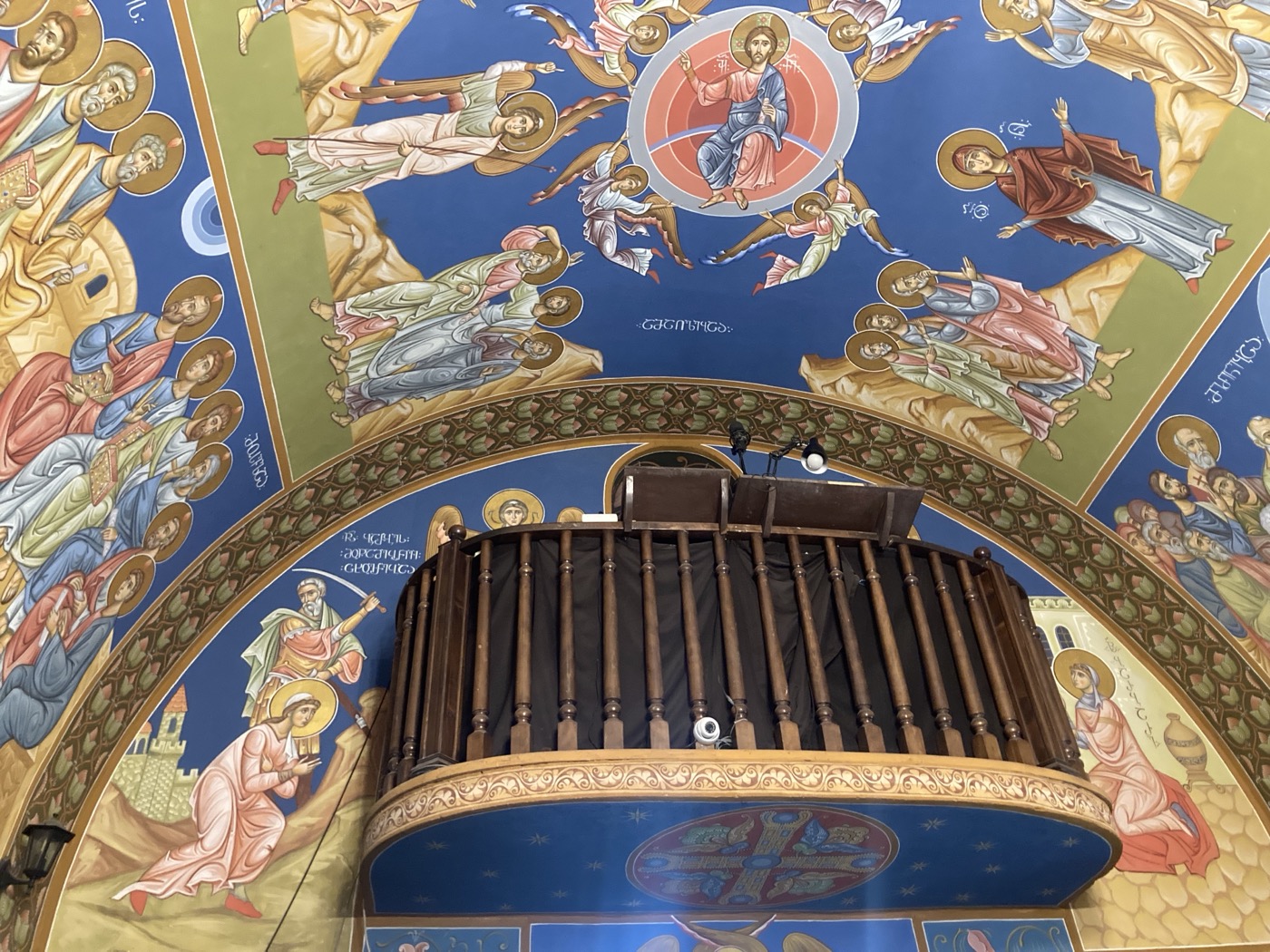
The icon commonly shows the child Mary being brought toward the Temple by Joachim and Anna and received by the priest. Young maidens with lamps may appear, and the architecture points toward the Temple as the place of consecration. The icon teaches that the feast concerns offering, preparation, and the mystery of God dwelling with humanity.
As with all Orthodox icons, the point is not photographic reconstruction. The icon interprets the feast theologically. It shows Mary in relation to the Temple because she will become the living dwelling place of the Word made flesh.
Why the feast matters during the Nativity Fast
For many Orthodox Christians, the Entrance is kept during the Nativity Fast. This gives the feast a particular spiritual force. While the Church is preparing for Christ's birth, she also remembers the one prepared to bear Him. The fast is therefore not just restraint from food; it is preparation of the heart for the mystery of God becoming man.
The feast can reshape the way a person understands fasting. Fasting is not a religious performance. It is a way of making room. Mary enters the Temple; the faithful are invited to let their own lives become more receptive to God through prayer, repentance, worship, and mercy.
Old Calendar and New Calendar dates
The feast is November 21 on the church calendar. In communities using the Julian calendar for fixed feasts, November 21 currently appears as December 4 on the civil Gregorian calendar during the years 1900 through 2099. This is the same feast, observed according to a different calendar reckoning.
Because Orthodox parishes in the same city may follow different fixed-date calendars, readers should check the local parish calendar before assuming the civil date of the service.
Why this feast matters for daily faith
The Entrance teaches that holiness is not only dramatic public action. It is also preparation, consecration, obedience, and hidden growth. In that sense, the feast speaks directly to ordinary Christian life: prayer, Scripture, fasting, and church attendance slowly form a person as a temple of the Holy Spirit.
Parents and catechumens often find the feast helpful because it shows the Church's concern for formation. Children, beginners, and lifelong Orthodox Christians all need a rhythm where faith is not reduced to opinions, but becomes worship and a way of life.
Parents, children, and formation
The feast often speaks strongly to parents because Joachim and Anna offer Mary to God. It should not be read as a simple parenting technique or a sentimental family story. It points to the larger Orthodox truth that children are not possessions. They are persons to be offered to God through prayer, worship, patience, and love.
For catechumens and beginners, the feast also teaches that formation takes time. Orthodoxy is not adopted merely by reading arguments online. It is received through worship, obedience, Scripture, fasting, prayer, and the slow reshaping of desire.
A sober word for converts and inquirers
This feast is a good test of whether someone is learning Orthodoxy as a living Church or only as internet content. Online debate often demands flat explanations: prove this, dismiss that, win the argument. Orthodox worship works differently. It teaches by prayer, symbol, Scripture, icon, and repeated participation.
The Entrance should therefore be approached with patience. A beginner does not need to master every historical question before praying the feast. But a beginner should also avoid careless exaggeration. The mature path is to receive what the Church sings, ask a priest when confused, and keep the feast in the same Christ-centered spirit in which the Church gives it.
Tradition without speculation
The Entrance is one of the places where beginners need a mature understanding of Orthodox Tradition. The Church does not keep the feast because every historical detail can be treated like a modern biography. She keeps it because the liturgical meaning is true to the mystery of Christ: Mary is prepared as the one who will bear the Word made flesh.
This protects the feast from two mistakes. It should not be dismissed merely because it is not narrated directly in the New Testament, and it should not be turned into imaginative storytelling detached from worship. The right setting for understanding the feast is the Church's hymnography, iconography, Scripture-shaped language, and prayer.
This is also why the feast is valuable for serious seekers. It shows that Orthodox Tradition is not an alternative to Christ or Scripture. It is the Church's way of receiving Christ through Scripture, worship, iconography, ascetic life, and the memory of salvation handed down in prayer.
What to avoid
Avoid using the feast as a weapon in debates about Mary. Orthodox devotion to the Theotokos is best learned in worship, not in argument. Also avoid treating the feast as detached folklore. Its meaning is Christ-centered: the one who enters the Temple will bear the Lord who fulfills the Temple.
A second mistake is reducing the feast to childhood innocence. The Church honors Mary because of the Incarnation. The tenderness of the scene matters, but it is tenderness inside a cosmic mystery: God prepares His dwelling among us.
Study the feast in context
TitleTheotokosWhy the title Mother of God protects the truth about Christ. TraditionScripture and Holy TraditionHow Orthodox Christians receive the faith in worship and teaching. IconsHoly IconsHow Orthodox visual theology points to the Incarnation.Customs and civil dates may differ by calendar and parish. Follow your local parish calendar.
Source note
This page follows Orthodox liturgical teaching and the Orthodox Church in America's explanation of the Entrance of the Theotokos to the Temple.
Questions people ask
When is the Entrance of the Theotokos?
It is kept on November 21 according to the parish calendar.
Is it directly described in the New Testament?
No. It is received through Orthodox liturgical tradition and interpreted in relation to the Incarnation.
What is the main meaning?
Mary is presented as the living temple of God, preparing for the coming of Christ.
Why does Orthodox worship use Temple language for Mary?
Because she bears Christ, the Word made flesh. Temple imagery helps the Church confess God's real dwelling with humanity.
Is this feast required to understand Orthodox devotion to Mary?
It is one of the clearest liturgical windows into that devotion because it shows Mary entirely in relation to Christ.
Do Old Calendar parishes keep it on another civil date?
Often yes. Julian November 21 currently appears as December 4 on the civil Gregorian calendar in the years 1900 through 2099.
Source Trail
Read this topic with the Church, not only the internet.
These links give a cautious path for checking the topic further. They do not replace parish worship, confession, pastoral guidance, or the calendar used by your bishop and local parish.
Learn Through Worship
Let the feasts teach slowly.
The app helps keep the Church calendar, saints, Scripture, fasting awareness, and prayer connected day by day.