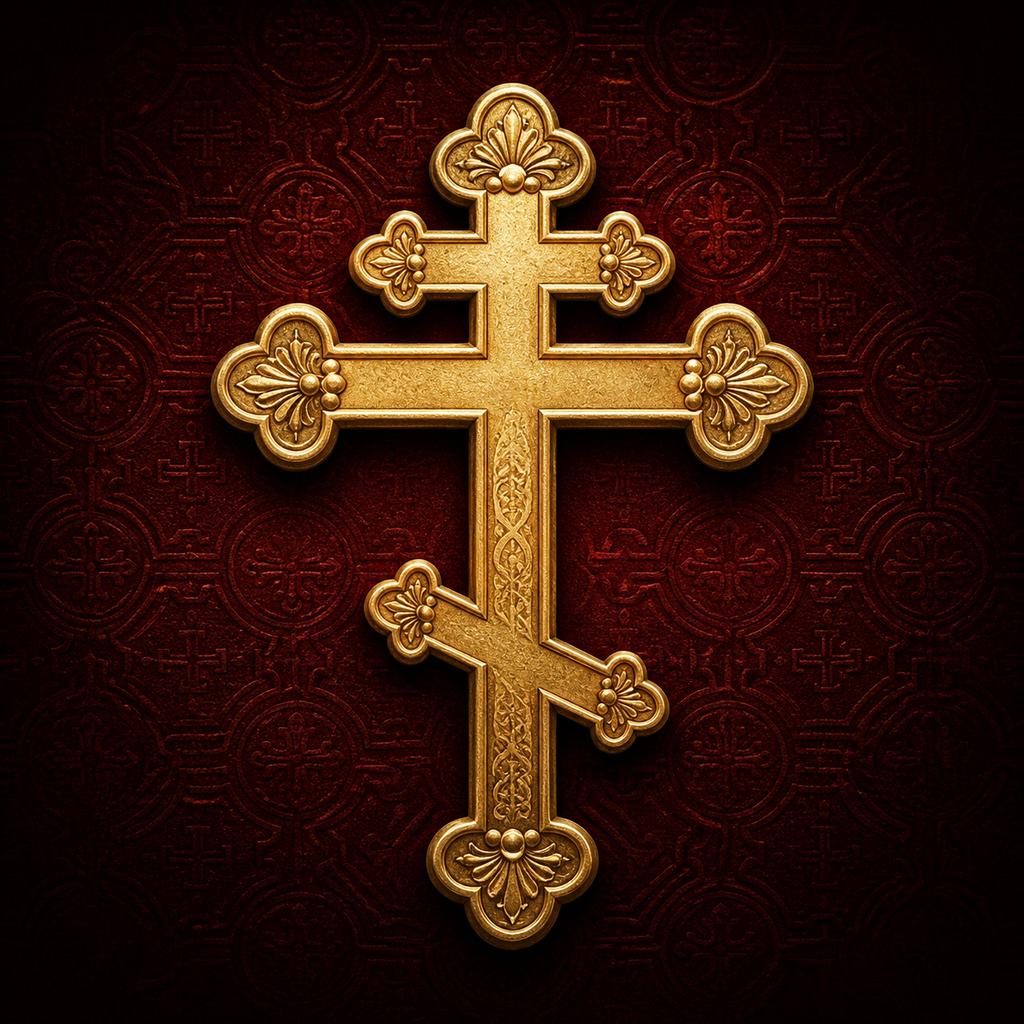

The Annunciation is celebrated on March 25, nine months before the Nativity of Christ. In the Gospel of Luke, the Archangel Gabriel announces to Mary that she will bear the Son of God, and she answers with obedience: "Let it be to me according to your word."
Orthodox worship sees this feast as the beginning of salvation because it announces the Incarnation. The eternal Son truly becomes human. The feast therefore stands at the center of Orthodox teaching about Christ, the Theotokos, and human cooperation with divine grace.
The feast is good news because the eternal Son of God truly becomes human for salvation.
Orthodox devotion to the Theotokos protects the confession that the child she bears is truly God the Son.
Mary's obedience is not self-achievement; it is humble cooperation with God's saving initiative.
Good News In Flesh
The Annunciation is not sentimental; it is the beginning of the Incarnation.
The feast joins Scripture, Christology, the Theotokos, human freedom, and the Church calendar. It should lead the reader to worship, not only to admiration of a beautiful scene.
Gabriel's greeting, Mary's question, and her obedience belong to the mystery of salvation.
Mary is honored because the one conceived in her is truly divine and truly human.
March 25 connects the Annunciation to Nativity and often places festal joy inside Great Lent.
The feast teaches the heart to receive God's word with humility, attention, and courage.
Orthodox Annunciation learning sequence
The Annunciation is good news because the Word becomes flesh, and Mary's faithful response becomes the Church's model of receiving God.
Incarnation Context
Read Annunciation as Orthodox good news, not a sentimental angel scene.
People often know the Annunciation as a beautiful image of Gabriel and Mary. Orthodox worship reads it as the beginning of the Incarnation: Christ is central, the Theotokos receives the word freely, March 25 points to Nativity, and festal joy may appear inside Great Lent.
The Incarnation as good news
The Annunciation is not merely an angelic message about a future religious figure. It is the announcement that the eternal Son of God truly takes flesh. This is why Orthodox Christians call the feast good news: salvation enters history not as an idea, but as the incarnate Christ.
The feast is therefore one of the clearest places to learn Orthodox Christianity. It brings together Scripture, dogma, liturgy, and prayer in one event. Gabriel announces, Mary receives, the Holy Spirit overshadows, and the Son of God becomes man. The Church does not treat this as private inspiration, but as the beginning of the world's renewal.
Why March 25 matters
The date expresses the connection between Annunciation and Nativity. Christ's birth is not an isolated winter celebration; it is joined to the mystery announced to Mary. The feast also often falls during Great Lent, which gives it a unique liturgical character.
In parishes that keep the Julian calendar for fixed feasts, March 25 currently corresponds to April 7 on the civil Gregorian calendar during the years 1900 through 2099. This can confuse people searching online, especially when one parish lists March 25 and another lists April 7. The feast is the same; the calendar reckoning differs.
| Question | Answer |
|---|---|
| When is it? | March 25 according to the parish calendar. |
| Why nine months before Christmas? | It marks the announcement and conception of Christ before His Nativity. |
| Does it fall in Lent? | Very often, which affects the services and fasting practice of the day. |
Mary's obedience and human freedom
Orthodoxy does not treat Mary as passive scenery in the story of salvation. Her faithful response is real, free, and humble. Yet the feast is not finally about human achievement. It is about the mercy of God entering history through the Incarnation of Christ.
This balance matters. The Annunciation shows divine initiative and human response together. Gabriel brings the message from God; Mary receives it with faith. Orthodox theology therefore sees her obedience as the model of the Church's own response to Christ.
Mary's response should not be flattened into a modern slogan about self-expression, nor should it be used to erase her freedom. The Orthodox reading is more serious. Grace comes from God; Mary consents in humility; salvation is God's work, yet human obedience is not meaningless. The feast teaches the dignity of a human yes to God.
Annunciation during Great Lent
When the feast falls on a weekday of Great Lent, the celebration has particular liturgical arrangements. For ordinary faithful, the safest rule is simple: attend the parish services if possible and follow the fasting guidance given locally. Internet charts cannot replace parish practice.
The feast can feel almost startling in Lent: brightness in the middle of repentance. That is part of its power. The Church does not oppose fasting and joy. Repentance clears the heart so the good news of the Incarnation can be received with attention.
In many Orthodox calendars the Annunciation is associated with a festal relaxation of the fast, but exact practice depends on calendar, day of the week, and local parish guidance. A serious website should not turn this into a universal rule detached from real parish life. The practical advice is simple: check the parish calendar, ask your priest, and keep the feast with gratitude rather than anxiety.
The icon of the Annunciation
The icon of the Annunciation usually shows the Archangel Gabriel approaching the Virgin Mary. The icon is not a frozen illustration of a private moment. It is a visual confession of the Incarnation: heaven addresses earth, the angel brings God's message, and Mary receives the word with humility and freedom.
The space between Gabriel and Mary matters. Orthodox iconography does not make the Annunciation a scene of force. Mary is not overpowered. She hears, questions, receives, and responds. The icon therefore teaches both divine initiative and human cooperation. God saves; Mary says yes; the Word becomes flesh.
Gabriel, fear, and holy attention
Luke's account does not present Mary as casually comfortable before the angel. She is troubled by the greeting and asks how this will be. That detail matters. Orthodox faith does not require shallow cheerfulness in the face of mystery. Reverent fear, honest questioning, and obedience can belong together.
For daily prayer, this is deeply practical. Many people wait for complete emotional certainty before they obey God. The Annunciation shows another path: listen, ask faithfully, receive what God gives, and answer with humility. The feast trains the heart to become attentive rather than merely excited.
The Incarnation in one feast
The Annunciation is one of the most compact statements of Orthodox Christianity. It touches Christology, the Theotokos, salvation, Scripture, angels, human freedom, and the sanctification of time. The feast is not only a memory of a biblical scene; it is the Church's proclamation that God has truly become man.
That is why the title Theotokos belongs naturally to the feast. Mary bears the one who is God the Son, not a merely inspired man. The Annunciation protects the same truth defended by the Church's doctrinal language: the child conceived in her is one divine Person, truly divine and truly human.
Why this feast is not sentimental
The Annunciation can be misunderstood as a gentle religious scene detached from doctrine. Orthodox worship treats it far more seriously. The feast announces the overturning of the human condition through the Incarnation. The angelic greeting, Mary's fear, her question, and her obedience all belong to the mystery of God entering history without violating human freedom.
For this reason, the feast is also a correction to shallow views of Mary. Orthodox Christians do not honor her as an isolated figure of piety. They honor her because she receives the Word made flesh, and because her obedience shows what creation was meant to become: receptive to God, humble, and alive in grace.
How Orthodox Christians keep the day
Where possible, the faithful attend the Divine Liturgy or the appointed services. The Gospel reading from Luke 1 is central. Many families also mark the day by reading the passage at home, looking at the icon of the feast, and noticing its place exactly nine months before the Nativity of Christ.
Because March 25 often falls during Great Lent, food practice should be guided by the parish calendar and the counsel of a priest. The spiritual point is not rule collecting. It is to receive the feast with prayer, gratitude, and obedience.
A simple household practice is to read Luke 1:26-38 slowly, pray the festal troparion if it is available in the family's prayer book, and name one concrete act of obedience for the day. The feast should not remain only an idea. It should lead the person toward worship, repentance, mercy, and a more receptive heart.
Human freedom and grace
The Annunciation is one of the clearest Orthodox windows into synergy, the cooperation of human freedom with divine grace. This does not mean Mary saves herself or initiates salvation. God acts first. Yet her response is not meaningless. She receives God's will freely, and her obedience becomes the doorway through which the Incarnation enters human history.
This balance protects the Christian life from two distortions. Salvation is not human self-improvement, but neither is the human person treated as a lifeless object. The Church learns from the Theotokos how to receive grace with humility, courage, and obedience.
What the feast says about the body
The Annunciation is also a feast of the body. The Word does not appear to be human; He becomes human. The Son of God takes flesh from the Virgin Mary. That is why Orthodox Christianity cannot treat the body as disposable, embarrassing, or spiritually irrelevant.
This matters for modern readers because many people imagine religion as thoughts, values, or private emotion. The Annunciation says something far stronger: God enters human life bodily. Orthodox prayer, fasting, icons, prostrations, sacraments, and feasts all make sense because the Incarnation reveals that matter can become a bearer of grace.
Why the feast matters for daily prayer
The Annunciation can shape ordinary prayer because it teaches how to listen. Gabriel's message interrupts Mary's life. She does not control the plan, yet she responds with faith. Daily prayer often works in the same direction: the heart becomes quiet enough to receive God's word and obedient enough to answer.
For app users, the feast is a reminder that calendar notifications are not merely date alerts. A feast should call the person back to Scripture, worship, and conversion. March 25 is not just information. It is the Church's annual proclamation that the Word has become flesh for the life of the world.
How to explain the Annunciation to a visitor
If someone is new to Orthodoxy, start with Luke 1 and the Incarnation. The Annunciation is the moment the Church celebrates the Son of God becoming man in the womb of the Virgin Mary. Mary is honored because of Christ, and Christ is confessed as truly divine and truly human.
It is also helpful to explain why the feast is called good news. The good news is not only that Mary receives a personal blessing. It is that the healing of the world has begun. The same Christ who is conceived at the Annunciation will be born in Bethlehem, baptized in the Jordan, crucified, buried, risen, and glorified.
Study the Annunciation in context
ChristologyThe TheotokosWhy Mother of God is a confession about Christ. NativityBirth of ChristThe feast nine months after the Annunciation. LentGreat LentWhy repentance and feast-day joy can belong together.Source note
This page follows Luke 1:26-38 and Orthodox liturgical teaching, especially the Orthodox Church in America's account of the Annunciation. Liturgical details may vary depending on the date and parish calendar.
Questions people ask
Is the Annunciation a feast of Christ or Mary?
It is both, but always Christ-centered. Orthodox Christians honor Mary as Theotokos because the child she bears is truly the Son of God.
Why is the Annunciation called good news?
Because it announces the Incarnation: the Son of God becomes man for the salvation of the world.
Can the Annunciation happen during Holy Week?
Its date is fixed, so it can coincide with different parts of the Paschal cycle. The Church has specific liturgical rules for those years.
Why is the Annunciation exactly nine months before Christmas?
The date expresses the connection between Christ's conception and His Nativity. March 25 and December 25 belong together liturgically.
What does Mary's answer teach?
Her response shows faithful human cooperation with the will of God, without making salvation a human achievement.
Source Trail
Read this topic with the Church, not only the internet.
These links give a cautious path for checking the topic further. They do not replace parish worship, confession, pastoral guidance, or the calendar used by your bishop and local parish.
A Feast In Time
Follow fixed feasts without losing the Paschal cycle.
Orthodox Daily Prayer keeps feast days, saints, Scripture, and fasting awareness close to daily life.