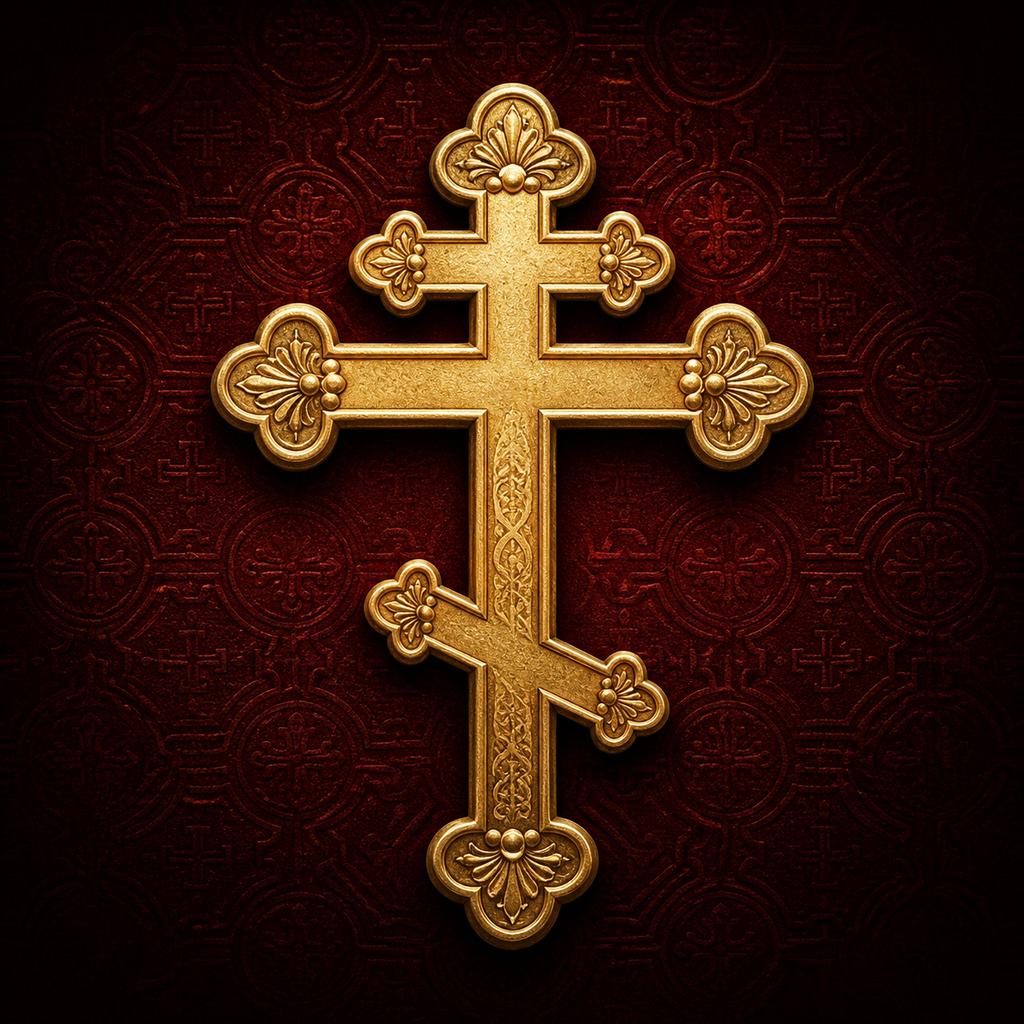

Great Lent is not only a season of restriction. It is a path of healing. The Church calls the faithful to simplify life, confess honestly, forgive, pray more attentively, give alms, and prepare for the joy of Pascha.
Great Lent is a season of repentance, not a religious self-improvement project.
Food fasting belongs together with prayer, mercy, confession, forgiveness, and worship.
Real fasting is guided by the Church and adjusted pastorally for health, work, age, and circumstance.
Pastoral note
Do not build your Lenten rule from the strictest chart you can find online. Begin with your parish calendar, your priest's blessing, your real health and work situation, and a desire for repentance rather than spiritual display.
The Road To Pascha
Great Lent is a shared return to God, not a private endurance contest.
The Church gives Lent as medicine: forgiveness, prayer, fasting, almsgiving, confession, longer services, and a quieter appetite for Pascha. The point is healing, not impressive strictness.
The fast opens through reconciliation, humility, and the refusal to carry resentment as spiritual seriousness.
Food discipline should be received through parish practice and pastoral care, especially where health or family life is involved.
The Canon of Saint Andrew, Presanctified Liturgy, Great Compline, and Lenten Sundays teach repentance in worship.
Lent is not a gloomy identity. It prepares the faithful to receive the Resurrection with a softened heart.
Lenten Medicine System
Great Lent heals when its disciplines stay together.
Orthodox Lent is not a food challenge, productivity plan, or spiritual performance. The Church joins fasting to forgiveness, prayer, almsgiving, confession, services, and Pascha so that repentance becomes concrete, humble, and ecclesial.
Forgiveness Sunday makes reconciliation the doorway, because fasting without mercy turns quickly into religious hardness.
The rule should be received through parish life and pastoral guidance, especially where health and family burdens matter.
Great Compline, the Canon of Saint Andrew, Presanctified Liturgy, and the Prayer of Saint Ephraim give Lent its voice.
Fasting should open the hand through money, food, time, attention, and hidden care for real people.
Confession is not a seasonal formality; it is a healing encounter guided by pastoral care.
The fast does not earn Pascha. It empties the hands so Resurrection joy can be received with gratitude.
Great Lent Map
How to understand Great Lent without reducing it to rules.
Great Lent is a shared return to God. Food fasting matters, but it belongs inside a larger pattern: forgiveness, prayer, almsgiving, confession, parish services, the Sundays of Lent, Holy Week, and Pascha.
Orthodox Great Lent learning sequence
Read Great Lent as a path of repentance that begins before Clean Monday and leads through Holy Week to Pascha.
Lenten Compass
Do not reduce Lent to a food chart.
Great Lent makes sense when fasting, worship, confession, almsgiving, Holy Week, and Pascha stay together. Choose the part of the season you need to understand next.
The purpose of the fast
The Lenten fast includes food, but it is never merely a diet. Orthodox fasting is joined to prayer, almsgiving, confession, worship, and reconciliation. Without love, fasting loses its purpose and can become another form of pride.
Great Lent also teaches patience. The point is not to perform a perfect private rule, but to return again and again to Christ with a softened heart. The Church gives a shared season so that repentance is not treated as a mood, but as a way of life.
Before Lent begins
The weeks before Great Lent already begin the preparation. The services teach humility, repentance, the Last Judgment, forgiveness, and the expulsion from Paradise. In many Orthodox churches, Forgiveness Vespers marks the threshold into Lent with mutual forgiveness.
This pre-Lenten period matters because Orthodox Lent does not begin as a sudden personal project. The Church gradually teaches the heart how to enter the fast: first without boasting, then with return from exile, then with sober remembrance of judgment, and finally through forgiveness.
| Preparation | What it teaches |
|---|---|
| Publican and Pharisee | Humility before God matters more than religious self-display. |
| Prodigal Son | Repentance is a return to the Father, not self-hatred. |
| Last Judgment / Meatfare | Love of neighbor, mercy, and accountability belong inside repentance. |
| Cheesefare / Forgiveness Sunday | The fast begins with reconciliation and the memory of exile from Paradise. |
Lenten Roadmap
Great Lent is a road, not a single rule.
The season has movement: preparation before Lent, the serious beginning of the first week, the Sundays that interpret repentance, the threshold of Lazarus Saturday and Palm Sunday, and then Holy Week and Pascha.
The pre-Lenten Sundays train the heart before the fast begins, so Lent does not start as sudden religious intensity.
Clean Monday and the first week interrupt normal habits and invite confession, attention, and a more truthful life before God.
The Sundays of Lent are theological signposts, not decorative commemorations. They interpret repentance through icons, grace, the Cross, ascetic struggle, and mercy.
Lent opens into Christ's victory over death, His voluntary Passion, and the joy of the Resurrection. The fast is ordered toward Pascha.
Services of the season
Great Lent has its own sound and pace. The Prayer of Saint Ephraim, Great Compline, the Canon of Saint Andrew, the Liturgy of the Presanctified Gifts, and the quieter tone of the weekday services all teach repentance through worship, not only through explanation.
If You Cannot Attend Everything
Choose parish worship over private optimization.
Many people cannot attend every Lenten service. That is not failure. A sober path is to ask what your parish actually offers, choose a few services faithfully, and keep a modest home rule without turning Lent into performance.
- First priorityAttend Sunday Liturgy as consistently as possible and speak with the priest about confession and Communion preparation.
- Second priorityAttend Forgiveness Vespers, Presanctified Liturgy, Great Compline, or the Canon of Saint Andrew when your parish offers them.
- Third priorityKeep a small daily rule: prayer, Scripture, almsgiving, fasting awareness, and quick forgiveness when resentment appears.
- Pastoral boundaryDo not copy another person's fasting rule. Health, work, family, pregnancy, age, and eating disorder history need guidance.
Clean Monday and the first week
The first Monday of Great Lent is often called Clean Monday. In practice, the first week has a more austere character in many parishes: longer services, the Great Canon of Saint Andrew in many traditions, and a deliberate break from ordinary habits. The point is not shock or spiritual extremism. It is a serious beginning.
A beginner should understand the first week as an invitation to reorient life. The Church is not asking for theatrical intensity; it is calling the faithful to prayer, sobriety, confession, and a quieter appetite for God.
| Moment | Main emphasis |
|---|---|
| Forgiveness Sunday | The faithful enter Lent through forgiveness, humility, and reconciliation. |
| First week | A strong beginning of prayer, fasting, confession, and the Canon of Saint Andrew in many parishes. |
| Sunday of Orthodoxy | The triumph of the Orthodox faith and the restoration of holy icons. |
| Sunday of Saint Gregory Palamas | The reality of communion with God by grace, not as an abstract idea. |
| Sunday of the Cross | The Cross is set before the faithful as strength in the middle of the fast. |
| Saint John Climacus | Ascetical struggle, humility, and the ladder of repentance. |
| Saint Mary of Egypt | Radical repentance, mercy, and hope for every sinner. |
The Sundays of Lent as a path
The Sundays of Great Lent are not random commemorations. They form a catechesis of repentance: the restoration of icons, the teaching of Saint Gregory Palamas, the Cross in the middle of the fast, the ascetical struggle of Saint John Climacus, and the radical repentance of Saint Mary of Egypt. Together they show that Orthodox repentance is doctrinal, liturgical, ascetical, and merciful.
The threshold into Holy Week
Great Lent should also be distinguished from the days that follow it. In many explanations, people speak broadly about "Lent and Holy Week" together, but the liturgical movement has a threshold: Lazarus Saturday and Palm Sunday stand before Holy Week, and then the Church enters the Passion of Christ.
This distinction matters because the fast is not an isolated moral exercise. Great Lent forms repentance; Lazarus Saturday and Palm Sunday reveal Christ's voluntary movement toward His Passion; Holy Week brings the faithful before the Mystical Supper, the Cross, the tomb, and the first proclamation of Resurrection.
| Threshold | Why it matters |
|---|---|
| Lazarus Saturday | Christ's authority over death is shown before the Church enters the Passion. |
| Palm Sunday | The King enters Jerusalem voluntarily, moving toward the Cross. |
| Bridegroom services | The faithful are called to watchfulness at the beginning of Holy Week. |
| Pascha | The Resurrection is the joy for which the whole Lenten journey prepares the Church. |
Pastoral discernment
Fasting practice varies by local tradition, health, age, work, pregnancy, eating disorder history, and pastoral blessing. The wise path is not comparison, but obedience, humility, and steadiness. A person should not use a generic internet guide as a substitute for parish guidance.
Good pastoral questions are concrete: Which parish calendar should I follow? How should I fast with my health and work? When should I come to confession? How should I prepare for Holy Communion? What services should I prioritize if I cannot attend everything? These are better questions than trying to win an argument with a fasting chart.
How to live Lent without theater
Start with the parish calendar. Attend services when possible. Make confession seriously. Pray a little more. Reduce noise. Give money, time, food, or attention to someone in need. Ask forgiveness quickly. Let the fast expose what needs healing rather than using it to craft an image of spiritual seriousness.
What Great Lent should produce by Pascha
The measure of Lent is not how impressive the rule looked from the outside. A good Lent should make a person more honest, more merciful, more patient, more attentive in prayer, more ready to forgive, and more aware of dependence on Christ. If fasting produces contempt, anxiety, vanity, or harshness, something has gone wrong.
By Pascha, the faithful should not feel that they have earned the feast. They should be more ready to receive it as mercy. Great Lent empties the hands so that Paschal joy can be received with gratitude rather than claimed as a reward.
Common mistakes when learning Great Lent online
The first mistake is reducing Lent to ingredients. The second is treating the strictest rule one can find online as the only faithful option. The third is separating fasting from worship, confession, forgiveness, and almsgiving. The fourth is comparing parishes and jurisdictions as if local pastoral differences were proof that the Church has no shared rhythm.
A healthier approach is slower and more ecclesial: learn the Church year, follow the parish calendar, read reliable Orthodox sources, ask the priest, and keep a rule that produces repentance rather than anxiety or pride.
Great Lent and the app habit
A daily prayer habit can help during Lent only if it remains humble. The goal is not to collect spiritual achievements, but to return to God with attention. A simple rule, the Lenten readings, reminders for fasting seasons, and space for confession preparation can support the parish rhythm when they point back to worship and repentance.
Orthodox Daily Prayer can help users keep track of fasting days, Scripture, saints, and a prayer rule, but it should not become the center of Lent. The center is Christ, encountered through repentance, forgiveness, the services, confession, Communion, and mercy toward others.
Common questions about Great Lent
What is Orthodox Great Lent?
Orthodox Great Lent is the major season of repentance, fasting, prayer, almsgiving, confession, and preparation for Pascha.
Is Great Lent only about food?
No. Food fasting is joined to prayer, almsgiving, forgiveness, confession, worship, and repentance. Without love and humility, fasting loses its purpose.
Should everyone follow the same fasting rule?
No. Fasting discipline is pastoral and should take account of health, age, work, pregnancy, eating disorder history, and guidance from a priest.
Can an app replace Lenten services?
No. An app can support reminders, prayer, readings, and fasting awareness, but Great Lent is learned through the worship, confession, forgiveness, and parish life of the Church.
What is Clean Week in Orthodox Lent?
Clean Week is the first week of Great Lent in many Orthodox traditions, marked by a sober beginning, prayer, fasting, repentance, and services such as Great Compline or the Canon of Saint Andrew where served.
What services should beginners notice during Great Lent?
Beginners can notice Forgiveness Vespers, Great Compline, the Canon of Saint Andrew, the Liturgy of the Presanctified Gifts, the Sundays of Lent, and the movement toward Lazarus Saturday, Palm Sunday, Holy Week, and Pascha.
Great Lent study path
Read Great Lent together with fasting, confession, Holy Week, and Pascha.
Source note
This guide follows Orthodox teaching on Great Lent as a season of prayer, fasting, repentance, almsgiving, confession, and preparation for Pascha. Concrete fasting and Communion preparation should follow parish guidance.
Source Trail
Read this topic with the Church, not only the internet.
These links give a cautious path for checking the topic further. They do not replace parish worship, confession, pastoral guidance, or the calendar used by your bishop and local parish.
Lenten Attention
Let reminders serve repentance, not replace it.
Orthodox Daily Prayer helps keep Lenten prayer, readings, fasting awareness, confession preparation, and the Church calendar close.
This guide is introductory. Your parish priest and local calendar should guide the concrete discipline of fasting, confession, Communion preparation, and Holy Week participation.